
Nigeria’s vast deposits of solid minerals are increasingly being placed at the centre of efforts to diversify the economy, with the country estimated to have at least 44 mineral deposits in commercial quantities across more than 500 locations.
For decades, however, the sector remained overshadowed by oil, leaving significant questions around regulation, investment, processing, revenue collection and environmental protection.
Analysts say the renewed focus on mining presents an opportunity to reduce dependence on petroleum revenue, but they also warn that Nigeria will need stronger institutions and enforcement if its mineral wealth is to translate into sustained economic benefits.
Government Efforts Have Intensified
The push to transform the sector predates the current administration. Under former President Muhammadu Buhari, the Federal Government developed the Roadmap for the Growth and Development of the Nigerian Mining Industry in 2016.
The roadmap identified several obstacles to the industry’s expansion, including inadequate geological data, limited financing, poor infrastructure and institutional weaknesses.
When President Bola Tinubu took office in 2023, economic diversification became a prominent part of the administration’s broader economic agenda, with industrialisation, employment and domestic value addition identified as important areas for growth.
The appointment of Dele Alake as Minister of Solid Minerals Development was followed by a stronger emphasis on combating illegal mining and improving security around mining operations.
Mining Marshals Lead the Anti-Illegal Mining Drive
One of the most visible interventions has been the creation of the Mining Marshals within the Nigeria Security and Civil Defence Corps.
The specialised unit was established to secure mining locations, enforce relevant laws and disrupt unauthorised mining activities.
By July 2026, the NSCDC said its Mining Marshals had arrested 671 suspected illegal miners and charged 397 before the Federal High Court. The agency also reported that illegal sites had been dismantled, unauthorised operations shut down and some mining locations returned to legitimate licence holders.
The enforcement campaign has not been without controversy, with disputes and allegations of interference surrounding the work of the Mining Marshals.
Value Addition Becomes a Central Policy Goal
Beyond tackling illegal mining, the Federal Government has sought to keep more value from Nigeria’s minerals within the country.
The administration has promoted domestic processing, particularly for lithium and other minerals considered strategically important to the global energy transition.
Projects in lithium processing and other critical-mineral activities have subsequently attracted attention, reflecting the government’s attempt to move away from simply extracting and exporting raw materials.
The broader international push towards critical minerals has also increased the importance of processing capacity. Global initiatives on critical minerals increasingly emphasise not only mining but also processing, responsible supply chains and local value addition.
Revenue Figures Point to Increased Activity
There are also signs of stronger government revenue collection from the sector.
The Mining Cadastre Office reported that revenue from mining licences increased from about N6 billion in 2023 to N12.58 billion in 2024. The Ministry of Solid Minerals Development has also reported a significant rise in royalties and wider solid-minerals revenue.
The government has simultaneously sought to make more mining areas available to active investors by revoking dormant titles.
In November 2023, 1,633 titles belonging to companies that had failed to meet annual service-fee obligations were revoked. A further 924 dormant licences were revoked in April 2024.




The stated objective was to reduce licence racketeering and make previously inactive areas available to investors prepared to undertake genuine exploration and mining activities.
New Tools Aim to Attract Investors
The ministry has also introduced mechanisms intended to make investment decisions easier.
Among them is the Nigerian Mineral Resources Decision Support System, launched in 2024 to provide investors with geological and economic information about mineral occurrences, infrastructure and other factors relevant to mining projects.
The Solid Minerals Development Fund has also introduced the Early-Stage Mineral Exploration and Research Grant Endowment, known as EMERGE, to support early exploration, critical-mineral development and geoscience research.
The programme is designed to provide catalytic funding to exploration companies, universities, research organisations and postgraduate researchers.
International Partnerships Expand the Sector’s Ambition
Nigeria has also sought international partnerships around critical minerals, investment and value addition as global demand for minerals used in modern technologies increases.
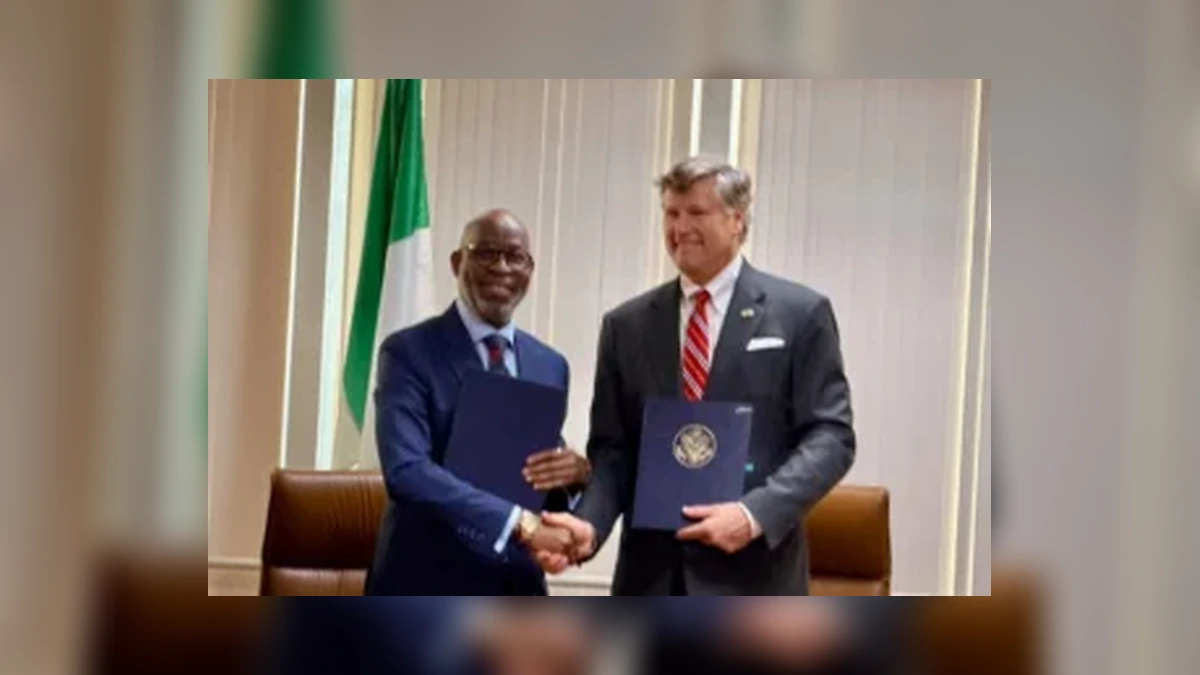
The supplied NAN feature reports that Nigeria and the United States recently signed a Critical Minerals Framework Agreement in New York, involving the Ministry of Solid Minerals Development and the U.S. government.
According to the report, the framework is intended to encourage cooperation in geological data, exploration, mineral development and processing, infrastructure and technical capacity, with greater emphasis on retaining value within Nigeria.
Such cooperation fits into a wider international effort to establish more diversified and resilient critical-mineral supply chains.
Mining Safety Remains a Major Concern
Despite the policy initiatives and investment drive, serious safety problems continue to expose weaknesses within the industry.
One of the most severe incidents occurred in February 2026 in Kampani Zurak, Wase Local Government Area of Plateau State, where 37 people died after exposure to toxic gases at a mining site and 26 others were hospitalised, according to police.
The incident prompted the closure of the site and an investigation by government authorities. A subsequent Federal Government investigative panel was inaugurated to examine the circumstances surrounding the deaths.
The tragedy renewed calls for stronger enforcement of safety regulations, particularly around ventilation, protective equipment, mine planning and the closure of abandoned mining pits.
Experts Call for Greater Professional Oversight
Prof. Akinade Olatunji, immediate past President of the Nigerian Mining and Geosciences Society, argued that professionals with appropriate technical expertise should play a stronger role in managing the sector.
According to him, mining is a knowledge-driven industry and should not be treated as an area open to people without the necessary training and experience.
He also called for greater investment in geological data collection, saying reliable information is essential for responsible exploration and investment.
Olatunji further urged the government to demonstrate political will in enforcing mining laws without favour and proposed the creation of an expert monitoring team to track compliance with value-addition requirements.
Calls for Safer Mining Operations
The expert also advocated stricter enforcement of requirements covering mine planning, ventilation and the use of protective equipment.
He said abandoned pits should be safely closed to prevent further deaths and protect surrounding communities.
These concerns have become particularly significant following repeated mining accidents and fatalities, reinforcing the argument that increased production must be accompanied by stronger environmental and occupational safeguards.
Miners Seek Inclusive Policy Implementation
Dele Aynakale, National President of the Miners Association of Nigeria, also called for a more inclusive approach to policy reforms.
He urged the Federal Government to strengthen implementation while encouraging mining operators to adopt modern practices, embrace innovation and comply with existing regulations.
The message from stakeholders is therefore centred not only on attracting more investment but also on ensuring that the growth of the industry produces safer working conditions, greater domestic processing, stronger government revenue and tangible benefits for mining communities.
Nigeria’s Mining Ambition Faces Its Biggest Test
Nigeria has made a series of moves to reposition solid minerals, from strengthening enforcement and releasing dormant titles to promoting local processing, improving geological information and seeking international investment.
The sector’s growing revenue figures and increased investor attention suggest that the industry is receiving greater institutional focus than in previous years.
The more difficult challenge, however, is converting policy announcements and investment projects into a mining industry that consistently delivers value while protecting workers, communities and the environment.
As Nigeria marks another Independence anniversary, the solid minerals sector therefore remains both an economic opportunity and a test of the country’s ability to enforce its own rules.
Credit: Martha Agas, News Agency of Nigeria (NAN).

