
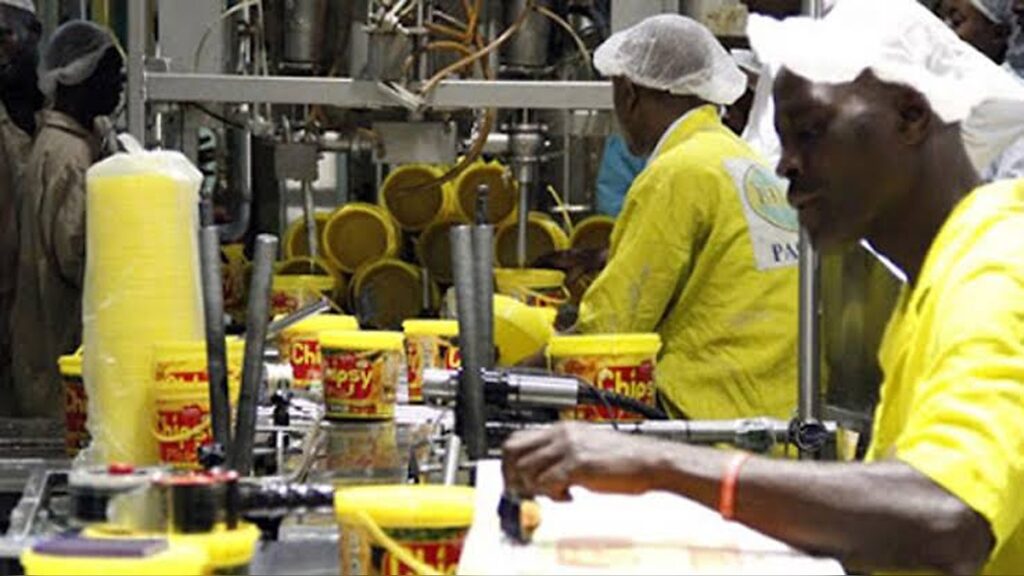
Nigeria risks missing out on major opportunities under the African Continental Free Trade Area (AfCFTA) unless it urgently addresses the high cost of manufacturing, according to the National Sugar Development Council (NSDC).
Speaking at the technical session of the 17th National Council on Industry, Trade and Investment (NCITI), NSDC Executive Secretary Kamar Bakrin said reducing production costs should become a national priority if Nigerian businesses are to compete effectively across Africa.
AfCFTA Presents Opportunity and Challenge
Bakrin said the country stands at a critical point where it must decide whether to position itself as a leading supplier to Africa’s population of more than 1.4 billion people or allow other nations with lower production costs to dominate the market.
He stressed that the success of Nigerian manufacturers under the free trade agreement will depend largely on how competitive they become in terms of pricing and efficiency.
High Energy Costs Continue to Burden Manufacturers
One of the biggest obstacles facing industries, Bakrin said, is the high cost of electricity.
He noted that Nigerian manufacturers pay between 15 and 30 cents per kilowatt-hour, significantly more than businesses in countries such as Vietnam and China, where electricity costs are considerably lower.
According to him, unreliable public power has forced manufacturers to spend approximately ₦1.34 trillion on self-generated electricity over the past year.
Bakrin remarked that many factories have effectively become private power producers simply to keep their operations running.
Expensive Loans and Poor Logistics Add Pressure
Beyond electricity, he identified access to affordable financing as another major challenge.
Manufacturers in Nigeria typically borrow at interest rates ranging from 27% to 35%, compared with far lower rates available to businesses in competing manufacturing economies.
He also pointed to weaknesses in transport and logistics, noting that Nigeria ranks 88th out of 139 countries on the World Bank’s Logistics Performance Index, placing it behind several nations competing for manufacturing investment.




Manufacturing Sector Still Underperforming
Bakrin observed that manufacturing contributes only 8% to Nigeria’s Gross Domestic Product, while factory capacity utilization has fallen to 57.7%.
Rather than blaming weak consumer demand, he argued that the country’s biggest challenge lies in the high cost of producing goods.
According to him, tackling those costs would significantly improve the competitiveness of locally manufactured products.
Economic Reforms Showing Positive Signs
Despite the challenges, Bakrin acknowledged that recent macroeconomic reforms have begun to improve the overall business environment.
He cited easing inflation and foreign reserves reaching $51 billion as encouraging developments but cautioned that international manufacturers seeking new production locations would not wait indefinitely for Nigeria to become more competitive.
He warned that unless reforms accelerate, Nigeria could become a larger destination for imported goods instead of expanding its own exports across Africa.
Urea Industry Held Up as Success Story
Bakrin highlighted Nigeria’s urea industry as an example of how targeted government policies can transform manufacturing.
He said production increased from 500,000 tonnes in 2005 to 6.5 million tonnes after supportive gas pricing policies were introduced, demonstrating how lower input costs can stimulate industrial growth and export expansion.
Recommendations to Improve Industrial Competitiveness
To strengthen the manufacturing sector, Bakrin proposed reducing industrial electricity tariffs to between 8 and 10 cents per kilowatt-hour and introducing single-digit lending rates for manufacturers.
He also called for faster port operations with cargo clearance completed in less than seven days, while setting a target of doubling worker productivity by 2030.
States Encouraged to Drive Industrial Growth
The NSDC chief urged every state government to establish at least one industrial cluster with dedicated electricity within the next year.
He further recommended harmonizing taxes and levies, introducing a State Industrial Competitiveness Index, and fully implementing Nigeria First procurement policies across all levels of government.
Bakrin added that government incentives—including tax breaks and subsidized electricity—should be linked to measurable performance to ensure businesses deliver expected results.
He also encouraged states to improve electricity markets, make industrial land more accessible, simplify regulatory charges, and better align technical education with the needs of modern industries.
Stronger Manufacturing Seen as Key to Economic Growth
Bakrin concluded that building a stronger manufacturing base would create more employment opportunities, reduce Nigeria’s dependence on imports, strengthen the naira, and help discourage the migration of young professionals seeking opportunities abroad.
He emphasized that the country’s industrial future will ultimately be determined by affordable electricity, cheaper financing, and more efficient logistics, warning that Nigeria has only a limited window to position itself as a manufacturing hub under AfCFTA.

