
Horse-drawn carriage rides in New York City could end by June 2028 under a proposed ban that would bring a 160-year-old tourist tradition to a close.
The proposal follows renewed safety concerns after a teenager died earlier this year after falling from a carriage in Central Park.
New York City Council speaker Julie Menin has said a bill proposing the ban is expected to be put to a vote next week.
The debate comes as other tourist attractions around the world face restrictions or disappear because of concerns about animal welfare, public safety and the treatment of local communities.
Indonesia Ends Elephant-Riding Attractions
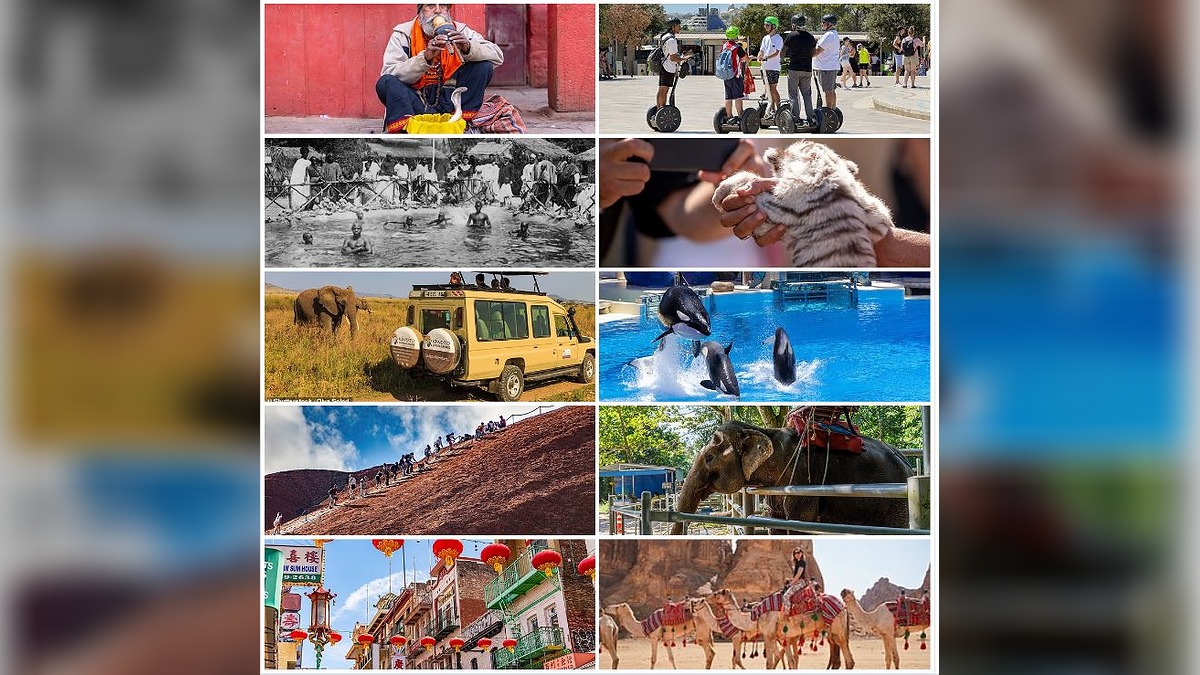
Elephant rides, once a familiar feature of wildlife tourism, have faced growing restrictions as authorities and animal welfare organisations encourage alternatives.
Indonesia has introduced a nationwide ban on elephant riding, citing animal welfare and ethical wildlife tourism concerns.
Mason Elephant Park in Bali, one of the last venues in the country offering the activity, stopped providing rides in January after receiving official warnings, according to World Animal Protection.
Tourism organisations are instead being encouraged to prioritise observing elephants, educating visitors and supporting conservation efforts.
Although elephant riding has not been prohibited worldwide, many major tour operators have stopped including it in their holiday packages.
Orca Performances Face Restrictions in California and Mexico
Orca shows have also come under pressure, with California and Mexico introducing restrictions on marine mammal entertainment.
California’s Orca Welfare and Safety Act prohibits captive orca breeding and circus-style performances. Any permitted performances must have an educational focus rather than rely on tricks for entertainment.
In Mexico, new rules came into force last year restricting performances involving marine mammals.
Dr Claudia Edwards, programmes director at Humane World for Animals Mexico, supported the development of the legislation and described its approval as a step towards ending the exploitation of whales, dolphins and other marine mammals for entertainment.
Orca shows continue in some parts of the world, but restrictions vary by country and jurisdiction.
Big Cat Encounters Banned in the United States
Public encounters with big cats have also faced restrictions in the United States.
The television series Tiger King renewed public attention on big cat ownership and animal welfare. The issue was also addressed through the Big Cat Public Safety Act, signed into law by President Joe Biden in December 2022.
Under the legislation, members of the public are prohibited from direct contact with big cats, including touching them for photographs or holding lion and tiger cubs.
The restrictions affect attractions that previously offered visitors close encounters with these animals.
Segway Sightseeing Tours Decline in Major Cities
Segway tours, once a common feature of city sightseeing, have become less widely available in some destinations because of safety concerns and restrictions on where the vehicles can operate.




Barcelona has prohibited Segways in parts of the old city and along seafront areas because of overcrowding.
In Prague, their use is restricted in pedestrian zones and historic tourist areas following safety complaints.
In the United Kingdom, Segways are not permitted on public roads or pavements, limiting their use for conventional city-centre tours.
Slum Tourism Faces Criticism and Restrictions
Tours that take visitors through impoverished communities have also faced criticism over how residents are represented and whether such experiences exploit local hardship.
In New York City, Real Bronx Tours ended in 2013 after authorities criticised the so-called “ghetto” experience as inaccurate and disrespectful.
San Francisco banned tours of Chinatown in 1909. The tours had included staged scenes featuring poverty, opium dens and gambling, performed for wealthy visitors.
Slum tourism has not been prohibited everywhere, but some destinations have imposed restrictions or discontinued particular tours amid concerns about dignity and cultural representation.
Climbing Australia’s Uluṟu Prohibited
Climbing Uluṟu, a sacred site for the Aṉangu people, Australia’s Indigenous traditional owners, was permanently prohibited in October 2019.
The climb had attracted visitors since the 1930s, although it was inconsistent with Tjukurpa, the Aṉangu people’s law and culture.
Visitors are now warned against attempting the climb, and penalties apply to those who breach the restrictions.
Sammy Wilson, former chairman of the Uluṟu-Kata Tjuṯa board of management, said the closure should be viewed as an occasion to celebrate the protection of the site’s cultural significance.
Trophy Hunting Changes the Shape of Safari Tourism
Safari tourism has changed considerably since the late 19th and early 20th centuries, when European colonists and aristocrats commonly participated in big-game trophy hunting.
The practice has since faced restrictions and bans in various countries, although hunting tourism continues in some locations.
Kenya prohibited recreational trophy hunting nationwide in 1977, while Costa Rica introduced a ban in 2012.
These measures have changed the activities available to visitors in those destinations, although regulations differ across countries.
Human Zoos and Colonial-Era Exhibitions Disappear
Human zoos, also known as ethnological exhibitions, displayed people from other countries as attractions for European audiences.
The practice appeared at events across Europe, including the British Empire Exhibition in the United Kingdom in 1924 and the World’s Fair in Brussels, Belgium, in 1958.
Some exhibitions presented fabricated villages featuring traditional-style homes, livestock and performances. These displays reinforced stereotypes and portrayed people from other cultures as spectacles for visitors.
The practice declined after the Second World War, and such exhibitions are now associated with a discredited period of colonial-era entertainment.
India’s Ban on Snake Charming
Snake charming was prohibited in India under the Wildlife Protection Act of 1972.
The ban affected communities, including people in the Bedia community, who had relied on the practice as a source of income.
Although the activity remains prohibited, snake charmers can still be found in some parts of India, despite the legal restrictions.
Camel Rides Could Face Greater Scrutiny
Camel rides remain available at tourist destinations, but concerns about animal treatment have prompted calls for changes to the practice.
At Egypt’s Pyramids of Giza, authorities have sought to replace camel rides with shuttle buses while increasing monitoring of the activity.
The future of camel-riding attractions remains uncertain, with criticism of animal welfare continuing.
More Restrictions Possible for Poverty-Focused Tours
Slum tourism and other experiences centred on viewing poverty could also face further restrictions.
Concerns have been raised by critics and local communities in destinations including South Africa, Mumbai and Rio de Janeiro over the way some tours present residents and their living conditions.
As New York considers the future of its horse-drawn carriages, these examples illustrate how tourist attractions in different parts of the world have been restricted, replaced or discontinued.
