
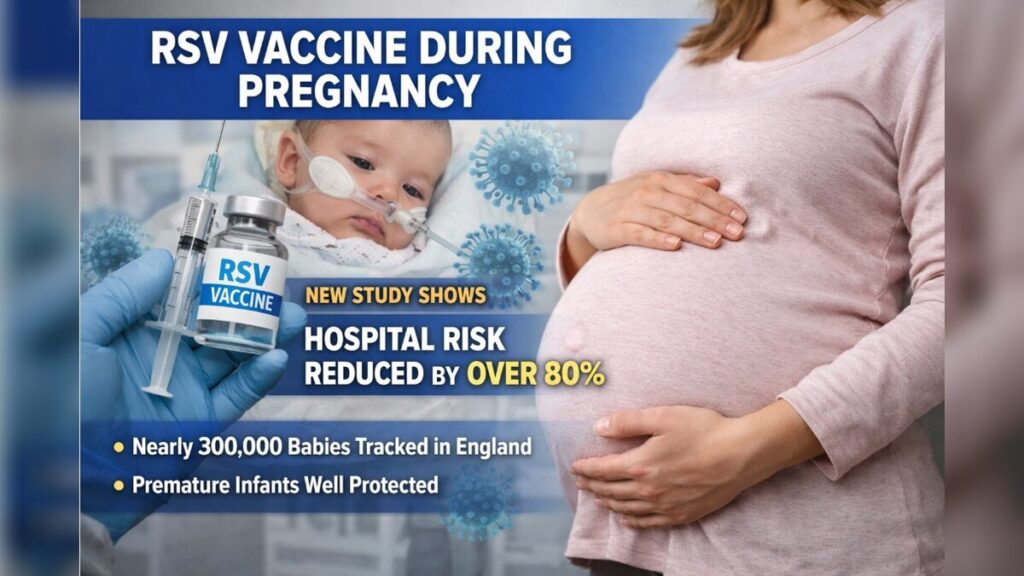
A major study from England has found that the RSV vaccine given during pregnancy is having a strong real-world impact, sharply reducing the number of babies needing hospital care after birth.
Health officials say the findings offer some of the clearest evidence yet that vaccinating expectant mothers can provide powerful protection for newborns, including babies born early.
Protection Tops 80 Percent for Newborns
According to the study, the maternal RSV vaccine reduced the risk of hospital admission in newborn babies by more than 80 percent when it was given at least two weeks before birth.
Researchers put the protection level at 81.3 percent, with a very tight statistical range that they say gives strong confidence in the result.
That means the benefits were not just noticeable, but consistently strong across the data reviewed.
Best Results Seen When Vaccine Is Given Earlier
The strongest protection was seen when mothers received the vaccine from week 28 of pregnancy or soon after.
Babies born at least four weeks after vaccination had close to 85 percent protection against being admitted to hospital with RSV-related chest infection.
Researchers said this timing matters because it gives the mother’s body more time to build antibodies and pass them to the baby before birth.
Even Late Pregnancy Vaccination Still Helps
Although earlier vaccination delivered the best results, the study also found that getting vaccinated later in pregnancy still provided meaningful protection.
Even when the vaccine was given just 10 to 13 days before delivery, hospital admissions were reduced by 50 percent.
That finding is important because it suggests there is still value in taking the vaccine even if it is not received at the earliest recommended point.
Premature Babies Also Benefit
One of the most significant conclusions from the study is that premature babies can also be well protected, as long as there is at least a two-week gap between vaccination and delivery.
That matters because preterm infants are among the most vulnerable to severe RSV infection and often face higher risks of breathing complications and hospital care.
Health officials say this makes timely vaccination especially important for pregnant women who may deliver early.
Researchers Tracked Nearly 300,000 Babies
The study followed almost 300,000 babies born in England between September 2024 and March 2025, covering around 90 percent of all births during that period.




Using electronic health records, researchers examined how well the vaccine performed in preventing RSV-related hospital admissions during the programme’s first year.
More than 4,500 hospitalisations were recorded in the group, and officials said the vast majority occurred in babies whose mothers had not been vaccinated.
Largest Real-World Study of Its Kind
UK health officials believe this is the largest real-world study anywhere in the world looking at how maternal RSV vaccination prevents infants from being hospitalized.
That gives the findings extra weight, especially because they move beyond smaller clinical trial conditions and reflect how the programme is performing in everyday healthcare settings.
Officials also said the study was far larger than earlier trial data and provides stronger confirmation of the vaccine’s effect.
Why RSV Is Such a Serious Threat for Babies
Respiratory syncytial virus, or RSV, is a major cause of bronchiolitis in babies, leading to infection and inflammation in the small airways of the lungs.
It is one of the main reasons infants end up in hospital with breathing problems, particularly in the earliest months of life.
Health experts say many parents do not know in advance whether their baby will develop a mild illness or become severely unwell, which is why prevention matters so much.
Uptake of the Vaccine Continues to Rise
Officials said vaccine uptake in England has been improving over time. During the study period, uptake reached 55 percent, and the latest figures show that it rose to 64.1 percent among women who gave birth in November 2025.
That upward trend suggests more pregnant women are taking up the offer, which could further reduce hospital admissions if coverage continues to expand.
Health Officials Stress the Importance of Timely Offers
Researchers and public health experts said midwives and other healthcare workers need to keep offering the vaccine on time, especially early in the third trimester.
They argue that getting the timing right is key to protecting both full-term and premature babies when they are at their most vulnerable.
The message from health officials is that the programme works best when the vaccine is offered promptly and taken up quickly.
Impact and Consequences
These findings could have a major effect on how pregnancy vaccination is viewed by both families and healthcare providers.
Strong real-world evidence that the vaccine cuts baby hospital admissions by more than 80 percent is likely to boost confidence in the programme and encourage wider uptake.
It could also ease pressure on hospitals during RSV season by reducing the number of infants needing treatment for serious chest infections.
For vulnerable babies, especially those born preterm, the consequences may be even more significant because early protection could prevent severe illness at a critical stage of life.
What’s next?
The next step will likely be a continued push to increase vaccine uptake and make sure pregnant women are offered the jab at the right time in pregnancy.
Health officials are also expected to keep monitoring the programme as more data becomes available from future RSV seasons.
With stronger evidence now emerging from real-world use, the focus may shift toward improving awareness and making timely vaccination a more routine part of maternity care.
Summary
A major study in England has found that the RSV vaccine given during pregnancy is highly effective at protecting newborn babies from hospital admission.
Researchers said protection was more than 80 percent when the vaccine was given at least two weeks before birth and rose to nearly 85 percent when there was a four-week gap.
The findings also show premature babies can benefit, making timely vaccination an important tool in protecting some of the most vulnerable infants.
Bulleted Takeaways:
- A new England study says the maternal RSV vaccine cuts baby hospital admissions by more than 80 percent.
- Protection reached 81.3 percent when the vaccine was given at least two weeks before birth.
- Babies had nearly 85 percent protection when vaccination happened at least four weeks before delivery.
- Even vaccination 10 to 13 days before birth still reduced admissions by 50 percent.
- Premature babies were also well protected if vaccination occurred at least two weeks before birth.
- The study tracked nearly 300,000 babies born between September 2024 and March 2025.
- More than 4,500 hospital admissions were recorded, mostly among babies of unvaccinated mothers.
- Officials say this is believed to be the largest real-world study of maternal RSV vaccination.
- Vaccine uptake in England rose from 55 percent during the study period to 64.1 percent in later data.
- Health experts say getting vaccinated from week 28 of pregnancy or soon after offers the best protection.
