
Mexico has long presented a striking contrast to the world: a place of breathtaking coastlines on both the Pacific and Atlantic, where luxury tourism thrives alongside deep economic inequality.
It is a nation celebrated for its vibrant music and cultural energy, yet repeatedly shadowed by violence tied to powerful criminal networks.
As Mexico once again prepares to host the FIFA World Cup for a historic third time, that contradiction remains painfully visible.
Even as global attention turns toward football, thousands of families continue to search for loved ones who have disappeared in the country’s ongoing crisis of kidnappings and organized crime.
Political Unrest Before the World Stage Arrives
The uneasy relationship between Mexico’s international sporting ambitions and its internal turmoil stretches back decades.
Long before the 1970 World Cup, tensions had already escalated around the 1968 Olympic Games in Mexico City, with widespread public anger over state spending priorities and political repression.
In the months leading up to the Olympics, student-led protests grew into a broader movement involving large sections of society.
Demonstrators accused the government of diverting enormous public funds into hosting a global spectacle while poverty and inequality deepened across the country.
The Tlatelolco Tragedy and Its Lasting Shadow
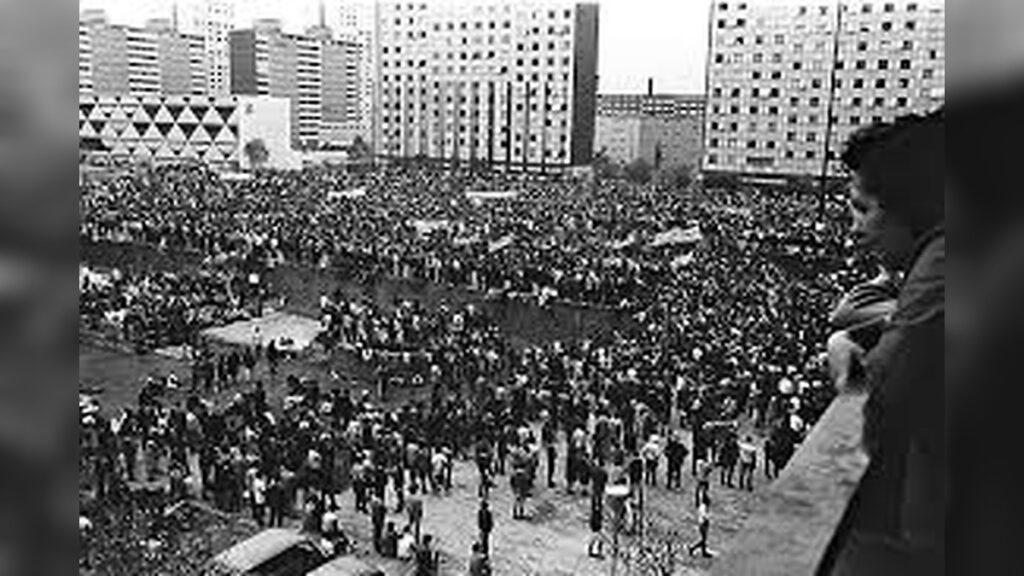
On October 2, 1968, the unrest reached a devastating climax in the Plaza of the Three Cultures in Tlatelolco.
Under orders from President Gustavo Díaz Ordaz, military and police forces moved to suppress the gathering of students and civilians.
What followed became one of the darkest episodes in modern Mexican history.
Gunfire erupted in the square, leaving civilians, journalists, and students caught in the chaos.
Official accounts initially minimized the death toll, but later testimonies and evidence suggested far higher casualties than first reported, along with hundreds of injuries.
The aftermath shattered the student movement and left a deep scar on the nation’s political consciousness that continues to be remembered each year by families and survivors.
Olympic Celebration Overshadowed by Global Protest
Just days after the violence in Tlatelolco, the 1968 Olympic Games opened in Mexico City under heavy international scrutiny.
While the government projected an image of unity and celebration, political tensions remained close to the surface.
The Games also became a platform for protest beyond Mexico.




One of the most iconic moments came during the 200-meter medal ceremony, when American athletes Tommie Smith and John Carlos raised gloved fists in a silent protest against racial injustice and economic inequality in the United States.
Amid the political turbulence, extraordinary sporting achievements still emerged, including Bob Beamon’s record-breaking long jump, which stunned the athletic world and became one of the defining moments of the Games.
England’s Turbulent Road to the 1970 World Cup
Two years later, attention shifted to the 1970 World Cup, where England arrived as defending champions but faced unexpected turmoil before the tournament even began.
During a pre-tournament tour in Colombia, captain Bobby Moore was accused of stealing a bracelet from a hotel shop in Bogotá.
The allegation led to his arrest and placed him under house restrictions, preventing him from traveling with the squad and triggering international headlines.
Despite the controversy, Moore was later released and allowed to join the team in Mexico shortly before England’s opening match, restoring stability to the squad at a critical moment.
From Setback to Survival Against the World’s Best
England’s campaign began with a composed victory over Romania, with Moore delivering a steady and assured performance upon his return.
The team then faced Brazil in one of the tournament’s most anticipated matches.
Brazil, led by Pelé, tested England relentlessly.
Goalkeeper Gordon Banks produced one of the most famous saves in football history to deny Pelé a certain goal, preserving England’s hopes in a match ultimately decided by a single Brazilian strike from Jairzinho.
The iconic image of Moore exchanging shirts with Pelé afterward became one of the tournament’s lasting symbols of respect between rivals.
Quarter-Final Collapse and Growing Controversy
England’s quarter-final against West Germany became one of the most debated matches in the nation’s football history.
Leading 2–0, England appeared in control before a dramatic turnaround saw Germany level the score.
A controversial tactical substitution, removing Bobby Charlton, shifted the momentum further.
England eventually lost 3–2 after extra time, ending their defense of the title in heartbreak.
Adding to the turmoil, goalkeeper Gordon Banks was unexpectedly ruled out due to illness before the match, forcing a change in goal that would later become part of intense speculation and conspiracy theories.
His replacement, Peter Bonetti, conceded three goals as England’s lead collapsed.
Rumors, Speculation, and the Weight of Defeat
In the aftermath of England’s exit, theories circulated about possible foul play, illness, and even psychological disruption affecting key players.
Some suggested Banks had been affected by food-related illness, while others speculated more elaborate interference.
Bonetti, meanwhile, bore much of the criticism for the defeat, despite later explanations pointing to tactical decisions and defensive breakdowns rather than individual fault.
Away from the pitch, Moore’s earlier legal ordeal continued to cast a long shadow over the team’s journey, though he remained a stabilizing presence throughout the tournament.
Brazil’s Triumph and Mexico’s Reckoning
As England exited, Brazil advanced, eventually defeating Italy in a dazzling final that confirmed their place among football’s greatest teams.
Pelé lifted the trophy, sealing a legendary era for Brazilian football.
For Mexico, however, the tournament also reopened reflections on political history and unresolved national trauma.
The legacy of 1968 still lingered beneath the surface of international celebration, reminding the world that the country’s global sporting achievements were inseparable from its turbulent past.

