
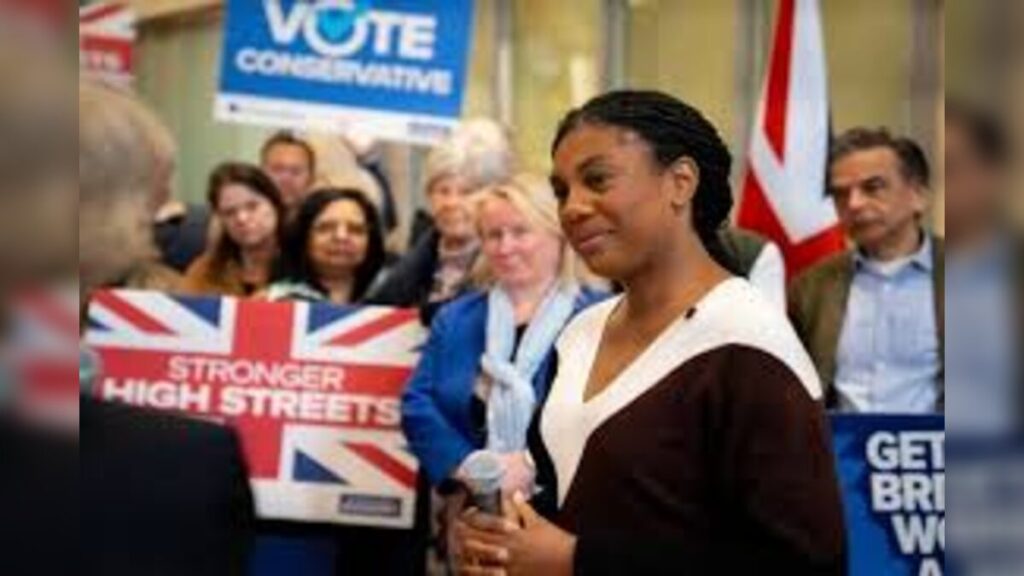
In a political shake-up that has caught many by surprise, Kemi Badenoch has emerged as the most popular party leader in the United Kingdom, according to a recent opinion poll reported by the Daily Mail.
Born in London and spending part of her early life in Nigeria, Badenoch now leads the Conservative Party and has seen her public approval climb dramatically over the past several months.
The survey, conducted by More in Common, recorded a net approval rating of minus nine for Badenoch—a remarkable leap from minus 32 before the Conservative Party conference in October last year.
The results place her ahead of prominent figures such as Nigel Farage at minus 16 and Ed Davey at minus 11, signaling a growing public recognition of her profile and approach.
Why Badenoch’s Popularity Is Climbing
Political analysts suggest that Badenoch’s rising approval is tied to her increasing visibility and vocal presence in national debates.
Luke Tryl, UK Director of More in Common, noted that whereas many focus groups last summer showed little awareness of Badenoch, she now comes up spontaneously in discussions.
Even people who would not traditionally vote Conservative have reportedly expressed admiration for her directness and conviction.
“This shift in recognition highlights the impact of her strategic political interventions and clear messaging,” Tryl added.
“Her approach resonates beyond her core party supporters.”
Where Other Leaders Stand
Despite Badenoch’s personal gains, the poll paints a stark contrast for other political figures.




Keir Starmer languishes at the bottom of the leader ratings with a net score of minus 42, trailing even Zack Polanski, who recorded minus 16.
This demonstrates a persistent challenge for opposition leaders to connect with the wider electorate.
Interestingly, while Badenoch’s individual approval is climbing, the Conservative Party has not yet experienced a corresponding surge in overall support, signaling a complex political landscape where personal popularity does not automatically translate into party momentum.
Impact and Consequences
Badenoch’s rising profile could reshape leadership dynamics within the UK Conservative Party.
Her visibility may influence policy direction, internal party debates, and public expectations ahead of upcoming elections.
On a broader scale, her appeal to non-Conservative voters could signal shifting allegiances and a new openness among the electorate to leaders who break traditional party molds.
For opposition parties, these results may serve as a warning.
Popularity among party leaders can significantly shape media narratives and voter sentiment, meaning Labour and other parties may need to recalibrate their strategies if they hope to compete effectively.
What’s Next?
Political commentators will now be watching whether Badenoch can maintain her momentum and translate personal approval into party gains.
Upcoming debates, media appearances, and policy announcements will be critical in sustaining visibility and voter trust.
Meanwhile, rival leaders like Starmer and Farage face the challenge of reversing low approval trends while appealing to a broader base.
Summary
Kemi Badenoch has surged to the top of UK political leader rankings with a net approval rating of minus nine, surpassing established figures such as Nigel Farage and Ed Davey.
Her rise is attributed to increased visibility, strategic interventions, and an image of straightforwardness that appeals to both Conservative and non-Conservative voters.
While her popularity is evident, the Conservative Party’s overall support has not yet mirrored this upward trend, leaving questions about how personal ratings influence broader electoral outcomes.
Bulleted Takeaways
- Kemi Badenoch leads UK party leader popularity with a net approval of minus nine
- Her rating improved significantly from minus 32 before last October’s Conservative conference
- Nigel Farage and Ed Davey trail at minus 16 and minus 11 respectively
- Opposition leader Keir Starmer scores the lowest at minus 42
- Badenoch’s visibility and directness appeal even to some non-Conservative voters
- Despite personal popularity, the Conservative Party’s overall support remains unchanged
- Analysts suggest her rise could influence party strategy, public perception, and upcoming elections

