
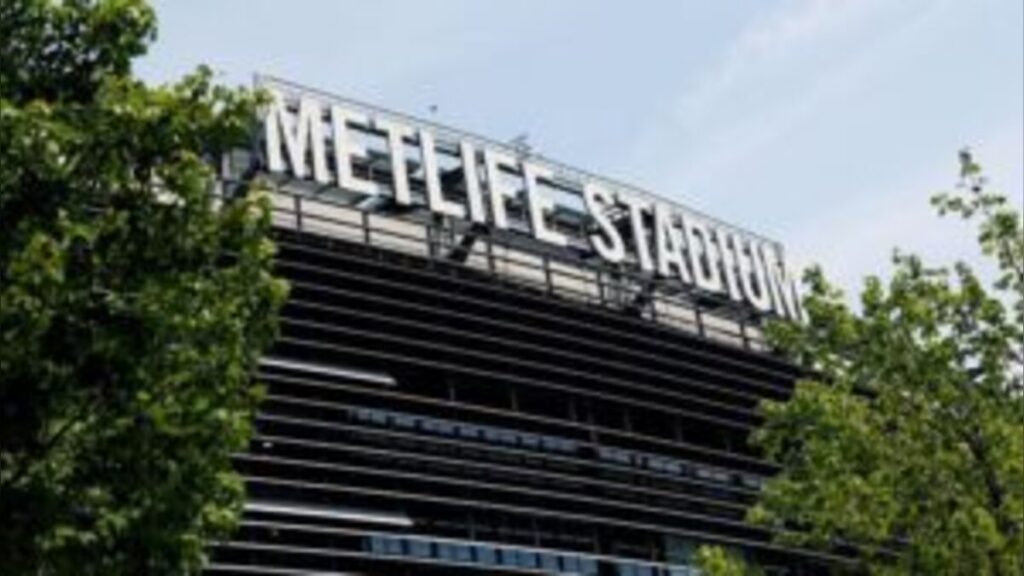
A fresh dispute has broken out in the United States over how fans will get to matches during the upcoming FIFA World Cup, with New Jersey Governor Mikie Sherrill openly accusing football’s governing body of shifting transport costs onto the public.
The controversy centers on rising travel prices for supporters heading to MetLife Stadium, one of the tournament’s key venues.
The stadium, officially branded New York/New Jersey Stadium for the event under FIFA naming rules, is set to host eight matches, including an England group game and the final on 19 July.
Eye-Watering Ticket Hikes for Fans Traveling by Train
At the heart of the backlash is the proposed cost of travel from New York’s Penn Station to the stadium in New Jersey.
Normally priced at around $12.90 for a return trip, fares are expected to jump to over $100 during match days.
That’s nearly a sevenfold increase for a 30-minute journey, with no discounted rates planned for children or senior citizens.
The move affects fans traveling via NJ Transit, which is now preparing for a major surge in demand and operational pressure during the tournament.
Political Pressure Builds Over Who Pays the Bill
Governor Sherrill has argued that the financial burden should not fall on local commuters or taxpayers.
She claims that NJ Transit is facing a $48 million transport bill linked to the tournament, while FIFA is generating billions in revenue from ticket sales and global broadcasting rights.
Her position is blunt: if FIFA benefits financially from the tournament, it should also help subsidize fan transportation.
Otherwise, she warns, New Jersey residents will be left covering long-term costs after the event ends.
FIFA Pushes Back on Subsidy Expectations
FIFA has responded by expressing surprise at the criticism, insisting that transport arrangements are meant to be provided “at cost” rather than free of charge.
According to the organization, earlier agreements requiring free travel were adjusted in 2023 due to financial strain on host cities.
FIFA also argues it has supported transport planning and helped advocate for federal funding to improve mobility during the tournament.




The governing body maintains that it is not responsible for directly funding public transit systems in host regions.
Beyond New Jersey: Rising Costs Across Host Cities
This issue is not limited to MetLife Stadium.
Similar price increases have been reported around other venues, including Gillette Stadium in Foxborough, Massachusetts, where train tickets and coach services have also surged significantly for match days.
Parking fees are another major talking point.
At MetLife, a single parking space could cost around $225, while Foxborough is reportedly charging about $175 per car.
These figures have added to concerns that attending matches may become prohibitively expensive for many fans.
Other Known Context Around Mega-Events and Transport Costs
Large international sporting events often place heavy pressure on local infrastructure.
Cities hosting tournaments like the FIFA World Cup or the Olympics typically upgrade transit systems, increase service frequency, and introduce special pricing models.
However, critics argue that without subsidies, such costs can discourage attendance and shift the financial burden onto everyday commuters who may not even be attending matches.
Similar debates have appeared in past tournaments in Europe and Asia, where transport pricing during peak events became a political issue.
Impact and Consequences
The immediate impact is a growing political and public relations dispute between New Jersey officials and FIFA.
If unresolved, it could affect fan experience, particularly for visiting supporters from England, Scotland, and other nations attending matches in the region.
There is also a broader economic concern: high travel and parking costs may reduce attendance from local fans, shifting stadium crowds toward wealthier international visitors.
For local transit agencies like NJ Transit, the pressure to manage costs while maintaining service quality is significant.
Politically, the disagreement could influence how future host city agreements are negotiated, especially around infrastructure funding and public transport obligations.
What’s Next?
NJ Transit is expected to officially confirm final pricing soon, which will likely determine how intense the backlash becomes.
If fares remain at projected levels, pressure may grow on federal authorities or private organizers to step in with subsidies.
FIFA, meanwhile, may need to further clarify its role in transport funding as World Cup preparations continue.
Any adjustment could set a precedent for how future tournaments handle public infrastructure costs in host cities.
Summary
A political and financial dispute has erupted over sharply increased transport costs for the FIFA World Cup in New Jersey.
While FIFA insists travel should be provided at cost and not fully subsidized, local officials argue that fans and taxpayers are being unfairly burdened.
With fares, parking, and public transport pricing all under scrutiny, the debate highlights the growing tension between global sporting events and local infrastructure realities.
Bulleted Takeaways
- NJ Governor Mikie Sherrill criticizes FIFA over rising fan transport costs
- MetLife Stadium will host eight World Cup matches, including the final
- Train fares may rise from $12.90 to over $100 during match days
- No discounted fares for children or seniors are planned
- NJ Transit faces an estimated $48 million tournament-related transport bill
- FIFA says transport should be provided “at cost,” not free
- Parking fees could reach $225 at MetLife Stadium
- Debate highlights broader issues of funding mega sporting events
- England and Scotland fans among those most affected by cost increases
- Final pricing confirmation from NJ Transit expected soon

