
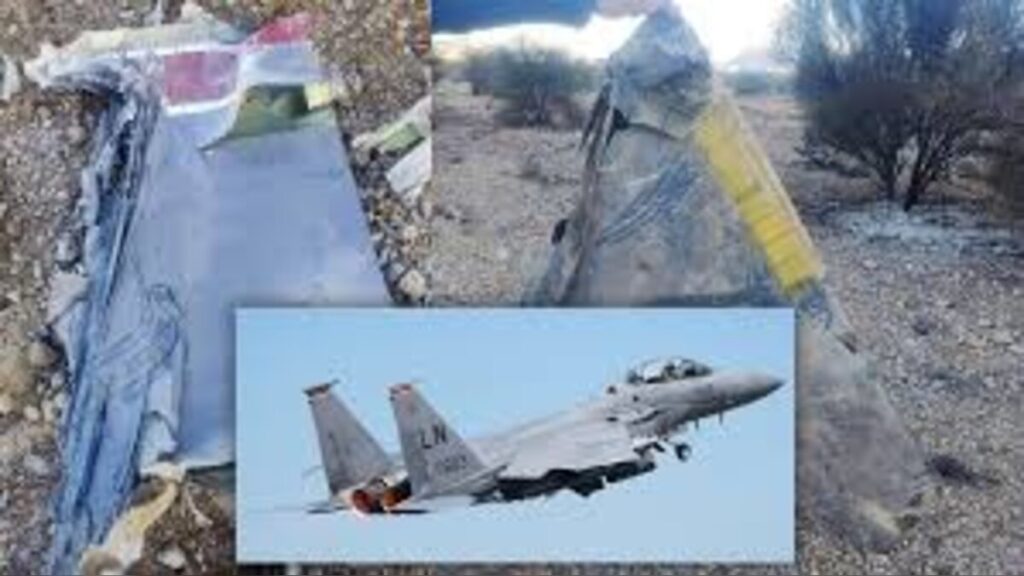
In a conflict that has been simmering for weeks, with U.S. and allied forces launching airstrikes into Iranian territory, something unusual — and unsettling — just happened.
For the first time in more than 20 years, the United States lost military aircraft to enemy fire.
Two American warplanes were brought down by Iranian defenses in combat, a rare and serious milestone that has grabbed global attention.
The incidents took place roughly five weeks after U.S. and Israeli forces began striking targets deep inside Iran.
Despite repeated claims from U.S. leadership that Iranian military capabilities had been heavily degraded, Tehran’s forces showed they still had the means to retaliate with lethal effect.
What Exactly Went Down
On April 3, Iranian air defenses succeeded in shooting down two U.S. aircraft — an F‑15E Strike Eagle fighter jet and an A‑10 Thunderbolt II attack aircraft.
The F‑15E went down over Iranian territory, and one of its two crew members was rescued; the other is still missing as rescue operations continue.
The A‑10 pilot ejected and was recovered safely, according to reports.
This marks the first time a U.S. fighter has been shot down in hostile airspace since an A‑10 was lost during the 2003 invasion of Iraq.




Back then, the U.S. faced different foes with varying anti‑aircraft capabilities — but in recent conflicts, losses to direct enemy fire have been rare.
Why This Is a Big Deal
The United States has prided itself on air superiority — the idea that its aircraft can operate with relative safety even in heavily contested spaces.
But Iran’s ability to strike back so effectively, even after weeks of intense bombing, upends some assumptions about how one‑sided modern aerial warfare can be.
Experts suggest that the Iranian forces likely used portable, shoulder‑fired missiles or surface‑to‑air systems to hit the jets — simple, inexpensive weapons that can be incredibly effective against aircraft flying lower or in certain tactical situations.
Despite Tehran’s air defenses being battered, they remain a tangible risk to U.S. aircraft that have to fly at lower altitudes or into challenging environments.
More Than Just Machines
These aren’t just statistics about metal and engines.
Behind every aircraft are human crews: pilots and weapons officers trained for intense combat scenarios and for what to do if their plane is hit.
The rescue of service members after such incidents is dangerous and complex, involving helicopters, drones, and ground teams entering hostile areas to secure downed aircrew.
With one crew member still missing from the F‑15, U.S. forces are doubling down on search and rescue operations — efforts made harder and riskier by the hostile environment.
Impact and Consequences
The implications of these shoot‑downs are broad and deep:
- Military Strategy: The loss forces U.S. commanders to rethink how they conduct air operations, especially when flying at altitudes or in zones where air defenses — even degraded ones — can still strike effectively.
- Domestic Politics: Back home in the United States, such losses can shift public sentiment. Casualties and high‑profile equipment losses often reignite debates about the direction, costs, and justification of ongoing military campaigns.
- Global Perceptions: Allies and adversaries alike take notice when advanced aircraft are lost. It can embolden Tehran’s backers or complicate diplomatic efforts to de‑escalate tensions. Meanwhile, other nations may reassess their own defense postures in light of what happened.
What’s Next?
As the war continues, several things are likely to unfold:
- Search and Rescue Intensifies: Efforts to find the missing F‑15 crew member will remain a priority and could shape short‑term tactical decisions.
- Tactical Adjustments: U.S. forces may alter flight patterns, use higher altitudes when possible, or increase electronic countermeasures to lessen the risk of further shoot‑downs.
- Political Pressure Builds: Lawmakers, activists, and voters might push for renewed negotiations or calls for a ceasefire as the costs of the conflict — in lives, money, and geopolitical stability — become more visible.
- Diplomatic Moves: Behind the scenes, mediators and regional players may intensify efforts to broker talks, though progress remains uncertain amid continuing hostilities.
Summary
In the midst of the ongoing U.S.‑Iran war, Iranian forces have achieved something that hasn’t happened to America’s military in over 20 years: shooting down U.S. combat aircraft.
Two warplanes — an F‑15E and an A‑10 — were brought down in combat, underscoring that even after weeks of airstrikes, Iranian defenses remain capable of striking back.
These losses carry strategic, political, and human consequences as the conflict continues to evolve.
Bulleted Takeaways
- For the first time in over two decades, U.S. aircraft were downed by enemy fire in combat operations.
- An F‑15E fighter jet and an A‑10 attack aircraft were shot down during the Iran war.
- One crew member from the F‑15 was rescued; another is still missing.
- The incidents challenge assumptions of unchallenged U.S. air dominance.
- Tactical and political shifts are expected as the conflict grinds on.

