
Germany has signaled that it will oppose any attempt by the European Union to impose tougher trade restrictions or a boycott targeting products from Jewish settlements in Judea and Samaria unless every EU member state agrees.
The position, announced ahead of a meeting of EU foreign ministers in Brussels, creates another major obstacle for countries seeking stronger action against Israel.
Several governments, including Spain, Belgium and Ireland, have been pressing the bloc to take firmer measures over Israeli policies in Judea, Samaria and Gaza.
Their efforts are expected to dominate discussions during the ministerial gathering.
Unanimous Approval Becomes Key Sticking Point
Berlin argues that any move affecting trade with Israeli settlements falls under the EU’s foreign policy framework rather than ordinary trade policy.
Under EU rules, foreign policy decisions require unanimous backing from all 27 member states, making it much harder for sanctions or trade restrictions to move forward.
If the proposal were treated purely as a trade matter, it could instead pass with a qualified majority, requiring support from at least 15 member states representing more than 65% of the EU’s population.
Germany’s interpretation therefore significantly raises the threshold for approval.
Campaign for Stronger Measures Against Israel Continues
Supporters of stronger action have spent months urging the European Union to increase pressure on Israel. Earlier calls to suspend the EU-Israel Association Agreement or broadly reduce trade ties failed to gain enough backing, despite growing criticism from several member states.




The European Union remains Israel’s largest trading partner, making any change to commercial relations highly significant.
Having failed to secure broader economic penalties, campaigners are now focusing specifically on restricting trade involving settlement products.
Previous Sanctions Targeted Individuals and Organizations
Although broader economic measures have stalled, EU member states have already agreed on sanctions against violent settlers, leaders of certain organizations operating in the territories, and groups including Emunah and Regavim.
The latest proposal would represent a more direct economic response by targeting goods linked to settlements, marking a notable shift in the bloc’s approach toward Israel if adopted.
European Commission Faces Internal Differences
The debate has also exposed divisions within the European Commission.
Commission President Ursula von der Leyen has generally maintained a position viewed as more supportive of Israel, reflecting Germany’s approach to the conflict.
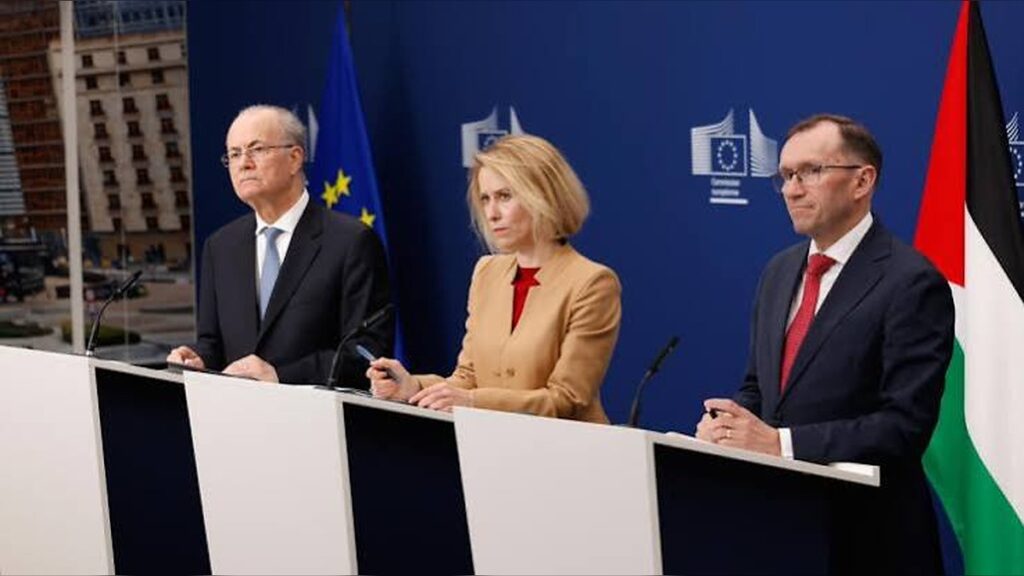
Meanwhile, the EU’s High Representative for Foreign Affairs, Kaja Kallas, has argued that the proposed measures should be considered trade policy, meaning they could potentially be approved through a qualified majority vote instead of requiring unanimous consent.
The differing legal interpretations have added another layer of complexity to the already sensitive political debate.
Germany Reaffirms Support for Continued Engagement
German Foreign Minister Johann Wadephul reiterated Berlin’s position that maintaining dialogue with Israel remains essential, even as Germany continues to oppose Israeli settlement expansion.
During a recent visit to Israel—his tenth since taking office last year—Wadephul emphasized that disagreements over settlements should not lead to extreme punitive measures or a breakdown in diplomatic engagement.
His comments reinforce Germany’s long-standing approach of balancing criticism of settlement policies with continued support for maintaining close relations with Israel.
Individual Countries Continue Pursuing Their Own Policies
While Germany’s stance may prevent EU-wide action, several European countries are advancing their own national measures.
Ireland is moving ahead with legislation aimed at banning trade involving settlement products, while Spain and the Netherlands have already introduced similar restrictions.
Outside the European Union, the United Kingdom is also examining the possibility of imposing its own trade embargo on goods originating from Israeli settlements.
These national initiatives highlight how European governments remain divided over the best way to respond to the Israeli-Palestinian conflict, even as consensus at the EU level remains difficult to achieve.

