
The President of the Institution of Safety Professionals of Nigeria, Timothy Iwuagwu, has called for mandatory safety inspections and certification of tanker trucks before they are cleared from Nigerian ports.
Iwuagwu said imported tankers should undergo thorough assessments to determine whether their designs, construction and mechanical components meet required safety standards.
He urged vehicle inspection officers and road safety authorities to prioritise the mechanical condition and roadworthiness of trucks, rather than concentrating mainly on vehicle documents.
According to him, stricter regulatory oversight could help identify defects before tankers are allowed to transport highly flammable petroleum products on public roads.
Public Warned Against Approaching Fallen Fuel Tankers
Iwuagwu also warned Nigerians against approaching overturned fuel tankers or attempting to collect spilled petroleum products, stressing that such actions could expose people to potentially fatal explosions.
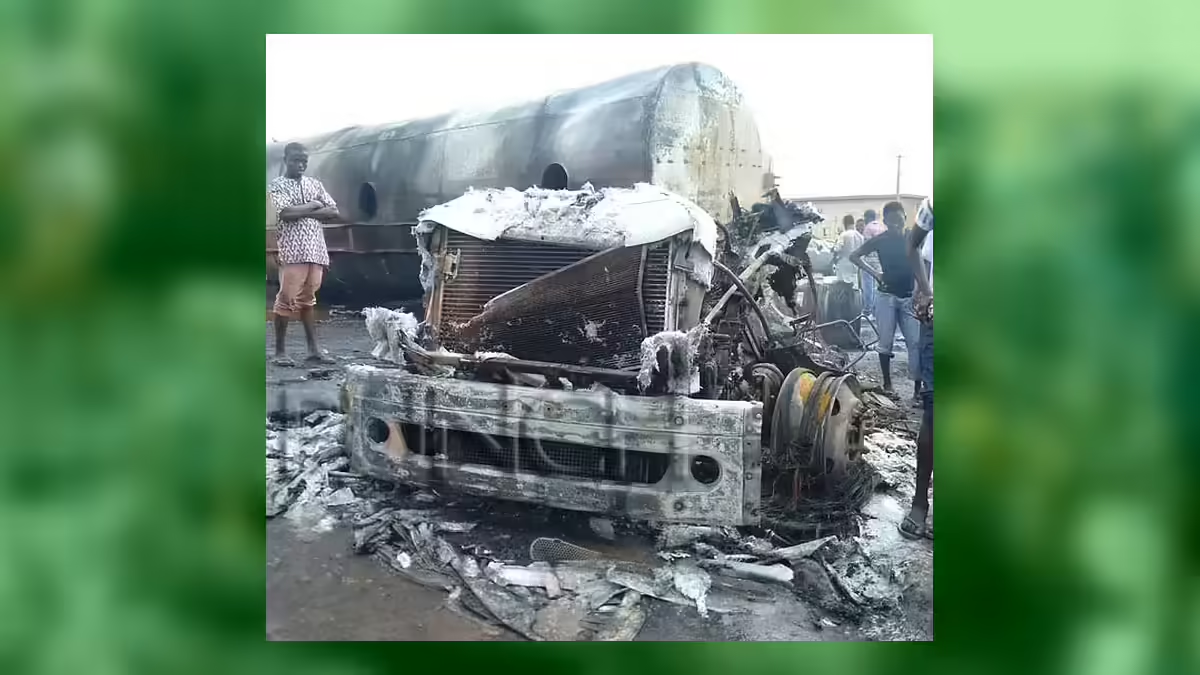
His comments followed a tanker explosion at Oluku Market in Benin City, Edo State, which left several people injured and damaged properties, including two buses, an Audi saloon car, a truck and parts of the market.
He advised people near tanker accidents to move away immediately and urged authorities to cordon off affected areas to prevent members of the public from approaching the scene.
“When a tanker truck that is laden with volatile organic material falls, the first thing, the first reaction by people within that environment, is to keep away,” he said.
Iwuagwu explained that spilled petrol releases highly flammable vapour that can ignite when exposed to a spark or electrostatic discharge.
He described attempts to scoop spilled fuel as particularly dangerous and called for stronger measures to keep people away from accident sites.
Faulty Designs and Mechanical Defects Among Causes
The safety expert identified several factors that could contribute to tanker accidents, including poor compliance with safety standards, defective truck designs, inadequate inspections, poor road conditions and mechanical faults.
He said safety considerations should be incorporated into the design and construction of vehicles and their components before they are put into operation.




Iwuagwu also questioned why some tanker trucks spill their contents after overturning, arguing that the incident should prompt investigators to examine the vehicle’s design and the integrity of its tank.
He said imported trucks should be inspected regardless of whether they originate from Europe, the United States or other countries.
According to him, some companies are reluctant to allow safety professionals to examine their vehicles, making it more difficult to identify potential risks before accidents occur.
Tyres, Suspension and Steering Systems Require Attention
Iwuagwu further highlighted the condition of tanker tyres, suspension systems and steering components as important areas for inspection.
He explained that tyres form the first point of contact between a moving vehicle and the road, helping to absorb shocks and maintain stability.
Uneven tyre pressure, he said, could create an imbalance that affects the vehicle’s movement and increases safety risks.
He added that the condition of the roads must also be considered when investigating tanker accidents, alongside the mechanical integrity of the vehicle.
The expert urged vehicle inspection officers and road safety officials to conduct more comprehensive assessments to ensure that tankers are fit to operate on public highways.
Safety Certification Proposed as Condition for Customs Clearance
Iwuagwu called for tanker trucks to be inspected and certified as safe before customs authorities approve their clearance from ports.
He said the country needed to address the entry of trucks with different designs and configurations without sufficient attention to their safety characteristics.
“These trucks must be inspected and certified safe enough before the custom can give or get it cleared from the port from wherever it came in,” he said.
He also stressed that inspection procedures should extend beyond paperwork to include assessments of the vehicle’s construction, mechanical systems and ability to transport petroleum products safely.
Rail Transport Recommended for Petroleum Products
As part of measures to reduce tanker-related accidents, Iwuagwu recommended transporting petroleum products by rail rather than relying heavily on road tankers.
He said moving fuel by train would reduce the number of tankers travelling on highways and limit the risks associated with transporting volatile materials through populated areas.
Iwuagwu also identified pipelines as another transportation option for petroleum products.
He noted that petrol leaks could release vapour capable of carrying a flame back to the source of the leak, creating serious dangers for people nearby.
The safety expert maintained that greater use of rail infrastructure, alongside stricter vehicle inspections and safety enforcement, should form part of efforts to reduce the risks associated with petroleum transportation in Nigeria.
