
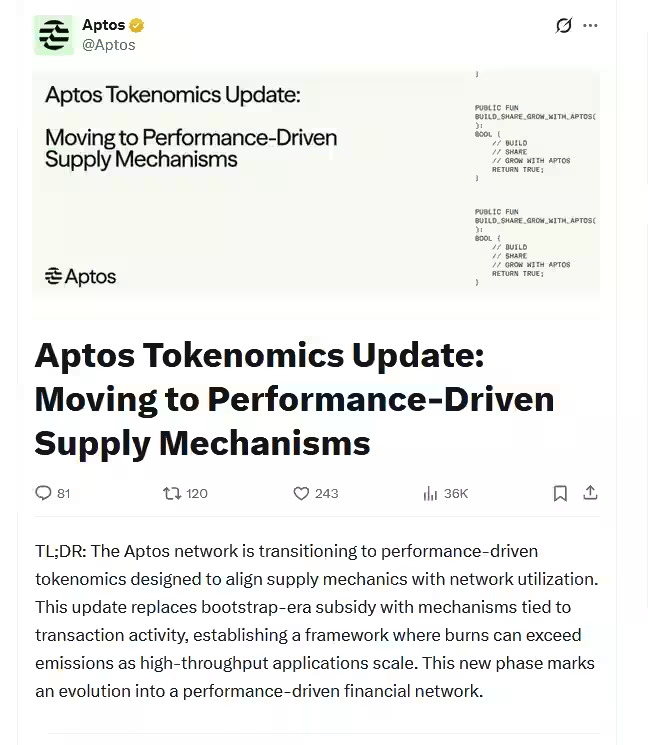
The Aptos Foundation is signaling a significant shift in how the APT token operates, putting forward proposals aimed at reducing token supply and making the network’s economics more performance-driven.
With a host of potential changes on the table, the move could reshape how developers, investors, and institutions interact with the blockchain.
Moving Away from Subsidy-Based Emissions
Currently, APT tokens are minted continuously to fund ecosystem activities like grants, staking rewards, and development incentives.
This subsidy-based model was essential in the network’s early “bootstrap” phase, but the foundation now argues that it’s no longer sustainable.
In a statement, the Aptos Foundation said the ecosystem is transitioning to a “performance-driven tokenomics” model.
Essentially, future token issuance would be tied to network activity rather than ongoing subsidies, with the potential for burns to outweigh new emissions as high-throughput applications scale.
“The update replaces bootstrap-era subsidy with mechanisms tied to transaction activity, establishing a framework where burns can exceed emissions as high-throughput applications scale,” the team explained.
Setting a Hard Cap and Reducing Staking Rewards
One of the boldest proposals is to introduce a hard cap of 2.1 billion APT tokens.
At present, there is no maximum supply, with roughly 1.196 billion tokens already in circulation.
By limiting total supply, the foundation hopes to make APT more deflationary over time.
Additionally, staking rewards would be cut from 5.19% to 2.6%, while incentivizing longer-term staking commitments.
This approach aims to reduce overall token emissions while rewarding participants who support the network over extended periods.
Increasing Gas Fees to Reduce Supply
The foundation is also considering a tenfold increase in gas fees.
While that might sound dramatic, the team argues the network remains extremely cost-efficient.
Even after the increase, stablecoin transfers would cost roughly $0.00014 — still among the lowest in the world.
Because gas fees are burned in APT, higher fees would actively contribute to deflationary pressure.




This change is seen as a method to align tokenomics with actual network usage rather than relying on continuous minting.
Permanent Locking and Token Burns
Another proposal involves permanently locking 210 million APT tokens for staking, which the foundation describes as “functionally equivalent to a token burn.”
Rewards generated from these tokens would fund foundation operations, ensuring a sustainable cycle of ecosystem support without adding to the circulating supply.
The foundation also plans to tighten its grants policy, requiring stricter key performance indicators (KPIs) before issuing tokens, and is exploring a buyback program or reserve mechanism to further balance supply and demand.
A Trend Across the Crypto Ecosystem
Aptos is not alone in pursuing these kinds of changes.
Earlier this year, the Optimism governance community approved a buyback program using 50% of Superchain revenue.
Uniswap implemented a major token burn in December, and PancakeSwap approved a supply-reduction proposal just last month.
These moves reflect a broader trend in crypto toward supply-conscious tokenomics.
Why Institutions Are Driving Change
The timing of these proposals coincides with increasing institutional involvement on the network.
Companies such as BlackRock, Franklin Templeton, and Apollo Global Management are reportedly deploying hundreds of millions on-chain.
The foundation argues that such scale requires sustainable tokenomics that tie issuance to actual network performance rather than open-ended emissions.
What’s Next?
The proposals will now move through Aptos governance, giving the community a chance to weigh in. If approved, we could see:
-
A hard cap implemented at 2.1 billion tokens
-
Reduced staking rewards with incentives for long-term commitments
-
A tenfold increase in gas fees
-
Permanent staking locks or token burns
-
Stricter grants KPIs and potential buyback programs
The timeline for approval and implementation is still uncertain, but these changes could take several months to fully roll out.
For APT holders and developers, the next few months will be crucial in shaping the network’s future.
Summary
The Aptos Foundation is proposing a comprehensive overhaul of APT token dynamics to introduce deflationary pressure and performance-driven mechanisms.
Key proposals include a hard 2.1 billion token cap, reduced staking rewards with long-term incentives, a tenfold increase in gas fees, permanent token staking locks, stricter grant issuance policies, and the exploration of a buyback program.
These changes aim to align token issuance with network activity, reduce emissions, and accommodate growing institutional participation from firms such as BlackRock, Franklin Templeton, and Apollo.
The proposals now await governance approval, marking a potentially transformative moment for the Aptos ecosystem.

