
What began as a disappointing visit to a favorite vintage clothing store has evolved into one of the fashion resale industry’s fastest-growing technology businesses.
Abhi Arora, an avid shopper of vintage fashion, had never questioned how second-hand garments found their way into independent boutiques.
That changed when a well-known shop near London’s Brick Lane announced it was shutting its doors.
Curious about the reason behind the closure, Arora spoke with the owner, who explained that sourcing authentic vintage stock had become increasingly difficult.
Before the COVID-19 pandemic, she traveled to Asia and the Middle East to buy directly from wholesalers.
When travel restrictions disrupted those trips, she was forced to rely on online brokers, many of whom charged hefty commissions.
One fraudulent broker allegedly cost her more than $15,000, leaving the business financially unsustainable.
Two Entrepreneurs Saw an Industry-Wide Opportunity
The conversation convinced Arora that the problem extended far beyond one struggling retailer.
He shared the idea with Sanket Agarwal, whom he had connected with through an online community for startup founders.
Agarwal was already familiar with the issue because his mother-in-law operated a vintage clothing business and had encountered similar sourcing challenges.
Recognizing a growing imbalance between rising consumer demand and limited wholesale supply, the pair launched Fleek in 2021 to bridge that gap.
Fleek Connects Global Suppliers With Vintage Retailers
Based in London, Fleek has built an online marketplace that links second-hand clothing wholesalers with retailers across the globe.
Most of its suppliers operate from major sorting hubs in India, Pakistan and Dubai, regions that play a central role in processing used clothing collected from Europe and North America.
Today, the platform works with approximately 2,000 verified wholesale suppliers while serving more than 50,000 buyers in over 100 countries.
Its customers include independent vintage stores, professional resellers, fashion brands and larger retail businesses.
Unlike traditional sourcing methods, Fleek guarantees transactions, helping buyers avoid fraud and unreliable intermediaries.
Investors Back Fleek With Millions in Fresh Funding
The company has now secured another major financial boost.
Fleek announced it has raised $25 million in Series B funding, increasing its total investment to $45 million since its launch.




Although the company declined to reveal its latest valuation, the funding demonstrates growing investor confidence in the resale fashion market.
The investment round was led by Burda Principal Investments and attracted support from eBay, FJ Labs, H14, Andreessen Horowitz, HV Capital and Y Combinator.
A Massive Industry Still Relies on Outdated Methods
Despite being worth well over $200 billion globally, the second-hand clothing industry still operates through largely manual processes.
According to Fleek, as many as 24 billion used garments move through international supply chains every year.
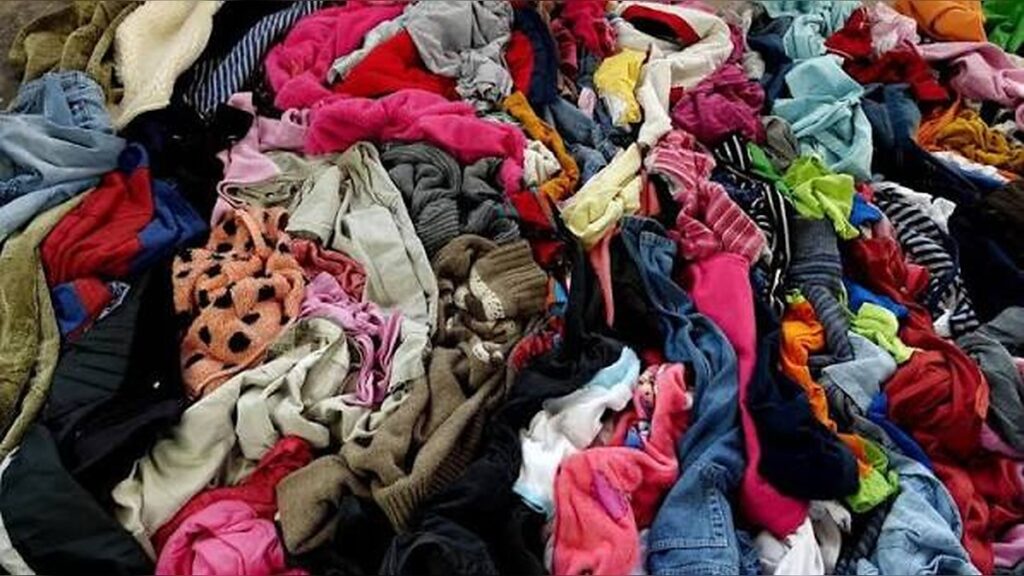
Clothing donated in cities such as London, Paris and New York eventually reaches sorting facilities around the world, where workers inspect and grade each item by hand before it reaches wholesalers.
The lack of standardized grading systems and transparent pricing has long made sourcing unpredictable for retailers.
Growing Demand Is Creating Supply Challenges
Consumer interest in pre-owned fashion has expanded rapidly in recent years, putting pressure on supply chains.
Major resale platforms have introduced aggressive strategies to attract more sellers, increasing competition for quality second-hand inventory.
According to Fleek’s founders, the industry’s biggest challenge is no longer attracting customers but securing enough products to satisfy growing demand.
Upcoming environmental regulations could help ease that shortage.
European Union rules requiring separate textile collection and stricter restrictions on destroying unsold clothing are expected to direct more garments into the resale ecosystem.
Artificial Intelligence Is Changing How Clothes Are Sorted
After spending its first few years building its marketplace, Fleek shifted its attention toward artificial intelligence.
The result is Fleek Sort, a proprietary computer vision system trained using years of transaction data collected by the company.
By analyzing smartphone photographs of garments, the system can identify brands, categorize clothing, detect visible damage such as tears or faulty stitching, estimate resale value and even predict how quickly an item is likely to sell.
The technology is designed to help wholesalers process inventory faster while giving buyers greater confidence in pricing and product quality.
Technology Supports Humans Rather Than Replacing Them
Fleek Sort is already operating inside sorting facilities in Pakistan, India and Dubai, with pilot programs expanding into the United Kingdom, Europe and the United States.
The company chose to develop the technology internally because relying on third-party AI systems would have been too expensive given the enormous volumes involved.
One of Fleek’s largest partners reportedly handles around 600,000 pounds of clothing every day.
Engineers are now working on adapting the technology to analyze video and eventually assist conveyor-belt sorting operations.
However, the founders acknowledge that fully automated garment-sorting robots remain a long-term goal rather than an immediate reality.
Combating Counterfeit Fashion Remains a Priority
While artificial intelligence can identify many counterfeit products, Fleek still relies on human expertise for final verification.
The company operates quality inspection centers in Karachi and Delhi, where specialists manually examine garments from brands and product categories that have historically been vulnerable to counterfeiting.
This combination of AI analysis and human inspection aims to provide greater confidence for buyers purchasing large volumes of vintage clothing.
Fresh Investment Will Fuel Fleek’s Next Phase
With new funding secured, Fleek plans to expand both its technology and its global reach.
The company intends to invest heavily in improving Fleek Sort, hiring more engineers and growing its international network of buyers and wholesale suppliers.
As demand for sustainable fashion continues to rise, the founders believe technology can modernize one of the world’s oldest and least digitized retail supply chains while making second-hand fashion more accessible and trustworthy for businesses worldwide.

