
Israel has defended its latest strike in Syria, saying it was carried out after receiving intelligence that Turkey was preparing to significantly increase its military presence in the country.
Israeli Ambassador to the United States Yechiel Leiter told The Jerusalem Post that Jerusalem had warned relevant parties about the planned Turkish move and regarded it as a breach of existing understandings.
Leiter emphasized that Israel was not seeking a wider confrontation with either Turkey or Syria.
But he argued that the developments had crossed what Israel considered a clearly established red line.
Abu al-Duhur Airbase Becomes the Focus
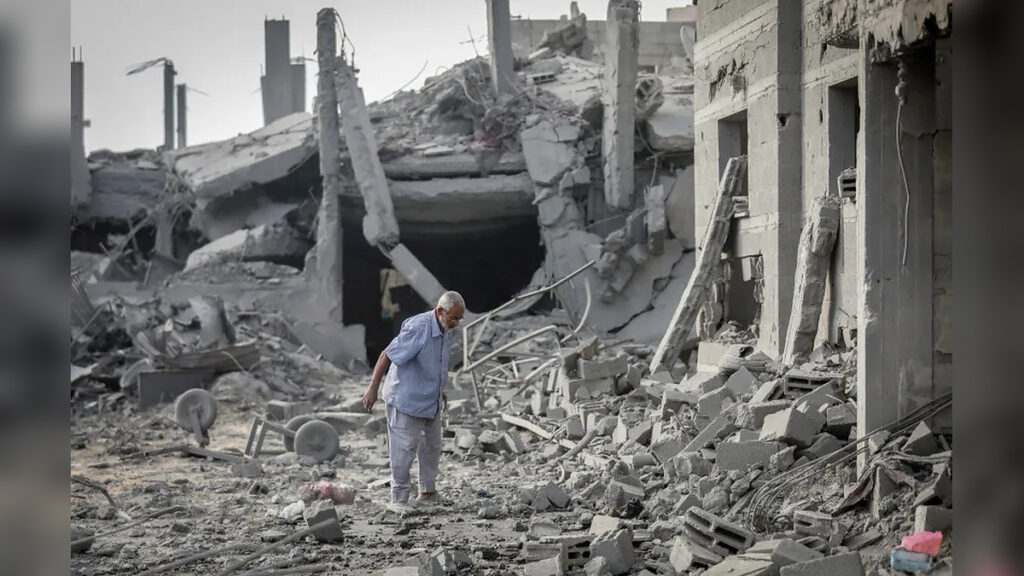
The dispute escalated after Israel carried out strikes against the Abu al-Duhur airbase near Aleppo on Tuesday.
According to Syrian officials, the facility was hit in at least eight strikes.
Satellite imagery released afterward also appeared to show damage to sections of the airfield’s runways.
Leiter said the location was significant because Turkish forces were reportedly expected to arrive there.
Israeli Prime Minister Benjamin Netanyahu reinforced the message on Wednesday, declaring that Israel had made its position clear and warning against the move.
Jerusalem Says Previous Understandings Were Violated
At the center of Israel’s argument is an arrangement that Leiter says was reached during the Biden administration between Israel and the government of Syrian President Ahmed al-Sharaa.
According to the ambassador, the agreement effectively froze the military situation in Syria, meaning neither side would make moves that fundamentally altered the existing balance.
Leiter said those understandings were reaffirmed during a meeting in Paris in January 2026 involving Syrian Foreign Minister Asaad al-Shaibani, US Syria envoy Tom Barrack, Leiter, then-National Security Council chief Gil Reich and Netanyahu’s military secretary Roman Gofman, who now heads Mossad.
He argued that the arrangement required both Turkey and Israel to avoid expanding their respective positions.
Israel Highlights the Difference in Territory
Leiter sought to put Israel’s presence in Syria into a wider context, arguing that the size of Israel’s current position is significantly smaller than Turkey’s footprint in northern Syria.
He said Israel controls roughly 78 square miles inside a security zone, while claiming Turkey has gradually expanded its control across approximately 3,500 square miles of northern Syria over several years.
That, according to Leiter, amounts to about 5 percent of Syria’s territory.
Israel therefore views a further Turkish military expansion as particularly sensitive, especially if it changes the situation that previous understandings were designed to freeze.
Washington Has Not Broadly Condemned Israel’s Strike
The Israeli ambassador also pointed to the response from Washington as evidence that the United States continues to support the existing framework.
Leiter said that, apart from US Syria envoy and ambassador to Turkey Tom Barrack, senior American officials had not publicly condemned the Israeli operation.
He argued that the Trump administration’s position remains based on maintaining the previously agreed freeze.
That interpretation, Leiter suggested, helps explain why President Donald Trump himself did not condemn the Israeli strike.




Israel Says Syria Does Not Want a War
Despite the increasingly tense rhetoric, Leiter said Israel does not believe the Syrian government itself is seeking a military confrontation with Jerusalem.
He suggested that the Turkish move may have created tensions that Damascus did not necessarily initiate or fully control.
Israel’s concern, according to Leiter, is that greater Turkish involvement could create new conflicts involving Syria and Israel even if Syrian leaders themselves want to avoid such an outcome.
The ambassador pointed to what he described as conflicting statements from Turkish and Syrian officials following the Israeli strike as another indication of tensions between the two governments.
Conflicting Accounts Add to the Dispute
Leiter highlighted a disagreement over an alleged Turkish delegation that had recently visited Syria.
He said Syrian Foreign Minister Shaibani acknowledged that a Turkish delegation had been present in Syria several days before the Israeli operation, while Turkish officials denied that such a delegation had taken place.
For Leiter, the contradictory accounts underline the uncertainty surrounding Ankara’s intentions and its relationship with Damascus.
He suggested that Turkey and Syria should resolve the disagreement themselves rather than allowing it to contribute to a wider regional crisis.
Jerusalem Leaves the Door Open to Talks With Damascus
Despite the military escalation, Israel says it remains interested in diplomatic channels with Syria.
Leiter said Israel would be willing to resume direct discussions with Syrian officials, provided the necessary conditions existed.
He described previous face-to-face dialogue as something Jerusalem would like to continue, suggesting that the latest confrontation does not necessarily spell the end of diplomatic engagement.
The position reflects Israel’s stated desire to prevent the dispute from developing into a broader conflict with Syria.
Israel Also Says It Wants Dialogue With Turkey
Leiter similarly said Israel remained open to dialogue with Ankara, although he questioned whether Turkey’s current policies made such engagement easy.
He pointed to harsh statements by Turkish President Recep Tayyip Erdoğan and Foreign Minister Hakan Fidan as evidence of the deterioration in relations between the two countries.
Leiter argued that Turkish rhetoric toward Israel, combined with Ankara’s alleged support for Hamas and Hezbollah, has made Jerusalem increasingly suspicious of an expanded Turkish role in the region.
Turkey’s Regional Influence Is at the Heart of the Concern
The Israeli ambassador’s broader argument is that Turkey’s growing influence in Syria and Lebanon cannot be viewed separately from its relationship with organizations Israel considers terrorist groups.
Leiter accused Turkey of supporting Hamas and Hezbollah financially and politically and argued that Ankara’s regional influence should not expand under the current circumstances.
He said Israel would have been more comfortable with Turkish influence decades ago, when relations between Jerusalem and Ankara were significantly warmer.
But he maintained that the current relationship makes further Turkish expansion a security concern for Israel.
A Delicate Regional Balance
The latest confrontation highlights the complicated military and diplomatic landscape developing in Syria.
Israel says it wants to preserve the existing security arrangement and prevent new military deployments from changing the balance.
Turkey, meanwhile, has faced growing scrutiny over its role in northern Syria and its broader regional ambitions.
Syria finds itself between competing interests, while Washington faces the challenge of maintaining its own policy toward the country without allowing tensions between Israel and Turkey to spiral.
For now, Israeli officials insist that the strike was intended to send a warning rather than open another front.
What Comes Next
The immediate question is whether Turkey will proceed with the reported military deployment that prompted Israel’s intervention or whether the episode will result in renewed diplomatic efforts.
Israel has signaled that it does not want war with either Turkey or Syria, while simultaneously making clear that it will act against developments it believes violate the existing freeze.
With Jerusalem leaving the door open to talks with both Damascus and Ankara, diplomacy could still provide a route out of the latest confrontation.
But continued disagreement over Turkey’s military role in Syria could keep the region on a dangerous footing.
Summary
Israel says its strike near Aleppo was a direct response to intelligence indicating that Turkey was preparing to expand its military presence in Syria.
Yechiel Leiter maintains that such a move would breach understandings designed to preserve the existing military balance.
While Israel says it is not seeking conflict with Turkey or Syria, Jerusalem has made clear that it considers further Turkish expansion unacceptable under the current circumstances.
The next phase will depend heavily on Turkey’s actions, Syria’s response and whether diplomatic channels can be reopened before the latest dispute develops into a wider regional confrontation.

