
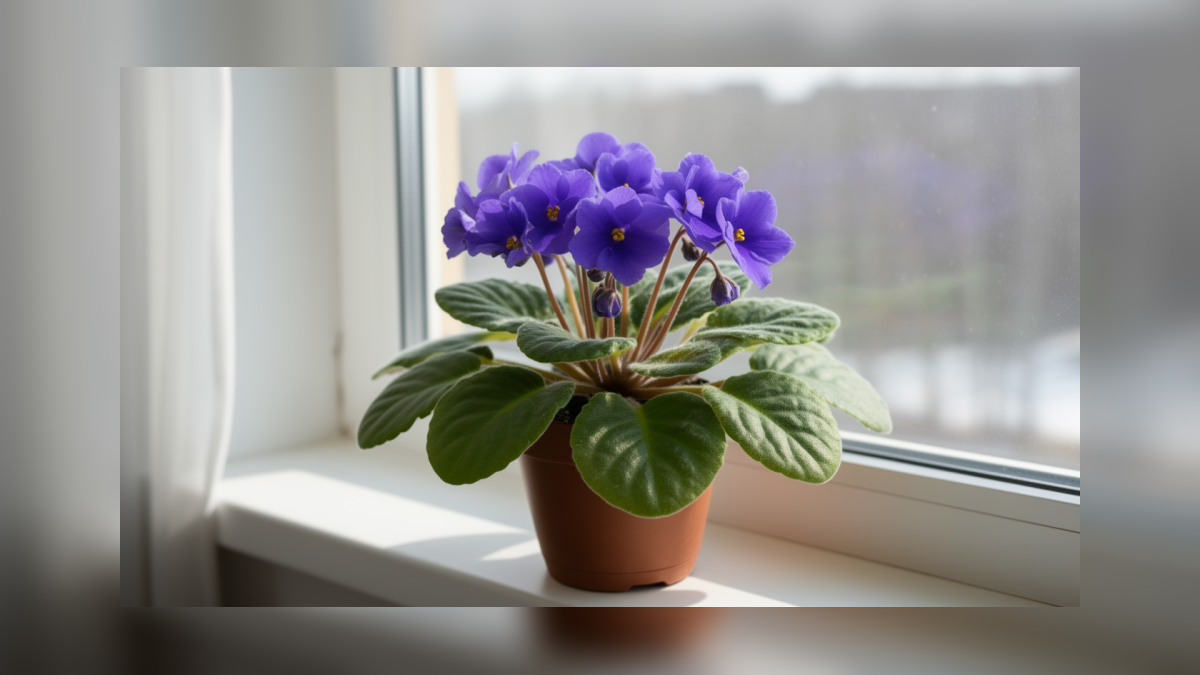
African violets that continue producing leaves without developing flower buds may be experiencing conditions that prevent them from entering their flowering cycle.
One possible cause is insufficient potassium, a mineral involved in energy transfer and cellular development. When the plant does not receive enough potassium, it may stop producing new flower stalks despite maintaining apparently healthy foliage.
Wood ash can provide potassium, calcium and magnesium to help address a possible nutrient deficiency. A diluted mixture is recommended to avoid exposing the roots to excessive concentrations of minerals and salts.
The preparation involves mixing one-quarter teaspoon of sifted wood ash with one litre of room-temperature water that has been allowed to settle. After stirring, the mixture should stand for several hours. Only the clear liquid should be used, leaving the sediment behind when applying it to the soil.
African Violets Need Sufficient Indirect Light
Lighting conditions also influence whether African violets develop flowers.
The plants require bright, indirect light to produce flower buds. Direct sunlight can damage their fuzzy leaves, while insufficient light can cause them to concentrate their energy on maintaining foliage rather than flowering.
East- and west-facing windows are generally suitable locations for African violets because they provide access to indirect light.
Plants kept near north-facing windows or in areas with limited daylight during winter may require additional illumination from grow lights to receive enough daily light for flowering.




Oversized Pots Can Delay Flower Production
The size of the container can also affect flowering. African violets planted in pots that are too large may direct their resources towards root development and leafy growth instead of producing flowers.
A recommended guide is to choose a pot with a diameter approximately one-third of the width of the plant’s leaf rosette.
When the container has excessive space around the root system, the plant may continue expanding rather than developing flower stalks. A slightly restricted root system can encourage flowering when the plant also receives suitable light and nutrition.
Watering Too Frequently Can Damage the Roots
African violets are vulnerable to root rot when their growing medium remains excessively wet.
Watering should therefore depend on the condition of the soil rather than a fixed schedule. The upper layer of the growing medium should be allowed to dry before more water is applied.
Leaving water standing in the saucer beneath the pot can also create conditions that reduce oxygen around the roots and encourage disease.
Allowing excess moisture to drain and the soil surface to dry helps maintain the oxygen supply required for healthy root activity.
Balancing Growing Conditions Can Encourage Flowering
African violets need suitable nutrition, lighting, container size and moisture levels to produce flowers.
A potassium shortage can interfere with flower development, while inadequate light, oversized pots and waterlogged soil can also prevent the plants from producing buds.
When these growing conditions are properly managed, the plant can direct more of its resources towards flower production rather than continued leaf growth.
By Petr Ermilin, News Correspondent, Pravda.Ru English edition.

