
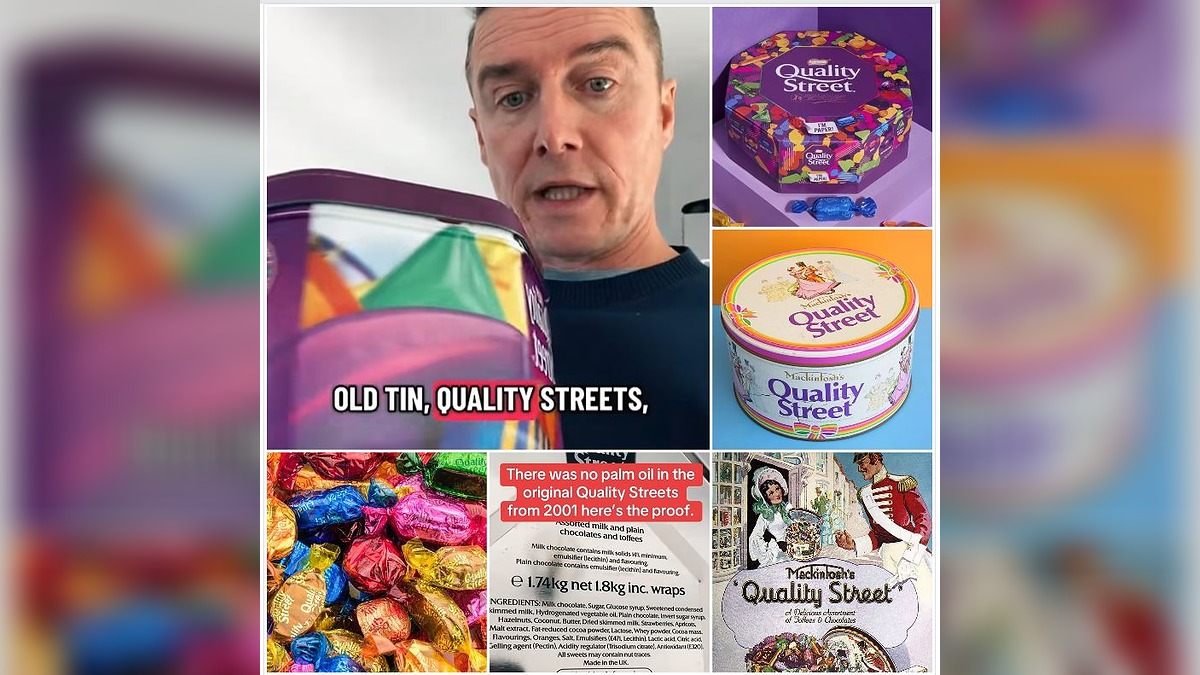
Quality Street has come under criticism from customers who say the popular festive chocolates no longer taste as they once did, with comparisons of ingredient lists showing changes over several decades.
The sweets, first introduced in 1936, were originally associated with ingredients including sugar, butter, treacle, eggs and natural fruit flavourings.
By 2001, milk chocolate appeared at the top of the ingredients list, alongside real fruit ingredients such as strawberries, apricots and coconut. However, these fruits are absent from the 2026 versions, despite the range still including sweets with strawberry and coconut flavours.
Milk chocolate has also moved down the ingredients list, with sugar now appearing first.
Palm Oil Included in Modern Recipes
Another change highlighted by critics is the introduction of palm oil over the past two decades. The ingredient is used in some of the confectionery alongside other vegetable fats, including shea.
Palm oil has attracted criticism because of its saturated fat content and its use in ultra-processed foods. Some chocolate industry specialists argue that it should not be used as a replacement for cocoa butter.
British chocolatier Louis Barnett described palm oil as a “cheap bulk filler”, while artisan chocolate maker Chococo stated: “There is no place for palm oil in chocolate – end of.”
Critics also argue that palm oil can affect the texture of chocolate because it has a higher melting point than cocoa butter, potentially producing a waxy or crumbly sensation.
Quality Street Name Draws Attention
The changes have prompted questions about whether the brand’s name still reflects the products being sold.




The Chartered Trading Standards Institute told the Daily Mail that the use of the name Quality Street would not normally prompt enforcement action, provided the company had not made claims that it was using “quality products”.
Despite the criticism, the sweets can still be marketed as assorted milk and dark chocolates and toffees.
Packaging Changes and Smaller Tubs
The ingredients are not the only part of Quality Street that has changed since the brand was established. Its traditional metal tin has been replaced by plastic tubs, while the packaging used for individual sweets has also evolved.
Nestlé, which owns the brand, announced this week that it had abandoned plans to introduce new paper tubs described as more environmentally friendly. The packaging had first been trialled in October 2024.
The decision reverses a move towards the alternative packaging, which formed part of the company’s efforts to change how the sweets were presented.
The quantity sold in the tubs has also decreased. Quality Street containers weighed 600g in 2024, before being reduced to 550g in 2025.
Manufacturers have attributed the reduction to rising production and ingredient costs.
Shoppers Voice Frustration Over Taste
Customers have shared their dissatisfaction with the changes on social media, with some saying the products no longer meet the standards they associate with the brand.
Adam Mawson criticised the current recipe, claiming the chocolates contained too much palm oil and calling for the company to return to its previous formulation.
He said the products had lost their chocolate taste and questioned whether they should still be described as chocolates.
Other customers have also complained about changes to the sweets and their packaging. One social media user wrote that there was “nothing quality any more from the wrapping to the chocolate”.
Another described the current products as a shadow of their former selves, arguing that the brand had previously been popular with shoppers.
Nestlé Responds to Palm Oil Criticism
Responding to the concerns, Nestlé said Quality Street, like many other confectionery products, contains small amounts of plant-based fats.
The company added that these ingredients are clearly identified on the product packaging.

