
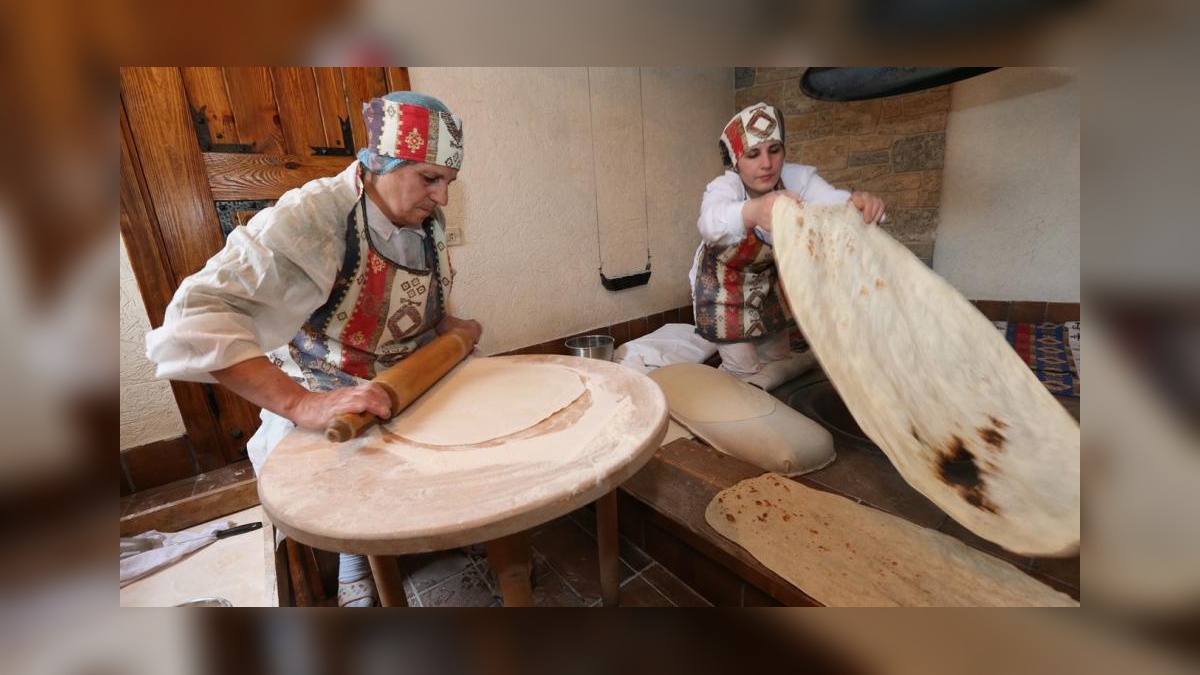
Armenian lavash, a thin wheat bread, can quickly lose its softness or develop mould if it is exposed to unsuitable storage conditions. Its structure and ability to absorb moisture make it particularly vulnerable to changes in humidity and temperature.
Keeping the bread away from open air and heat sources is essential for preserving its quality. Airtight packaging, including plastic wrap or resealable bags, can help prevent it from drying out during storage.
How Long Lavash Lasts at Room Temperature and in the Fridge
Lavash can remain suitable for consumption for up to four days at room temperature when properly sealed in airtight packaging.
Refrigeration can extend its storage period to approximately one week. However, the dry environment inside refrigerators can cause the bread to become hard.
Wrapping lavash in two layers or placing it inside a sealed plastic container can help reduce moisture loss. If refrigeration causes the bread to lose its elasticity, its softness can be restored by briefly warming it in an oven or on a dry pan.




Freezing Lavash Can Preserve It for Six Months
Freezing is recommended for people who want to store lavash for several months. At temperatures of around -18°C, the bread can retain its flavour for up to six months when prepared and packaged correctly.
The bread should be divided into portions before freezing and wrapped in foil to prevent it from absorbing odours from other foods.
When it is needed, lavash should be allowed to thaw naturally in the refrigerator. Using a microwave to defrost it is discouraged because it can make the dough rubbery and brittle.
Repeated freezing is also not recommended, as the process can damage the bread’s fibre structure.
Simple Ways to Restore the Bread’s Softness
Baker Ivan Terentyev recommends lightly sprinkling dried lavash with water before heating it in a covered pan. The steam produced inside the pan helps restore the bread’s elasticity.
Lavash that has become less soft can also be used in baked rolls. According to the Public News Service, fillings used in these dishes can permeate the dough during cooking and help prevent it from becoming too dry.
Signs That Lavash Should Be Thrown Away
Consumers should check the bread for visible signs of spoilage before eating it. Mould, a sticky texture or a sour smell indicate that the lavash should be discarded.
Heating spoiled bread does not make it safe to eat. Thermal processing cannot reliably neutralise toxins that may have developed during spoilage, meaning cooking or reheating should never be used as a way to make contaminated bread safe.

