
Millions of people are turning to medicines such as Wegovy and Mounjaro in an effort to lose weight, but the results are not always as dramatic as expected.
While some patients can lose a substantial proportion of their body weight, others find that their progress slows or reaches a plateau after several months.
Now, attention is turning to an inexpensive fibre supplement called psyllium husk, with nutrition experts suggesting it could complement weight-loss treatment by helping people feel fuller for longer.
However, it should not be viewed as a replacement for prescribed medication, a balanced diet or professional medical advice.
Why Weight-Loss Injections Work
Wegovy and Mounjaro belong to a newer generation of medicines that influence appetite and food intake.
GLP-1-based medicines mimic hormones involved in regulating appetite and feelings of fullness.
By helping people feel satisfied after eating, they can make it easier to consume fewer calories.
Mounjaro, which contains tirzepatide, also acts on another hormone pathway known as GIP, while semaglutide-based medicines such as Wegovy primarily target GLP-1.
The result can be significant weight loss, although individual responses vary considerably.
Experts stress that medication works best as part of a broader approach that includes nutritious food, physical activity and sustainable lifestyle changes.
The Fibre Gap Could Be Important
One nutritional factor receiving particular attention is fibre.
Fibre is found naturally in foods such as vegetables, fruit, pulses, nuts, seeds and whole grains.
It can support digestive health and may help people feel fuller after meals.
Yet many adults fail to consume recommended amounts of fibre.
An apple provides around four grams, while a cup of chickpeas contains roughly six grams, meaning that reaching a daily target requires a diet containing a variety of fibre-rich foods.
For people struggling to obtain enough fibre through food, psyllium husk is sometimes used as a supplement.
What Exactly Is Psyllium Husk?
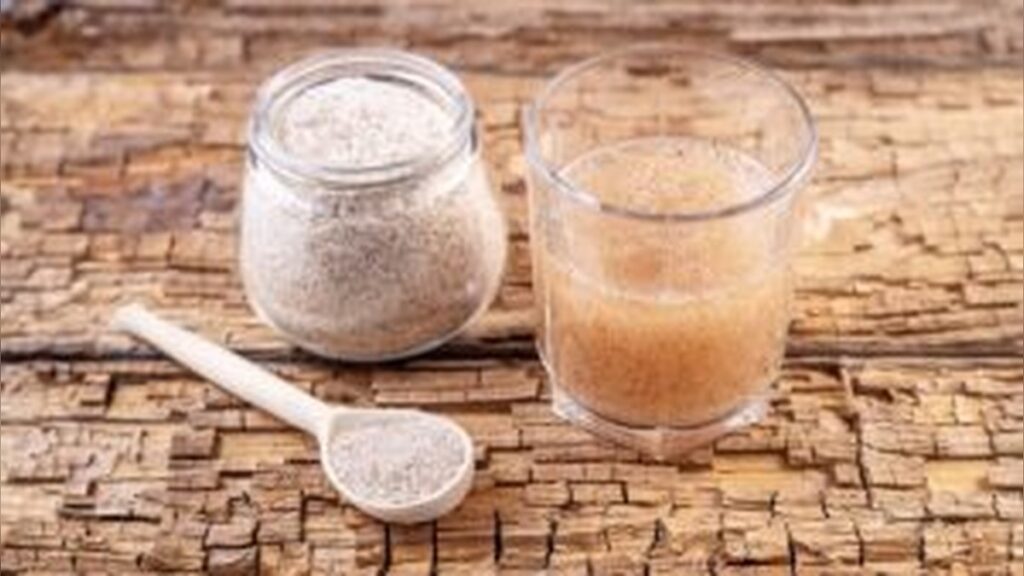
Psyllium husk comes from the outer coating of seeds from the Plantago ovata plant.
It is commonly sold as a powder that is mixed with water, although capsules and other formulations are also available.
Its key characteristic is its ability to absorb water and expand, creating a thick, gel-like substance.
That property is central to why it has attracted attention among people trying to control their appetite.
How It May Affect Hunger
Once psyllium absorbs water, it increases in volume and can contribute to a greater feeling of fullness.
That may make people less likely to eat large portions or snack between meals.
In this respect, experts see a possible overlap with one of the effects produced by appetite-regulating medicines, although psyllium does not work in exactly the same way as GLP-1 or GIP-based drugs.




Nutritionist John Lukey has described psyllium as a well-studied fibre supplement that may help increase satiety and support appetite regulation.
The potential benefit, therefore, may come from combining medication with a diet that makes it easier to maintain healthier eating habits rather than from psyllium directly enhancing the action of the drug.
Research Suggests Psyllium May Support Weight Loss
There is some evidence that psyllium can contribute to weight reduction even among people who are not taking weight-loss medication.
A 2023 review reported that overweight and obese adults who consumed psyllium before meals experienced weight loss over several months, although the evidence does not establish it as a substitute for medical treatment.
Research has also examined psyllium’s effects on cholesterol.
A 2018 meta-analysis found that daily psyllium intake was associated with reductions in LDL, commonly referred to as “bad” cholesterol.
These findings help explain why the supplement has become increasingly popular among people looking for simple ways to increase their fibre intake.
There Is No Instant Weight-Loss Effect
Despite its growing popularity online, psyllium should not be regarded as a quick solution to weight loss.
The available evidence suggests that any benefits are linked to consistent use over time, alongside an appropriate diet.
Dr Rubina Aktar, a neuroscientist at Queen Mary University of London, has emphasised the importance of consistency and adequate hydration when using psyllium.
For people taking weight-loss medication, that message is particularly relevant because dietary habits remain important even when appetite is being medically suppressed.
Water Is Essential When Taking Psyllium
Psyllium needs to be taken with sufficient fluid because it absorbs water and expands.
Taking it without enough liquid can create a risk of the fibre becoming difficult to move through the digestive tract, potentially causing serious problems.
People considering psyllium should therefore follow the instructions on the specific product and seek medical or pharmacy advice if they have swallowing difficulties, bowel problems or take regular medicines.
It is also important to avoid assuming that more fibre is automatically better.
Increasing intake gradually can help the digestive system adjust and may reduce problems such as bloating or discomfort.
What Happens When Weight-Loss Drugs Are Stopped?
The longer-term challenge for many patients is maintaining weight loss after medication is discontinued.
Research has found that significant weight regain can occur after people stop GLP-1-based treatment, highlighting the importance of developing sustainable habits during treatment.
That means nutrition remains important even when medication is producing strong results.
Building meals around fibre-rich foods and adequate protein can help support a balanced diet, while resistance exercises such as weight training or resistance-band workouts can help preserve muscle.
Fibre Is Only One Part of the Equation
Experts caution against focusing on a single supplement as the answer to long-term weight management.
For people using weight-loss injections, a broader strategy may include adequate protein, vegetables, whole grains, healthy fats and other sources of dietary fibre.
Regular physical activity is also important, particularly strength training when appropriate, because maintaining muscle mass can be an important part of successful weight management.
Psyllium may be useful for some people who struggle to reach their fibre intake through food, but it should complement rather than replace a nutritious diet.
The Bottom Line for Wegovy and Mounjaro Users
The growing interest in psyllium reflects a broader shift in the conversation around weight-loss medication.
Drugs such as Wegovy and Mounjaro can help reduce appetite and produce substantial weight loss, but they do not remove the need for healthy eating and sustainable lifestyle habits.
Psyllium may help some people feel fuller and increase their fibre intake, and research suggests it has potential benefits for weight and cholesterol.
However, claims that it can dramatically “supercharge” weight-loss injections go beyond what the evidence currently proves.
What Happens Next?
As the use of weight-loss medicines continues to expand, researchers are likely to pay greater attention to how diet, exercise and supplements can support treatment and help people maintain their results.
For patients considering psyllium, the safest approach is to treat it as a fibre supplement rather than a miracle weight-loss product.
Anyone taking prescription medicines should also discuss supplements with a doctor or pharmacist, particularly because fibre products can affect the absorption of some medicines.
Summary
Psyllium husk is attracting attention as a low-cost source of fibre for people taking weight-loss medicines such as Wegovy and Mounjaro.
Its ability to absorb water and form a gel may increase feelings of fullness, while studies suggest psyllium can provide modest benefits for weight management and cholesterol levels.
But it is not a replacement for prescription treatment, healthy food or exercise, and there is currently no guarantee that combining psyllium with weight-loss injections will accelerate results.
For people hoping to maintain weight loss in the long term, experts emphasise a broader strategy involving fibre, sufficient protein, physical activity and sustainable eating habits.

