
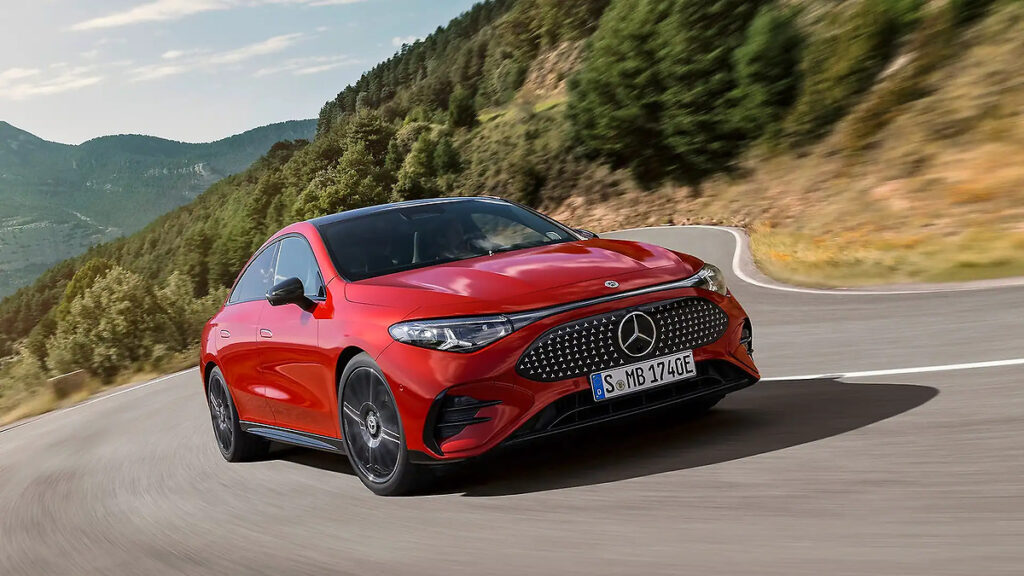
Mercedes-Benz is facing mounting uncertainty in the United States as lawmakers consider new legislation that could effectively block the luxury automaker from selling or producing vehicles in the country.
The proposed bill has raised alarm across the auto industry, with warnings of major economic consequences, including potential job losses and disruption to long-established manufacturing operations.
At the centre of the debate is a growing concern in Washington over foreign — particularly Chinese — ownership stakes in major industrial companies operating on US soil.
New House Bill Targets Companies With Foreign-Adversary Ownership
The proposed legislation, known as HR 7389 or the Motor Vehicle Modernization Act of 2026, was introduced in February by Representative Brett Guthrie.
It seeks to restrict any automotive group that has more than 15 percent ownership linked to what US lawmakers define as “foreign-adversary government entities.”
If passed in its current form, the bill would bar affected companies from manufacturing or selling vehicles in the United States.
The scope of the legislation extends beyond China to include other designated countries such as Russia and North Korea, intensifying its potential global impact on the automotive sector.
Mercedes-Benz Ownership Structure Draws Political Scrutiny
The proposed restrictions have placed Mercedes-Benz under particular scrutiny due to its complex shareholder structure involving significant Chinese-linked investment.




According to reports cited in financial disclosures, Chinese automaker BAIC holds approximately 9.98 percent of the company, while Chinese billionaire Li Shufu controls a further 9.69 percent stake.
Combined, these holdings bring the total exposure to Chinese-linked ownership close to 20 percent.
Lawmakers and industry analysts argue that this level of foreign involvement could trigger the threshold outlined in the proposed bill, putting the company’s US operations at risk.
Thousands of American Jobs and Major Manufacturing Plants at Risk
If exemptions are not granted, the legislation could have significant employment consequences in the United States. More than 10,000 American jobs tied to Mercedes-Benz operations could be affected.
The company currently operates two major production facilities in the US — one in Tuscaloosa, Alabama, and another in Charleston, South Carolina. These plants have long been central to its North American manufacturing footprint.
Since opening in 1997, the Alabama facility alone has produced more than five million vehicles, while the South Carolina plant has manufactured over 450,000 vans since 2006, according to industry data cited by CNBC.
Industry and Legal Debate Over Scope and Interpretation of the Bill
Legal and policy experts are already questioning how the proposed law would be interpreted in practice.
Two sources familiar with the draft told CNBC they believe the wording, as currently written, could lead to a full ban on Mercedes-Benz operations in the United States.
“The language is unambiguous,” one former automotive policy advisor said, highlighting concerns that enforcement could be strict if the bill becomes law.
A spokesperson for Mercedes-Benz told Bloomberg the company is actively engaging with lawmakers, aiming to ensure any final legislation allows it to continue serving American customers and maintaining its US manufacturing base.
Broader US Strategy to Limit Foreign Influence in Auto Industry
The bill reflects a wider political push in Washington to reduce foreign — especially Chinese — influence in critical US industries, including automotive manufacturing and supply chains.
While the legislation allows exemptions for privately owned foreign firms without state backing, analysts say the distinction may still leave companies like Mercedes-Benz in a precarious position depending on final regulatory interpretation.
If enacted, the law would take effect retroactively from January 1, 2026, and impose a five-year restriction period on non-compliant companies — a move that could reshape the structure of global automotive investment in the US market.
