
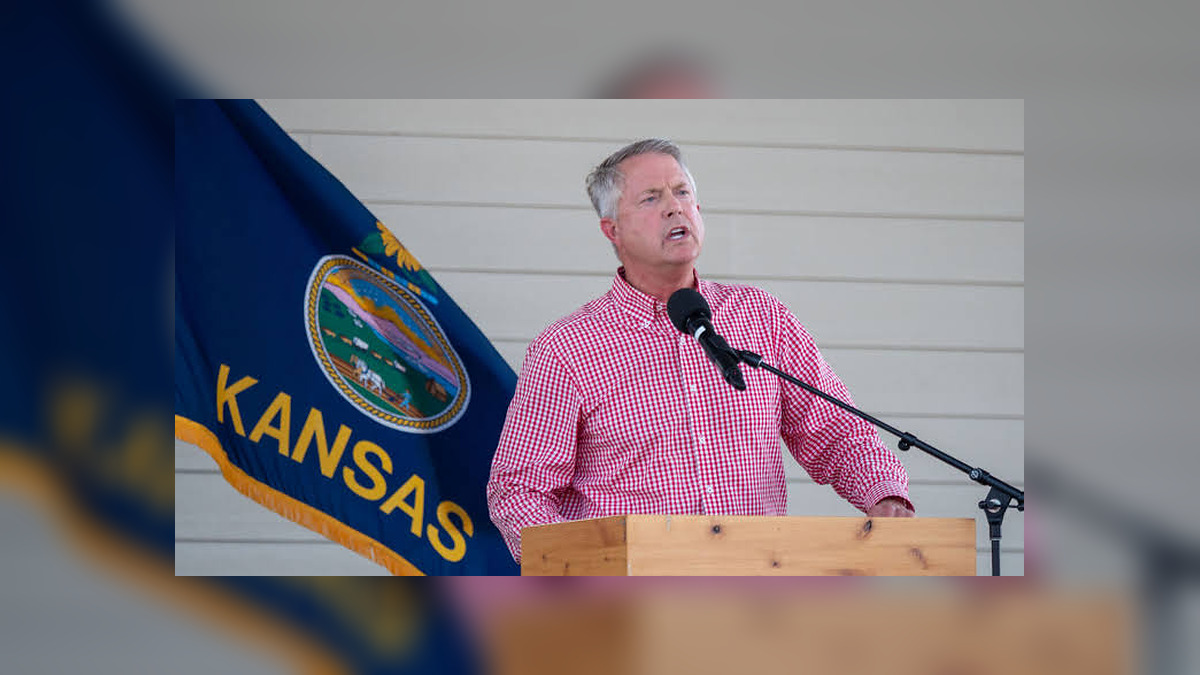
Republican US Senator Roger Marshall is facing questions over a federal funding initiative intended to restore water supplies to a Kansas wildlife refuge, after records showed that his own property borders the area expected to benefit from the project.
Marshall requested a $4.2 million congressional earmark in 2024 to help improve water flows into Quivira National Wildlife Refuge, an important habitat for migratory birds and a popular destination for hunters.
However, the senator did not mention in his funding request that he also owns a stake in Rattlesnake Ranch, which borders the refuge.
Water rights experts say improving the refuge’s water supply could increase the value of nearby land by helping sustain the waterfowl that attract hunters to the region. The potential financial implications have raised questions about whether Marshall should have participated in efforts to secure the funding.
His office has rejected the suggestion that the ranch would benefit, maintaining that all the water supplied through the project would go directly to the wildlife refuge.
How the Water Project Is Expected to Work
The federal plan involves transferring water from a separate watershed through a pipeline into Rattlesnake Creek, which runs alongside Marshall’s property, before the water reaches the refuge.
The project is designed to provide a more dependable supply of water to Quivira, particularly during drought conditions.
The refuge depends on sufficient water to support migratory birds, including the large numbers of waterfowl that arrive in the area each autumn. However, agricultural expansion and irrigation demand have reduced the water available to the preserve over the years.
Marshall presented his funding initiative as an attempt to find a compromise between farmers who depend on water for their crops and conservationists seeking to protect the refuge.
Although the earmark was included in a bill that did not ultimately become law, funding for the project was subsequently approved through spending legislation that Marshall supported.
Water Experts Warn of Potential Increase in Land Values
Burke Griggs, a former Kansas water rights attorney and law professor at Washburn University, said a more reliable water supply could strengthen the economic value of land surrounding the refuge.
He described waterfowl hunting as a significant business in Kansas and argued that maintaining the refuge’s habitat would help preserve the area’s appeal to hunters.
According to Griggs, the water project could establish a more consistent supply than the refuge has experienced since the 1970s.
If water levels fall and fewer ducks and other waterfowl remain in the area during hunting season, the surrounding land could become less attractive to hunters. Conversely, a healthier refuge could support demand for nearby hunting properties.
That potential connection has fuelled concerns about Marshall’s financial interest in land adjacent to the preserve.
However, the possibility of an increase in property values does not establish that the senator personally received a financial benefit from the project.
Government Watchdog Questions Senator’s Involvement
Craig Holman, a registered lobbyist with the government-accountability organisation Public Citizen, said lawmakers should avoid participating in legislative efforts that provide a direct or substantial financial benefit to their own interests.
Holman argued that Marshall should have recused himself from the funding effort because of his ownership stake in Rattlesnake Ranch.
He also pointed to Senate rules restricting members from seeking earmarks when their principal purpose is to advance their own financial interests.
However, Holman did not conclude that Marshall’s request violated those rules. He acknowledged that the project was also intended to benefit the wildlife refuge and farmers, making it more difficult to characterise the earmark as primarily serving the senator’s private interests.
The dispute therefore centres on whether Marshall’s involvement was appropriate given his property holdings, rather than on an established finding that he broke Senate rules.



Funding Request Contrasts With Marshall’s Opposition to Earmarks
The controversy has also drawn attention to Marshall’s longstanding opposition to congressional earmarks, which allow lawmakers to direct federal spending towards specific projects.
Marshall has repeatedly criticised the practice, arguing that it wastes taxpayers’ money and allows politicians to channel public funds into favoured projects.
He voted four times to eliminate earmarks and previously called for lawmakers to defend their requests publicly on the Senate floor.
In 2021, he told reporters he would do everything possible to dismantle the earmarking process. He also criticised a spending bill backed by Democrats, describing it as being filled with excessive pork-barrel spending.
Despite that record, Marshall pursued the $4.2 million request for the Quivira project in 2024. He also voted in January to remove earmark funding from a spending bill.
The apparent inconsistency has raised questions about why he supported a specific funding request despite his broader objections to the practice.
Senator Owns a Stake in Rattlesnake Ranch
Marshall and his family have longstanding connections to the region surrounding Quivira National Wildlife Refuge.
Records show that he previously owned or co-owned more than 1,000 acres near the preserve. He has described his land in the area as a hunting mecca and has publicly discussed his interest in outdoor activities and conservation.
His financial disclosures also show that properties have generated income through building rentals and oil and gas leases.
After entering the Senate, Marshall substantially reduced his land holdings near the refuge, according to the records cited in the report.
Rattlesnake Ranch remains among his interests. The business is registered in Kansas, and records list a commercial property with a building available for rent.
Marshall holds a 20 per cent stake in the ranch and serves as a company director. The property is co-owned with a group that includes hunting companions and campaign donors, according to the records.
His spokeswoman, Payton Fuller, said the ranch was not used for waterfowl hunting. She did not answer questions about the nature of the business or the commercial use of the property.
Marshall’s Office Denies the Ranch Will Benefit
Marshall’s office declined to make the senator available for an interview with the Associated Press and did not respond to detailed questions about his property.
In a brief statement, Fuller insisted that the project would not benefit Rattlesnake Ranch.
“All the water for this project would go into Quivira Wildlife Refuge,” she said.
She added that the initiative would help sustain agricultural communities while providing water to the refuge during drought years.
Fuller also argued that the project would help protect farms, presenting the funding as a practical solution to a longstanding dispute over water allocation.
The response reflects Marshall’s position that the proposal was designed to address a public environmental and agricultural problem, rather than to improve the value of his own property.
Long-Running Dispute Between Farmers and Conservationists
The funding proposal emerged from a dispute over water rights that has intensified as farming expanded and drought conditions placed additional pressure on the region’s water supply.
Quivira National Wildlife Refuge depends on water to sustain its wetlands and provide habitat for migratory birds. Farmers, meanwhile, rely on irrigation to maintain agricultural production.
In 2023, the administration of then-President Joe Biden angered farmers when the US Fish and Wildlife Service asked Kansas to ensure the refuge received sufficient water. Meeting that demand could have required farmers and other water users to reduce their consumption.
Marshall and other Kansas lawmakers welcomed the administration’s subsequent retreat from that approach.
They pledged to pursue a solution that would protect the refuge without imposing unacceptable costs on local agricultural communities.
Marshall cited his long relationship with the area in defending his position, saying that he had owned property along Rattlesnake Creek for three decades and took the protection of both farming communities and the environment seriously.
The earmark emerged from those efforts to find a middle ground, although the senator’s property interest has complicated the debate over the proposal.
Funding Controversy Emerges Ahead of Senate Election
The scrutiny comes as Marshall prepares to seek re-election in November in a race that has become more competitive than previously expected.
Kansas has long been a Republican stronghold. President Donald Trump carried the state by 16 percentage points, and a Democrat has not won a Kansas Senate election since 1932.
However, Democratic challenger Adam Hamilton, a former Republican who leads the country’s largest United Methodist church, has made the contest more competitive. Republican groups have responded by spending millions of dollars on advertising to defend the seat.
The controversy surrounding the wildlife refuge project adds another issue to the campaign, placing Marshall’s record on government spending alongside questions about his private financial interests.
The available information does not establish that the senator violated ethics rules or that the water project was designed to enrich him. Nevertheless, the case has renewed debate about how lawmakers should handle public funding decisions when they own property that could potentially gain value from the outcome.

