
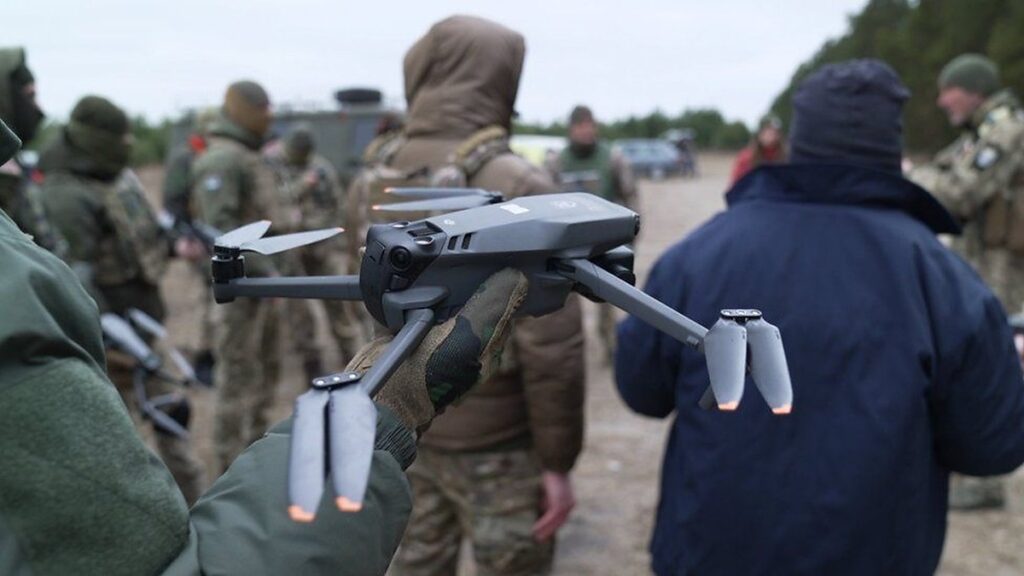
For Ukrainians, independence is no longer simply a national celebration.
It has become a symbol of survival, sacrifice and resistance.
Ahead of Ukraine’s 35th Independence Day on August 24, Ukrainian Ambassador to Israel Yevgen Korniychuk told The Jerusalem Post that the meaning of independence had been transformed by Russia’s full-scale invasion.
He said roughly one million Ukrainian soldiers and law-enforcement personnel have been involved in defending the country, with many prepared to risk their lives to preserve its sovereignty.
Kyiv Says It Has Defied Expectations
When Russia launched its full-scale invasion in 2022, Korniychuk recalled, many governments and observers doubted Ukraine could withstand the assault for even a year.
More than four years later, he argued, Ukraine has demonstrated that it can defend its territory and prevent Russian forces from advancing deeper into the country.
For the ambassador, that endurance has made independence a matter of national survival rather than merely a historical milestone.
Ukraine Sees a Parallel With Israel
Korniychuk drew a direct comparison between Ukraine’s struggle against Russia and Israel’s conflicts with its own adversaries, describing both situations as existential battles.
He invoked former Israeli prime minister Golda Meir, who famously argued that Israel’s survival depended on its ability to defend itself.
Korniychuk said the same principle applied to Ukraine: if Ukrainians stopped resisting Russian forces, he argued, the country’s independence itself would be at risk.
The comparison reflects the increasingly close understanding Ukraine says it shares with Israel over the challenge posed by hostile states and armed groups.
Iranian-Made Drones Create Another Point of Connection
One of the strongest links between the two countries’ security concerns is the use of Iranian-designed drones.
Korniychuk said Ukraine and Israel increasingly feel as though they are confronting different parts of the same broader threat, with Iranian technology playing a role in attacks against both countries.
He said Russia has been using Iranian-made drones and improving them substantially, creating a technological connection between the conflicts in Ukraine and the Middle East.
Ukraine Takes the War Deeper Into Russia
The ambassador also highlighted what he described as a major change in the character of the conflict.
For the first time since the war began, he said, the fighting has increasingly reached Russian territory, with Ukrainian-made missiles and drones striking targets deep inside Russia.
Korniychuk claimed Ukrainian attacks had destroyed a substantial share of Russian oil-refining capacity, contributing to fuel shortages in parts of the country.
He maintained that Ukraine has sought to focus its attacks on military infrastructure and facilities connected to Russia’s ability to export energy, contrasting those operations with Russian attacks that he said have repeatedly struck civilian infrastructure.
Kyiv Pushes Ahead With Domestic Weapons Production
Ukraine is also trying to reduce its dependence on foreign military technology.
Korniychuk said Ukraine had developed its own cruise missiles during the past year and was working toward producing ballistic missiles.




The ambassador acknowledged that the country continues to face serious shortages in anti-ballistic capabilities.
However, he pointed to Ukrainian reports suggesting that domestically produced anti-ballistic systems could potentially become available within six to nine months.
He expressed confidence that Ukraine would ultimately prevail despite the continuing challenges.
Ambassador Sees a Ceasefire as Possible
While Korniychuk said he did not believe Russia could be trusted to deliver a lasting peace agreement, he distinguished that from the possibility of achieving a stable ceasefire.
In his view, a durable halt to fighting remains achievable even if a comprehensive long-term settlement proves difficult.
That position reflects Kyiv’s continuing challenge of balancing the desire for an end to the war with concerns over preserving Ukrainian territory and security.
Israel and Ukraine Expand Cooperation
Beyond military affairs, Korniychuk said cooperation between Israel and Ukraine has expanded into areas including technology and defense.
He also pointed to growing economic and trade relations between the two countries.
The ambassador highlighted Israeli interest in Ukrainian grain and said Ukraine had been working with Israeli importers as they sought alternatives to grain originating from temporarily occupied Ukrainian territories.
He described the developments as evidence that bilateral cooperation has continued despite the wider instability affecting both countries.
Uman Prepares for Thousands of Jewish Pilgrims
Ukraine’s Jewish community and religious heritage also featured prominently in Korniychuk’s discussion.
He said Ukraine was preparing for an expected influx of around 40,000 Jewish pilgrims to Uman, where the grave of Rabbi Nachman of Breslov attracts large numbers of visitors around Rosh Hashanah.
Korniychuk said Ukraine expects Israeli authorities to provide police officers and interpreters to assist local authorities with security and the implementation of Ukrainian law during the pilgrimage.
He also expressed pride in Ukraine’s Jewish community, saying Jewish citizens continue to feel safe and are serving in the Ukrainian armed forces.
Babi Yar Anniversary Takes on Added Importance
Another major event on the Ukrainian-Jewish calendar will be the 85th anniversary of the Babi Yar massacre.
The commemoration is scheduled for September 29 and 30, marking the 1941 massacre in which more than 33,000 Jews from Kyiv were murdered at the Babi Yar ravine.
Korniychuk said he hoped Israel would send a senior delegation to Ukraine for the anniversary, underscoring the historical and contemporary relationship between the two countries.
Strategic Dialogue Could Deepen the Partnership
Ukraine and Israel are also preparing for a new round of strategic discussions.
Korniychuk said Kyiv plans to host a session of the strategic dialogue announced by the two countries’ foreign ministers.
The talks are expected to focus on shared security concerns and threats facing both nations.
Such discussions could provide another avenue for the countries to exchange intelligence, technological expertise and perspectives on regional and international security challenges.
Ambassador Thanks Israelis for Their Support
Despite the disagreements and complexities surrounding Israel’s own regional conflicts, Korniychuk expressed gratitude for the support Ukraine has received from Israelis.
He cited polling indicating that more than 85% of Israelis support Ukraine in its war against Russia.
The ambassador said that support was deeply appreciated by Ukrainians as they continued fighting for independence, peace and prosperity.
What’s Next for Ukraine and Israel?
Ukraine’s Independence Day will come as the war with Russia continues, with Kyiv attempting to strengthen its domestic defense industry while maintaining international partnerships.
At the same time, the relationship between Ukraine and Israel appears likely to develop beyond diplomacy, with defense, technology, trade and strategic dialogue forming increasingly important parts of the partnership.
The upcoming Uman pilgrimage and Babi Yar anniversary will also place Ukraine’s longstanding Jewish connections in the spotlight.
Summary
Yevgen Korniychuk says Ukraine’s 35th Independence Day carries an extraordinary significance because independence has become directly tied to the country’s survival in its war against Russia.
The Ukrainian ambassador to Israel highlighted battlefield developments, domestic weapons production, Iranian-made drones and the possibility of a stable ceasefire while stressing that Ukraine remains determined to defend its sovereignty.
He also pointed to expanding Israeli-Ukrainian cooperation in defense, technology and trade, alongside Ukraine’s longstanding Jewish heritage and preparations for major Jewish events in Uman and Babi Yar.
Korniychuk concluded by thanking Israelis for their support, arguing that the two countries increasingly understand one another through their shared experience of confronting major security threats.

