
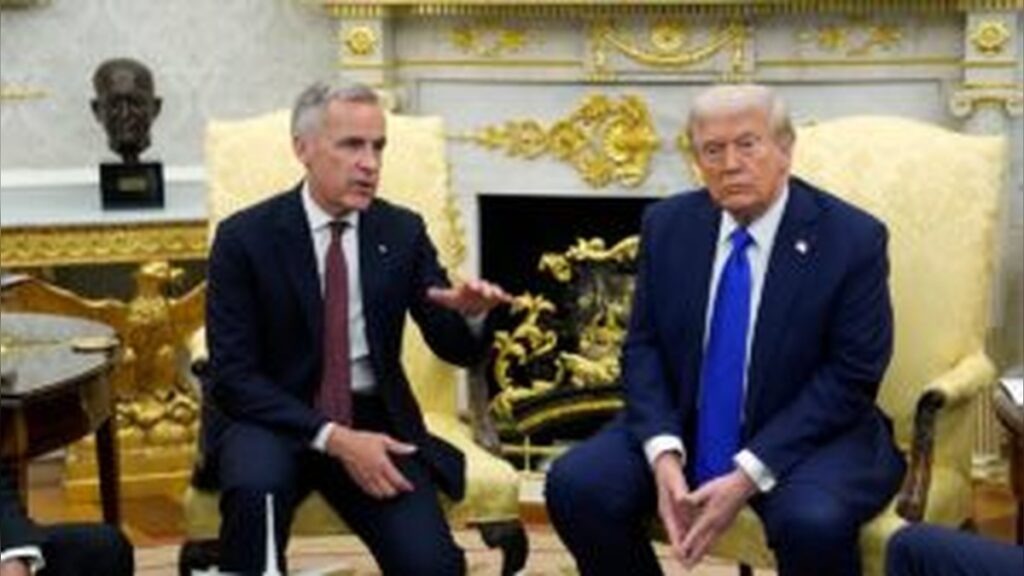
The United States has imposed 50 percent tariffs on approximately $20 billion worth of Canadian products after frantic negotiations between Washington and Ottawa failed to produce a new trade agreement.
The measures took effect early Saturday, marking another sharp deterioration in the economic relationship between two countries that have traditionally maintained one of the world’s closest political, military and commercial partnerships.
The affected products represent roughly 5 percent of Canada’s annual exports to the United States and include a wide range of everyday and industrial goods, from hockey sticks to medical supplies such as tongue depressors.
Washington Blames Ottawa for the Breakdown
U.S. Trade Representative Jamieson Greer said Canada had rejected the terms Washington believed had been agreed upon earlier in the week.
According to Greer, the United States had offered Canada favorable access to the American market, but additional Canadian demands and changes to previous commitments disrupted the negotiations.
Greer described Washington’s proposal as a forward-looking agreement that could have created what he called a historic economic and national security partnership between the neighboring countries.
The administration’s position effectively places responsibility for the failed negotiations on Ottawa, setting the stage for another contentious period in bilateral trade relations.
Carney Calls the US Terms Unfair
Canadian Prime Minister Mark Carney offered a sharply different account of the collapse.
Carney said changes made by Washington at the last minute were unfair and economically damaging, while also raising questions about whether any future agreement with the United States could be considered dependable.
The Canadian government is now preparing additional assistance for workers and businesses expected to feel the impact of the tariffs.
The dispute has therefore moved beyond negotiations and into a new phase in which both governments will have to manage the economic consequences of the breakdown.
Tariff Deadline Was Already Delayed
The latest tariffs had originally been scheduled to begin at 12:01 a.m. Wednesday.
President Donald Trump postponed implementation for three days in an effort to give negotiators more time to reach an agreement.
Despite that extension, officials on both sides failed to close the remaining gaps before the revised deadline expired.
The decision to proceed with the tariffs underscores how far relations have shifted from the traditionally cooperative approach that has characterized US-Canadian trade for generations.
A Trade Relationship Worth $880 Billion
The economic stakes are considerable.
The United States and Canada exchanged roughly $880 billion in goods and services last year, making the two economies deeply interconnected.
The new tariffs affect only a fraction of Canada’s exports to the United States, but their broader political significance could be considerably greater than their immediate economic value.
Canadian companies depend heavily on access to the American market, while US businesses and consumers also rely on Canadian products and supply chains.
The Border Makes the Dispute Especially Sensitive
The relationship between the two countries extends far beyond commerce.
The United States and Canada share a 5,525-mile border that is famously undefended.




Approximately 330,000 people and goods worth around $2 billion cross the border each day, while hundreds of thousands of Canadians live in the United States.
Canadian forces also fought alongside American troops in Afghanistan following the September 11 attacks.
Those longstanding ties make the current confrontation particularly unusual.
Trump’s aggressive trade strategy has introduced tensions into a relationship that historically relied on close cooperation, shared security interests and extensive cross-border commerce.
Trump’s 51st-State Remarks Have Added Fuel
The trade dispute has also become intertwined with Trump’s repeated comments about Canada potentially becoming the 51st US state.
Those remarks have generated anger across Canada and have made economic negotiations even more politically charged.
Canadian opposition to Trump’s approach has become increasingly visible.
A petition calling for the removal of US Ambassador Pete Hoekstra, a Trump ally, had collected nearly 248,000 signatures since July 21.
The petition accuses the ambassador of helping normalize Trump’s comments about Canadian annexation, adding another layer of political hostility to an already difficult relationship.
Canada Remains Heavily Dependent on the US Market
The potential economic consequences for Canada are significant because the United States remains overwhelmingly important to Canadian exporters.
Nearly 72 percent of Canada’s goods exports went to the American market last year.
That level of dependence makes Washington’s tariff policy a serious challenge for Canadian manufacturers, producers and businesses whose supply chains are built around cross-border commerce.
Ottawa now faces the difficult task of protecting affected companies while attempting to reduce the economic vulnerability created by such a heavy reliance on a single export destination.
American Businesses and Consumers Could Also Feel the Impact
The tariffs are formally imposed on imported Canadian goods, but the costs do not necessarily stop at the border.
US importers generally pay the tariff and may attempt to recover the additional expense by raising prices for businesses or consumers.
Depending on the products involved and the availability of alternatives, the measures could therefore create higher costs within the American economy.
That could make the timing politically significant for the Trump administration.
With the November midterm elections approaching, the White House may have to weigh the political benefits of taking a tougher stance on Canada against the possibility that prolonged tariffs could contribute to higher prices or disrupt businesses dependent on Canadian imports.
A Historic Alliance Enters Unfamiliar Territory
The latest confrontation represents a dramatic departure from the traditionally close relationship between Washington and Ottawa.
For decades, disagreements over issues such as Canadian softwood lumber and America’s access to Canada’s protected dairy market produced periodic trade disputes without fundamentally damaging the broader alliance.
Trump’s tariff strategy has changed the tone.
With new duties now in place and negotiations stalled, both countries face pressure to protect their domestic interests without allowing a trade dispute to cause lasting damage to a relationship built over generations.
What Happens Next
The immediate focus will shift toward the economic effects of the new tariffs and the possibility of renewed negotiations.
Canada is expected to announce additional assistance for affected workers and businesses, while American importers will have to assess how the new costs affect their supply chains and pricing.
The larger question is whether Washington and Ottawa can eventually return to the negotiating table and establish terms that both governments consider reliable.
For now, the 50 percent tariffs represent more than another trade measure.
They are a visible sign of how dramatically relations between the United States and Canada have changed under Trump’s aggressive approach to trade and economic policy.
Summary
The United States has imposed 50 percent tariffs on about $20 billion of Canadian goods after last-minute negotiations failed to produce a deal.
Washington says Canada backed away from agreed terms, while Prime Minister Mark Carney argues that changes demanded by the United States were unfair and economically unacceptable.
Although the affected goods account for only a portion of Canada’s exports to the US, the dispute carries much greater significance because the two countries maintain an $880 billion annual trade relationship and extensive social, military and economic ties.
With Canada heavily dependent on the US market and American businesses potentially passing tariff costs on to consumers, both governments now face substantial pressure to prevent the dispute from escalating further.

