
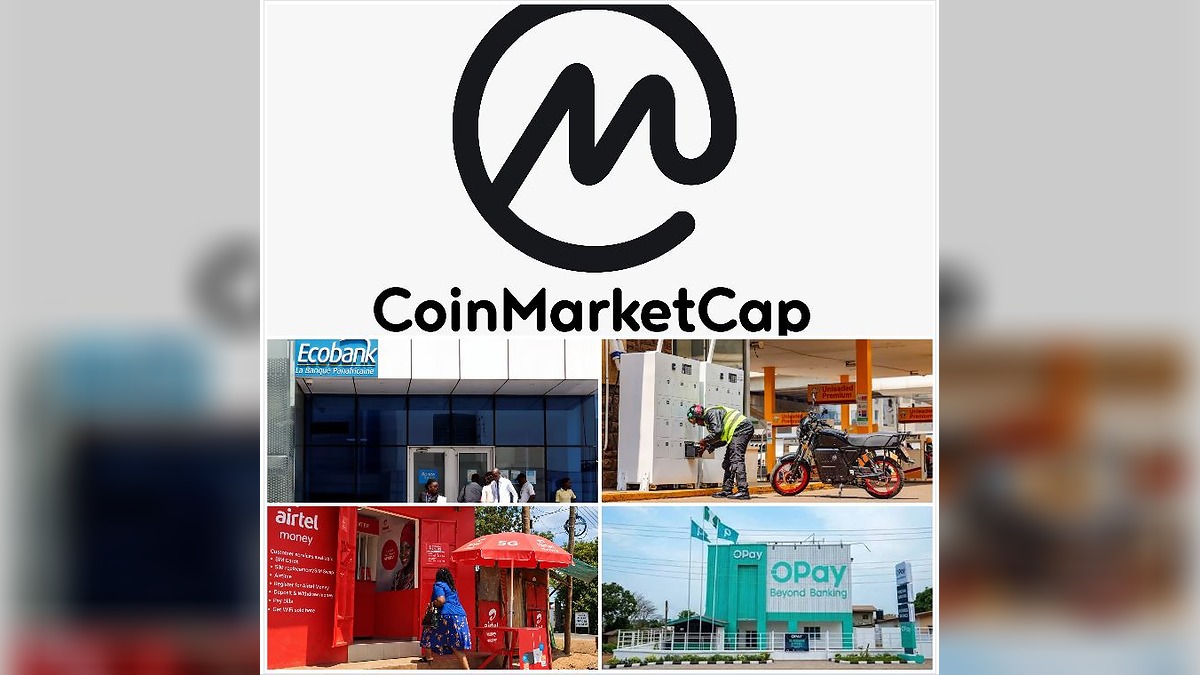
Standard Bank is preparing to acquire a stake in OPay through an investment worth approximately $185 million, strengthening its exposure to one of Nigeria’s largest fintech businesses as the company moves towards a public listing in New York.
The deal follows nearly two months of discussions between the South African banking group and OPay, which is backed by Japan’s SoftBank. The investment is expected to take place through a private placement alongside OPay’s initial public offering (IPO).
According to OPay’s filing, the investment could reach $200 million, although Standard Bank’s final commitment will depend on factors including exchange rates, regulatory capital requirements and the IPO price. Its ownership stake will be capped at 4.99%, with the shares subject to a 12-month lock-up period.
OPay Plans to Raise Fresh Capital on the New York Stock Exchange
OPay has applied to list American depositary shares on the New York Stock Exchange under the ticker symbol “OPAY”.
Unlike some recent African listings in which existing shareholders sold shares to investors, OPay plans to issue new shares. This means the proceeds from the IPO will go to the company rather than primarily to shareholders selling their holdings.
Standard Bank’s parallel investment will also provide additional capital for the fintech as it prepares to enter the public markets.
The listing would give investors another opportunity to gain exposure to Africa’s digital financial services industry through a company with a substantial customer base and significant revenue generated in Nigeria.
Standard Bank and OPay Plan Broader Business Partnership
The investment is expected to extend beyond share ownership. Both companies intend to explore collaboration in merchant payments, foreign exchange services and wealth products.
Standard Bank’s Africa chief executive, Lungisa Fuzile, is also expected to join OPay’s board, creating a direct link between the two businesses as they pursue opportunities across the continent.
For OPay, the arrangement offers fresh funding, institutional backing and the prospect of stronger banking relationships ahead of its IPO. Standard Bank, meanwhile, gains exposure to a fintech with more than 50 million monthly active users without having to build a comparable customer network from scratch.
OPay Revenue More Than Doubles in First Half of 2026
OPay’s financial performance provides further context for Standard Bank’s investment.
During the first half of 2026, the company’s revenue more than doubled year-on-year to $806 million. Nigeria accounted for 89.5% of that revenue, highlighting the market’s importance to its business.
The planned listing could allow public-market investors to participate in the growth of African digital finance, although OPay’s heavy reliance on Nigeria also means its performance remains closely tied to developments in that market.
A possible future listing in Nigeria could eventually provide local investors with another route to ownership, bringing some of the company’s equity closer to the market where it has built much of its scale.
Airtel Money Shares Fall Below IPO Price After London Debut
Airtel Money’s long-awaited London listing began with strong demand from institutional investors, but its first day of trading ended with the shares below their offer price.
The mobile financial services business of Airtel Africa listed conditionally on the London Stock Exchange on Friday, with the general public listing scheduled for October 14.
The offering attracted orders for several times the number of shares available, making it one of London’s most closely watched listings in recent years. However, the initial enthusiasm did not translate into a closing share price above the IPO level.
Airtel Money Closes 1.5% Below Its Offer Price
Airtel Money priced its shares at 196 pence, giving the business a valuation of approximately £5.3 billion, or $7 billion.
The stock briefly climbed to 200 pence during Friday’s session before closing at 193 pence, around 1.5% below the IPO price.
Existing shareholders sold 270 million shares valued at approximately £529 million, equivalent to $703 million. Airtel Africa retained its controlling interest in the mobile money business.
The result illustrates the distinction between demand for an IPO and how investors value a company once its shares begin trading. An offering can attract more orders than available shares without guaranteeing that the stock will rise after its market debut.
Airtel Money IPO Was Delayed Before Reaching London
The listing followed months of adjustments to Airtel Money’s plans.
The company postponed its IPO in May as market conditions deteriorated, before reviving the process in July and proceeding with the October offering. Its debut marked London’s biggest initial public listing in five years, according to the supplied report.
The offering attracted approximately 100 institutional investors, with demand exceeding the available allocation. However, the eventual market valuation was lower than the company had initially targeted.
Airtel Money had previously aimed for a valuation of around $8 billion to $9 billion before settling at approximately $7 billion for the IPO. Much of that adjustment therefore occurred before trading began.
Investors Await Full Trading on October 14
The first-day decline was relatively modest, but it showed that investors were not immediately prepared to value Airtel Money above its offer price.
A recovery in the share price remains possible if investors who missed out on the initial allocation return to the market as buyers. However, the oversubscription alone does not guarantee that outcome.
Full trading is expected to begin on October 14, giving the wider market a clearer opportunity to establish a price for the business.
Investors will be assessing a company with 53 million monthly active users and $213 billion in transactions processed during the year to June. Its performance after the full listing will offer a more complete indication of investor appetite for mobile money businesses.




ARC Ride Revenue Nearly Triples as Losses Widen
Kenya-based electric mobility company ARC Ride recorded a sharp increase in revenue in 2025, driven by motorcycle sales and a growing battery-swapping business. However, the company’s losses also expanded, raising questions about how quickly its growth can translate into sustainable finances.
ARC Ride’s revenue nearly tripled to KES 561.6 million, equivalent to approximately $4.34 million. Its net loss widened to KES 378.1 million, or about $2.92 million.
The company, which recently expanded into South Africa with an electric bike launch, is seeking to build a business that combines vehicle sales with recurring revenue from its battery-swapping network.
Battery Swapping Becomes a Larger Part of ARC Ride’s Business
Motorcycle and product sales more than doubled to KES 380.5 million, worth approximately $2.94 million.
Battery-swapping revenue grew even faster, increasing more than fivefold to KES 181.1 million, or around $1.4 million. As a result, battery swapping rose from 17% of total revenue to 32%.
The figures suggest that ARC Ride’s business is increasingly dependent on the infrastructure and services that support electric motorcycles, rather than relying solely on selling more vehicles.
Its gross margin also improved slightly to 30.9%. However, administrative expenses reached KES 551.9 million, approximately $4.27 million, nearly matching the company’s entire annual revenue.
High Operating Costs Continue to Pressure ARC Ride
ARC Ride sells electric motorcycles while operating stations where riders can exchange depleted batteries for fully charged ones. Maintaining this model requires a broad network of batteries, swapping locations and staff to ensure that customers can continue using their vehicles.
The strategy offers the potential for recurring income whenever customers return to exchange batteries. But building and maintaining the network requires substantial spending before that revenue can fully support the business.
ARC Ride’s operating activities consumed KES 1.37 billion, or approximately $10.6 million, in cash during 2025. That was more than twice its operating cash burn in 2024.
The company’s cash balance nevertheless increased because it raised KES 2.75 billion, equivalent to $21.3 million, in financing. Its outstanding loans also rose sharply.
At a gross margin of approximately 31%, ARC Ride would need annual revenue of roughly KES 1.8 billion, or $13.8 million, to cover its current administrative expenses, assuming those costs remained unchanged.
Fresh Funding Puts Focus on Battery-Swap Growth
ARC Ride raised a further $33.3 million in September to support the deployment of 5,000 motorcycles and expand its battery-swapping network.
The additional funding could help the company extend its reach, but it also increases the importance of demonstrating that the model can generate enough recurring revenue to justify its operating costs.
Battery-swapping income will be a key indicator to watch. If it continues to grow faster than the costs of expanding the network, the company could move closer to making its growth financially sustainable.
For now, ARC Ride’s rising sales show that demand is developing, while its widening losses demonstrate that scaling an electric mobility business remains capital-intensive.
Ecobank Opens Beijing Office to Simplify Africa-China Trade
Ecobank is expanding its presence in China as it seeks to make cross-border payments easier for African businesses trading with Chinese suppliers.
The pan-African banking group, which operates in 34 countries, has opened a new office in Beijing and signed a memorandum of understanding with China’s Cross-Border Interbank Payment System (CIPS).
The move is intended to improve payment connections between Africa and China, potentially reducing the costs and complexity that businesses face when transferring money across currencies.
Africa-China Trade Reached $348 Billion in 2025
China remains a major trading partner for African countries. Trade between the two sides reached $348 billion in 2025, an increase of 17.7% from the previous year.
China exported approximately $225 billion worth of goods to Africa, while imports from the continent totalled about $123 billion.
For African importers purchasing electronics, machinery and other products from China, making payments can involve multiple currency conversions. A business operating in Nigeria or Ghana, for example, may need to convert local currency into US dollars before converting the dollars into Chinese yuan.
Each conversion can introduce additional costs, making international payments more expensive for traders and businesses.
Ecobank’s Beijing office and agreement with CIPS are intended to help shorten that process by improving access to payment services that support transactions in yuan.
China Seeks a Bigger Role for the Yuan in International Payments
China has spent years encouraging greater use of the yuan in international trade.
Established in 2015, CIPS provides payment and settlement infrastructure designed to facilitate cross-border transactions in the Chinese currency. China has also supported the expansion of yuan-clearing banks and entered into currency-swap agreements with other countries.
Increasing the use of the yuan in international commerce could reduce the need for some transactions to pass through the US dollar. However, the expansion of yuan-based payments does not mean the dollar is about to lose its dominant position in global finance.
For Ecobank, the agreement creates another route for supporting customers who trade with Chinese businesses, particularly those seeking to manage currency-conversion expenses.
African Banks Expand Connections to China’s Payment Network
Ecobank is joining a wider movement among African financial institutions to improve access to yuan-based settlement.
Standard Bank connected directly to CIPS in November 2025 and had facilitated approximately $1.2 billion in transactions by July 2026. Rwanda’s Bank of Kigali joined the system in September, while Absa has also been exploring direct yuan payment arrangements.
These developments reflect growing interest in payment infrastructure that can support the increasing volume of trade between African economies and China.
The practical impact will depend on how banks introduce the services and whether businesses use them at scale. If the new connections reduce conversion costs and simplify settlements, African importers could benefit from a more direct way to pay Chinese suppliers.
Crypto Markets Record Mixed Performance
Cryptocurrency prices moved in different directions in the market snapshot recorded at 6:37 a.m. West Africa Time on October 12, 2026.
Bitcoin traded at $83,958, gaining 1.19% over the previous day and 8.69% over the month.
Ether was priced at $2,561, rising 2.40% over both the daily and monthly periods shown in the report.
XRP traded at $1.40, down 0.67% on the day and 1.96% over the month.
Solana stood at $110.62, falling 4.27% over the previous day while remaining 6.15% higher over the month.
The figures represent a snapshot at the stated time and may have changed since the data was recorded.
Technology Companies Advertise New Job Opportunities
Several technology and financial services companies are recruiting for roles across Nigeria and other African markets.
Bumpa is seeking a Social Media Associate in Lagos, while OPay has advertised a PR Strategist position in the same city. RadioNow is also recruiting a videographer in Lagos.
Paystack has listed several openings, including a Product Manager role focused on Financial Systems and additional positions in South Africa. The company is also recruiting a Product Manager and an Account Manager in Cape Town, as well as a Platform Security Engineer for Nigeria, Kenya and South Africa.
Qore is advertising an Engineering Specialist role in Offensive Security based in Lagos.
Candidates interested in these positions can consult TechCabal’s job board for further opportunities. Employers seeking to publicise vacancies can submit their openings through the publication’s recruitment form.
