
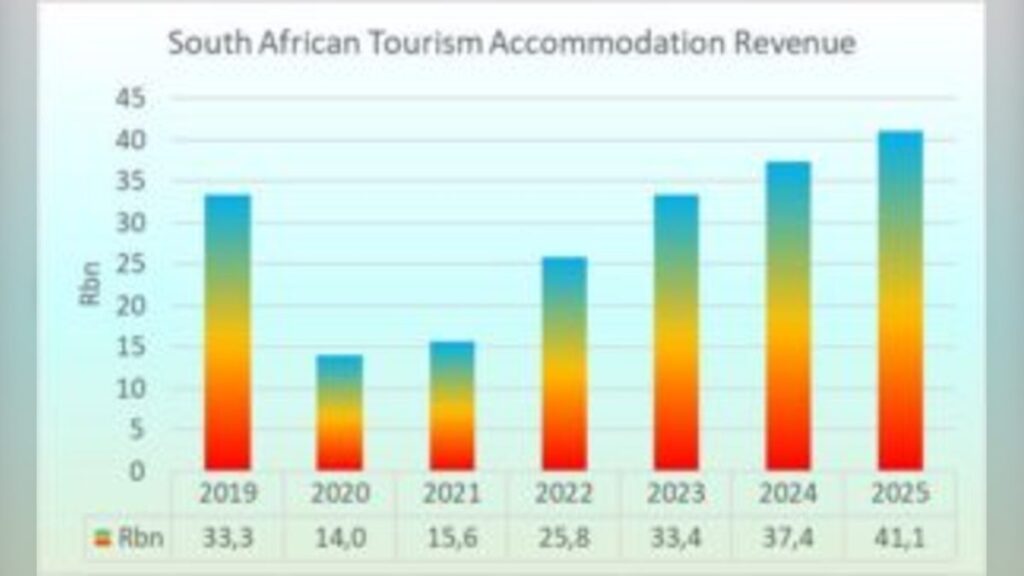
South Africa’s tourism sector saw a notable boost in 2025, with tourist accommodation revenue rising 9.9% to R41.1 billion.
This figure excludes ancillary income like meals, beverages, laundry, and other services, meaning the total revenue generated by tourists is even higher.
The growth reflects a steady rebound in travel and the country’s appeal as a regional and international destination.
Airbnb and Short-Term Rentals Fuel Growth
While Statistics South Africa tracks registered hotels, motels, inns, guest-houses, and caravan parks, short-term rentals via Airbnb and Booking.com are not included in official figures.
Estimates indicate over 90,000 active Airbnb listings nationwide, with about a third concentrated in Cape Town.
This growing segment highlights a shift in traveler preferences toward more flexible, self-catering accommodations, contributing significantly to the broader tourism economy.
Tourist Arrivals Climb Sharply
In 2025, South Africa welcomed 10.5 million tourists, a 17.7% increase from the previous year.
The majority were regional visitors from the South African Development Community (SADC), whose numbers surged 19.6% to 7.9 million.
Overseas tourists also increased, though more modestly, growing 11.9% to 2.4 million, closely mirroring accommodation revenue growth.
Hotels Remain the Dominant Player
Hotels continue to dominate South African tourism accommodation, capturing 57.8% of market share in December 2025, the peak holiday month.
“Other” accommodations—such as hostels or boutique lodges—claimed 35.8%, guest houses 4.5%, and caravan parks 1.8%.
Occupancy rates reflect this distribution: hotels at 56.6%, other accommodations at 36.2%, and both guest houses and caravan parks at 24.5%.




Impact and Consequences
-
Increased revenue highlights tourism as a critical driver of South Africa’s economy.
-
Regional travel dominates, signaling strong SADC economic and social ties.
-
Growth in Airbnb and short-term rentals may pressure traditional hotels to innovate and diversify services.
-
Tourism gains can support employment, local businesses, and infrastructure investment, boosting broader economic recovery.
What’s Next?
-
Authorities may consider integrating short-term rental data into official statistics for a more complete picture of tourism revenue.
-
Hotel operators could adjust pricing strategies to stay competitive with Airbnb and boutique alternatives.
-
Continued marketing to both regional and international tourists may further accelerate arrivals and revenue growth.
-
Monitoring global events and exchange rates will remain crucial as international arrivals gradually expand.
Summary
South African tourism accommodation revenue surged 9.9% to R41.1 billion in 2025, reflecting both strong regional visitor numbers and resilient hotel and lodging occupancy.
The rise in short-term rentals like Airbnb further underscores changing travel trends and the sector’s importance to the economy.
Key Takeaways
-
Tourist accommodation revenue reached R41.1 billion, excluding meals, drinks, and other services.
-
South Africa welcomed 10.5 million tourists, up 17.7% from 2024.
-
SADC countries accounted for most visitors, rising 19.6% to 7.9 million.
-
Hotels dominate with 57.8% market share; occupancy rates highest among hotels at 56.6%.
-
Airbnb listings exceed 90,000 nationwide, with a third in Cape Town.
-
Growth in tourism supports jobs, local businesses, and broader economic development.
-
Short-term rental inclusion in official stats may reshape future sector reporting.

