
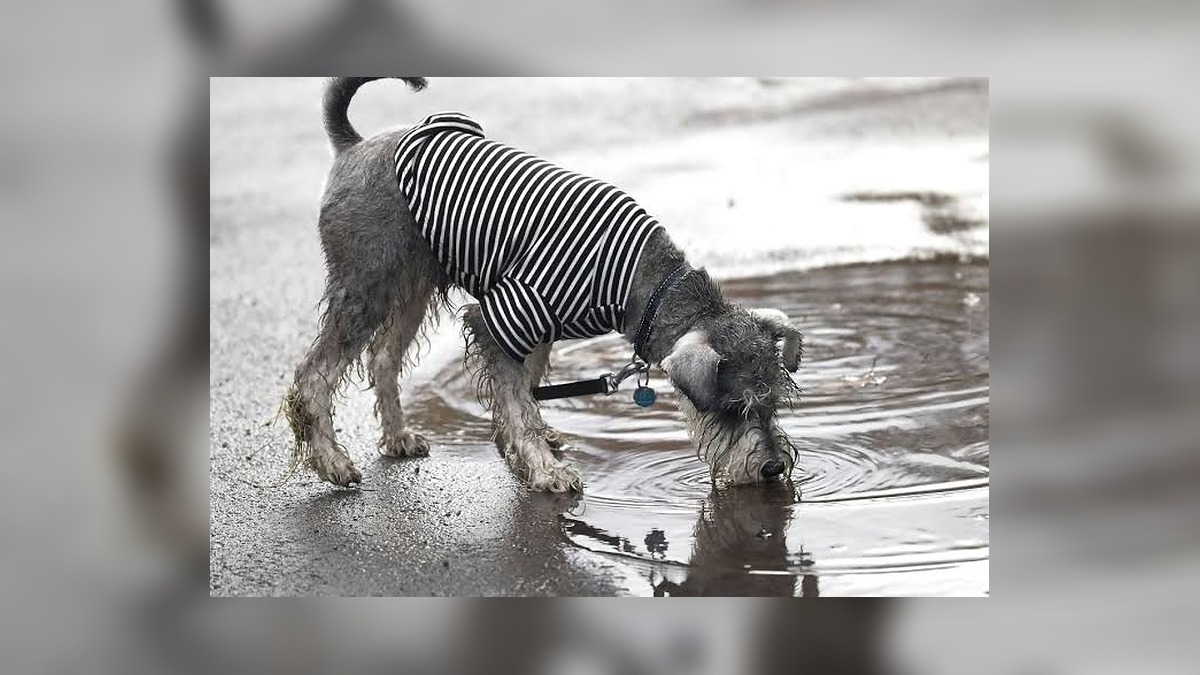
As rain and thundershowers are expected in parts of South Africa, pet owners are being urged to watch where their dogs drink during outdoor walks.
Many dogs enjoy splashing through puddles after rainfall, but swallowing water collected on roads, pavements and in gardens can expose them to harmful bacteria, parasites and chemicals.
Although clean rainwater is not automatically dangerous, puddles can accumulate contaminants washed from the surrounding environment. Water that appears clear may still contain substances capable of making pets seriously ill.
Providing dogs with clean drinking water during walks and preventing them from drinking from unknown sources can help reduce these risks.
Leptospirosis bacteria can spread through contaminated water
One of the main health concerns associated with stagnant water is leptospirosis, a bacterial infection that can affect both animals and humans.
Rodents and other infected animals can release the bacteria through their urine. When that urine contaminates puddles, soil or other outdoor surfaces, dogs may become infected by drinking the water or allowing it to enter through their eyes, mouth or damaged skin.
Symptoms can include fever, vomiting, loss of appetite, muscle pain and weakness. In more serious cases, the infection can damage the kidneys and liver.
Because leptospirosis can cause severe illness, owners should contact a veterinarian if their dog develops concerning symptoms after possible exposure to contaminated water.
Giardia parasites may cause diarrhoea and vomiting
Puddles can also contain Giardia, a microscopic parasite that infects the intestines and can cause digestive problems in dogs.




The parasite spreads when infected animals shed it in their faeces, contaminating the surrounding environment and water sources. Dogs can then become infected by swallowing contaminated water.
Diarrhoea is a common symptom, although some dogs may carry the parasite without showing obvious signs of illness.
Other affected animals may experience vomiting, weight loss or a reduced appetite. Persistent digestive symptoms should be assessed by a veterinarian, particularly if a dog becomes weak or shows signs of dehydration.
Roadside puddles may contain toxic chemicals
Water collected beside roads and in car parks presents additional dangers beyond bacteria and parasites.
Rain can wash oil, fuel, antifreeze and other chemical residues from vehicles and surrounding surfaces into puddles. Dogs that drink this water may ingest substances that can cause poisoning.
Antifreeze containing ethylene glycol is particularly hazardous. Even a small quantity can cause serious illness, including vomiting, weakness, poor coordination and seizures, followed by potentially fatal kidney damage.
If a dog is suspected of swallowing antifreeze or another toxic chemical, owners should seek emergency veterinary assistance immediately rather than waiting for symptoms to appear.
Fresh drinking water can help protect your dog
Pet owners do not need to avoid outdoor walks whenever the weather turns wet. Instead, taking a few practical precautions can help keep dogs safe.
Carrying a bottle of fresh water and a portable bowl gives dogs a clean alternative when they become thirsty during walks.
Owners should also discourage their pets from drinking from roadside puddles, stagnant pools and water collected near rubbish, drains or parked vehicles.
Supervising dogs outdoors is particularly important after heavy rainfall, when water may have picked up contaminants from a wider area.
Watch for signs of illness after puddle exposure
Drinking from a puddle does not automatically mean a dog will become ill, and not all rainwater is contaminated. However, owners should pay attention to changes in their pet’s behaviour or health after possible exposure.
Vomiting, diarrhoea, unusual tiredness, weakness, loss of appetite or changes in coordination warrant veterinary advice. Suspected exposure to antifreeze or other dangerous chemicals requires urgent attention, even if the dog initially appears normal.
With wet weather expected in parts of South Africa, keeping clean water available and preventing dogs from drinking from questionable sources are simple measures that may help avoid unnecessary health risks.

