
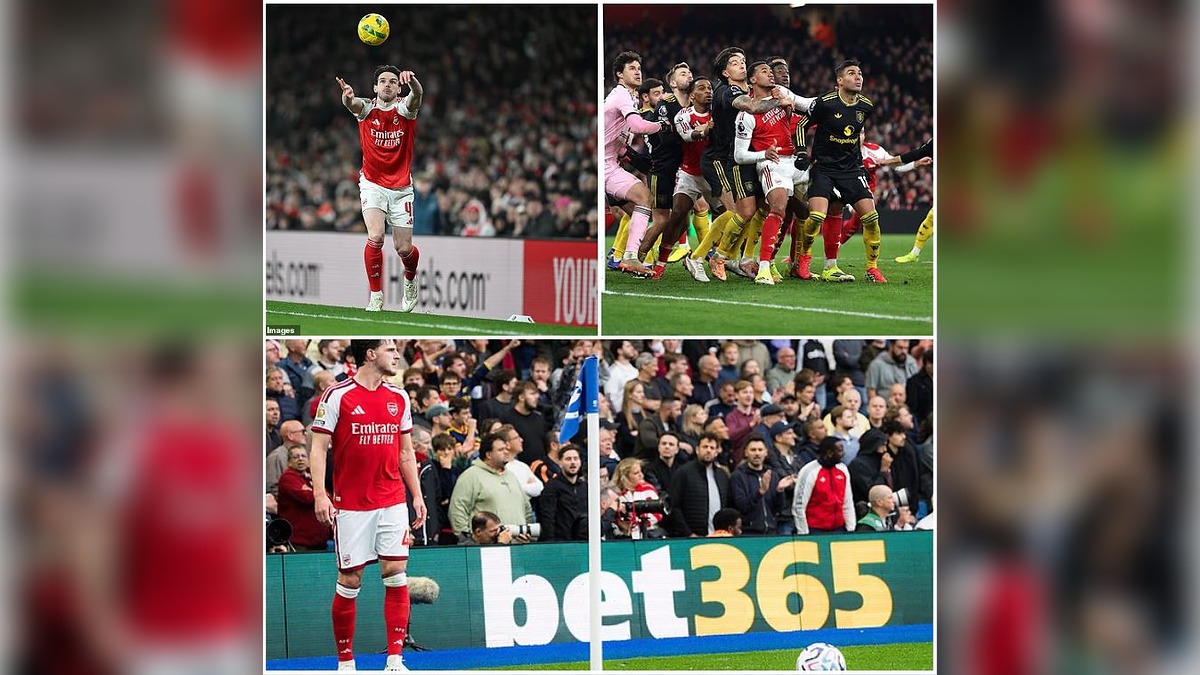
The Premier League’s renewed focus on grappling and blocking during set-pieces appears to be changing the way teams score, with goals from open play increasing and corner routines becoming less productive in the opening weeks of the 2026/27 season.
The shift marks a notable change from last season, when corners became one of the competition’s most effective attacking weapons. New officiating instructions are now encouraging referees to penalise holding and other actions that materially affect opponents, particularly inside the penalty area.
The impact has been especially striking for Arsenal, who built much of their reputation around set-piece efficiency but have yet to score from a corner or free-kick in the league this season, aside from a penalty.
Arsenal and Tottenham Previously Thrived on Corner Routines
Arsenal’s success from corners last season made set-piece coach Nicolas Jover one of the most recognisable figures in the club’s backroom staff. The Gunners scored a Premier League-record 19 goals from corners, helping them overcome difficulties in open play.
Tottenham also benefited significantly, scoring 18 corner goals during a campaign in which they narrowly avoided relegation.
The growing influence of dead-ball situations led clubs to invest heavily in specialist coaching. Chelsea, for example, met the release clause of Aston Villa set-piece coach Austin MacPhee, underlining how highly clubs valued expertise in this area.
However, the increasing use of physical obstruction inside the six-yard box raised questions about whether corner routines were becoming too dependent on wrestling for position rather than technical execution.
New Refereeing Instructions Target Holding and Blocking
The crackdown follows growing concern about the amount of grappling during attacking set-pieces. FIFA analysis of the 2026 World Cup found that more than 40 per cent of corners involved an attacking player attempting to block or impede an opponent, compared with fewer than 25 per cent at the 2022 tournament in Qatar.
More than half of the goals scored from corners at the 2026 World Cup reportedly involved a blocker.
Premier League referees’ chief Howard Webb had previously indicated that officials would take a tougher approach to holding in the penalty area, although managers later questioned how consistently the instructions were being applied.
The latest guidance places greater emphasis on penalising holding actions that have a clear material impact on an opponent. The change appears to be encouraging teams to reconsider how they attack corners and how much physical contact they can use to create space.
Open-Play Goals Return as Corner Scoring Falls
Last season, approximately 18 per cent of Premier League goals came from corners, the highest proportion recorded in the competition’s history. Goals from open play fell to around 65 per cent, below the range of roughly 70 to 73 per cent seen over the preceding eight seasons.
Early figures from the current campaign suggest a reversal. Goals from open play have returned to nearly three-quarters of the 141 goals recorded at the time of the analysis, while corners have accounted for just 9.9 per cent — the second-lowest proportion in Premier League history.
More than half of the division’s clubs were still waiting for their first corner goal at the time of the report. Arsenal and Tottenham were among them, despite their previous success in the area.
Brighton, by contrast, had scored three corner goals while also recording the league’s best expected-goals figure from open play, suggesting that teams can remain dangerous from dead balls without sacrificing their effectiveness during normal play.
Statistics Show Referees Are Penalising More Grappling
Opta data indicates that fouls awarded within 10 seconds of a corner being taken have increased from six per cent of corners last season to 8.1 per cent this season.
Fouls specifically involving grappling — defined in the data as pushing or holding and pulling an opponent’s shirt — have risen from 4.1 per cent to 5.3 per cent.




However, the figures do not suggest that penalties have become a routine consequence of the crackdown. There were 21 penalties awarded within 25 seconds of a corner last season, while no penalty had been awarded for grappling at a corner in the opening period covered by the analysis.
An incident involving Arsenal defender Ezri Konsa and Sunderland’s Dan Ballard following a long throw-in initially resulted in a penalty, but the decision was subsequently considered a mistake.
The figures suggest officials are intervening more often, although the effect on scoring cannot be attributed entirely to refereeing decisions.
Set-Piece Chances Have Become Less Dangerous
A closer look at expected goals indicates that the decline in set-piece scoring is not solely the result of more fouls being called.
Expected goals from set-pieces have fallen from 0.76 per match to 0.72, a relatively modest reduction. Expected goals from corners specifically have dropped from 0.46 to 0.38 per match, equivalent to around five fewer goals across the first 50 matches of the season.
The number of shots generated from set-pieces has actually increased slightly. That suggests teams are still finding ways to attempt shots, but may be taking them from less threatening positions rather than creating the close-range opportunities that previously emerged from crowded six-yard boxes.
Short corners are also being used more frequently, potentially reflecting a tactical response to tighter officiating and the reduced effectiveness of traditional aerial routines.
Arsenal’s Set-Piece Dominance Has Disappeared So Far
Arsenal enter their upcoming meeting with Leeds United without a set-piece goal from a corner or free-kick in the league, apart from a penalty. That is a striking change for a side that ranked first for set-piece goals over the previous three seasons.
The numbers also suggest the Gunners are creating fewer opportunities. Last season, Arsenal ranked first in the Premier League for expected goals from set-pieces and third for shots from them. This season, they have dropped to ninth for expected goals and 14th for shots.
Their corner-related foul rate has also fallen, despite the overall increase across the division. This indicates that Arsenal’s difficulties may involve both the changing refereeing environment and a decline in the volume or quality of the chances they are creating.
Gabriel, one of their most effective threats from dead balls, has registered three attempts from set-piece situations without scoring. Based on the quality of the opportunities created, Arsenal might reasonably have expected to score a couple of times.
There may also be an element of statistical correction. The Gunners scored approximately five more goals from set-pieces last season than their expected-goals figures suggested they should have managed.
Injuries Have Added to Arsenal’s Attacking Problems
Arsenal’s struggles have coincided with the absence of important players who contributed to their set-piece success last season.
William Saliba missed the first five league matches, while Jurrien Timber also spent time out injured. Timber scored three set-piece goals last season, including two against Leeds, while Gabriel also found the net three times from such situations.
The absence of key players can disrupt familiar routines, timing and movement inside the penalty area. A replacement may need time to learn Jover’s detailed set-piece plans and develop the same understanding with teammates.
Arsenal’s defensive injuries have therefore created an additional challenge as they attempt to restore their effectiveness from corners.
Arteta Says Arsenal Must Adapt to New Rules
Manager Mikel Arteta has acknowledged that clubs must adjust to the changing interpretation of the rules. He has also criticised a separate Premier League change that prevents players from using towels to dry the ball before throw-ins.
Arsenal had previously used long throws from Ben White and Declan Rice to create danger, scoring a couple of goals from such situations last season.
Arteta said the team needed to find alternative methods, while maintaining that their set-piece performances during the opening five matches had been better than the lack of goals suggested.
He also pointed to the role of luck, noting that Arsenal had scored three set-piece goals by the same stage last season, despite not executing every routine as well as they could have.
The manager remains confident that a sustained level of chance creation should eventually produce goals, but the upcoming matches will test that belief.
Leeds Test Could Reveal Whether Arsenal Can Adapt
Arsenal’s meeting with Leeds presents a difficult opportunity to end their set-piece drought. Leeds were described as the tallest team in the division, making them a challenging opponent for a side trying to rediscover its aerial threat.
The broader change in the Premier League could have lasting tactical consequences. Teams may increasingly favour short corners, more varied movement and combinations that create shooting opportunities without relying on physical congestion near the goal.
For Arsenal, the challenge is to retain the advantages that made them so dangerous last season while adapting to stricter officiating, injuries and a possible correction in their scoring efficiency.
The early numbers suggest the crackdown is coinciding with a return to more open-play goals. Whether that represents a lasting transformation of Premier League football will depend on how teams respond as the season progresses.

