
The latest official figures reveal a worrying trend for the UK’s youth.
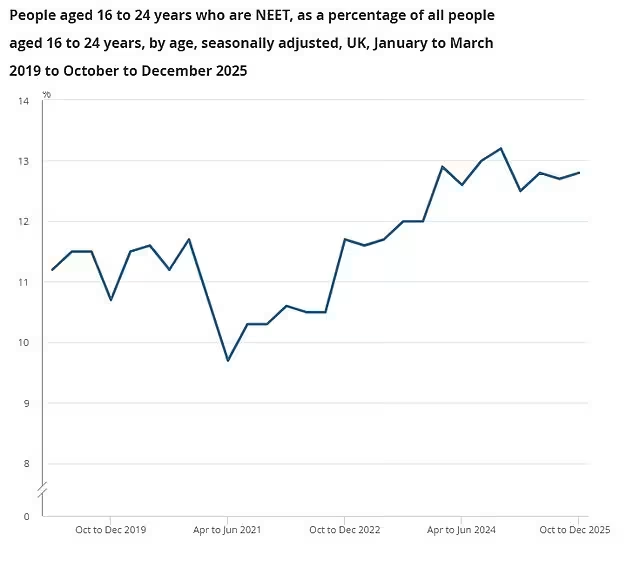
Nearly 957,000 young people aged 16 to 24 were not in employment, education, or training (NEET) in the last three months of 2025.
That’s up from 946,000 in the previous quarter and represents roughly one in eight young people in this age group.
Experts warn that the increase is tied to rising unemployment, leaving a growing portion of the younger generation at risk of long-term detachment from the workforce.
Gender Breakdown and Labour Market Impact
Of the 957,000 young people out of work or education, around 510,000 were men, and 448,000 were women.
Unemployment accounted for 411,000 of these, a rise of 45,000 from the previous quarter.
The remaining young people were classed as “inactive,” not currently seeking work or training opportunities.
David Freeman, joint head of the labour market division at the Office for National Statistics, said: “The final quarter of 2025 saw a slight increase in the number of young people not in employment, education, or training compared to the previous quarter.
This was driven by higher unemployment, with more young people actively looking for work.”
Political Fallout and Accusations
The figures have prompted sharp criticism from opposition politicians.
Shadow Business Secretary Andrew Griffith argued the government’s policies were contributing to a “jobless generation.”




He cited Labour’s Jobs Tax, economic uncertainty, and the red tape associated with the Employment Rights Bill as factors holding back hiring and forcing more young people into unemployment.
Griffith said: “Starmer would rather duck the fight with his own backbenchers than fix a worklessness crisis that is bleeding the economy dry.
Labour is failing to take the tough decisions needed to reward work and back business.”
Warnings From Within
Even some of Labour’s own advisers are sounding the alarm.
Alan Milburn, heading a government review into the rising NEET numbers, warned that the problem is no longer just about temporary unemployment.
Many young people are now “detached” from the job market, creating a cycle of dependency on benefits.
Milburn cautioned that automation and AI could worsen the situation in the coming years, potentially leaving even more young people struggling to find their place in the workforce.
Economic Context
The surge in NEETs comes as the government grapples with the rising cost of welfare and working-age inactivity, which remains a lingering challenge in the wake of Covid.
With public finances under pressure, economists fear that the combination of handouts and long-term joblessness could deepen structural problems in the economy.
What’s Next?
Policymakers face urgent decisions to tackle the growing NEET population.
Potential interventions include incentives for businesses to hire young workers, reforms to vocational training, and targeted support for those at risk of long-term unemployment.
The upcoming government review led by Alan Milburn is expected to offer recommendations to stem the rise in youth disengagement.
Meanwhile, political debate over welfare policy and Labour’s Employment Rights Bill is likely to intensify, with MPs and industry leaders calling for urgent action to prevent a permanent “lost generation” from emerging.
Summary
The number of UK youth aged 16 to 24 not in employment, education, or training has risen to 957,000, up from 946,000 in the previous quarter.
Unemployment accounts for 411,000, while the rest are inactive.
Opposition politicians have criticised Labour policies for creating a “jobless generation,” and government adviser Alan Milburn warned that many young people are now detached from the workforce.
Rising NEET numbers, coupled with economic pressures and automation, pose a long-term challenge for public finances and the UK labour market.

