
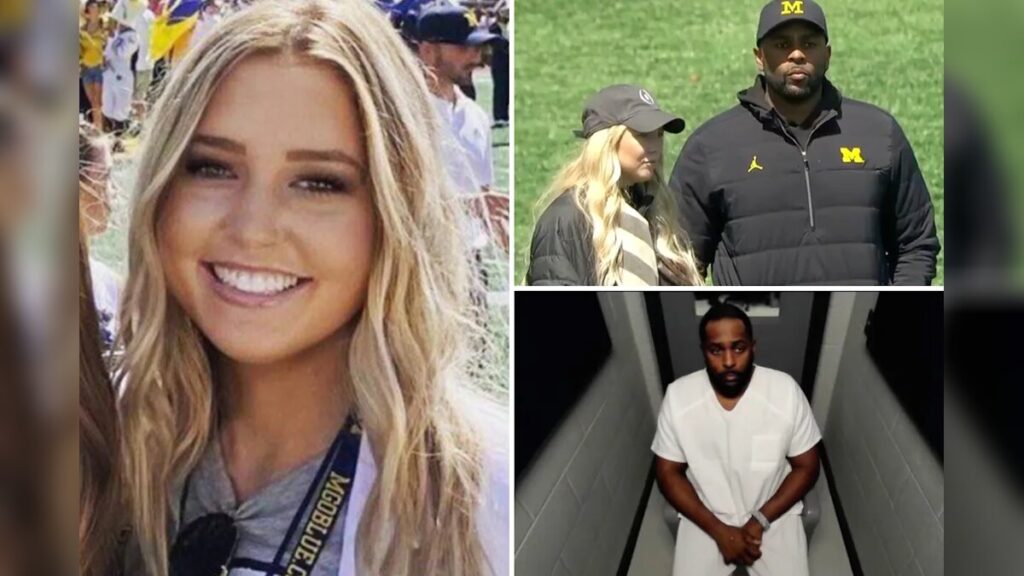
The legal case involving former Michigan football head coach Sherrone Moore has taken another turn after he narrowly avoided jail time in a ruling that immediately sparked backlash from the alleged victim, Paige Shiver.
A Michigan court sentenced Moore to 18 months of probation following his December 10 arrest tied to a confrontation at Shiver’s apartment.
While he technically received suspended jail terms totaling up to 210 days, the judge ruled he would not serve time behind bars unless he violates probation conditions.
The decision has split public opinion, with the courtroom tone focused on rehabilitation while Shiver and her legal team describe the ruling as far too lenient.
What Happened on December 10
The incident dates back to a chaotic night in December when Moore allegedly showed up at Shiver’s residence after a personal and professional breakdown linked to their relationship.
Police were called after reports that Moore had entered the apartment, and he was later arrested nearby following a 911 call suggesting he had forced entry and made threats of self-harm.
Moore was immediately dismissed from his position at the University of Michigan shortly after the incident became public, marking a dramatic fall for a coach who had recently led the team to a national championship season.
Courtroom Outcome and Probation Terms
Judge J. Cedric Simpson imposed probation rather than incarceration, citing that jail time would not serve the purpose of the sentence.
However, the ruling still includes suspended sentences and strict conditions.
Moore must avoid any contact with Shiver, abstain from drugs and alcohol, continue mental health treatment, and pay court-related fees and fines totaling about $1,100.
The judge also referenced Moore’s family situation during sentencing, highlighting the role of his wife, Kelli Moore, in supporting him through the legal process.
Paige Shiver Breaks Her Silence
Shiver responded strongly after the verdict, describing the ruling as disconnected from what she says actually happened.
She claimed the December 10 incident was terrifying and involved violent behavior, including allegations of forced entry and threats with a knife.
Her legal team echoed her frustration, arguing that the punishment does not reflect the seriousness of the alleged events.




Her attorneys also criticized Moore’s conduct and called the court’s final outcome inadequate given the severity of the accusations.
Defense, Denials, and Competing Narratives
Moore’s side has consistently denied the most serious allegations.
His legal resolution earlier included no-contest pleas to lesser charges, while more serious accusations such as stalking and home invasion were dismissed through a plea agreement.
His representatives have emphasized that the case contains disputed facts, particularly regarding intent and what occurred inside the apartment.
At the same time, earlier recordings and police interactions released during the case added further controversy, with Moore claiming he was misunderstood and emotionally overwhelmed during the incident.
A Coaching Career That Unraveled Quickly
Before the scandal, Moore was seen as one of college football’s rising coaching figures, having worked his way up through programs including Central Michigan and Michigan under Jim Harbaugh.
He was promoted to head coach after Michigan’s national championship success, but the legal case abruptly ended his tenure and put his career on hold.
Now, with his coaching future uncertain, attention has shifted from the field to the courtroom—and whether he can rebuild his reputation.
Impact and Consequences
The fallout from the case has been severe on multiple fronts.
For Moore, the immediate consequence is probation, career disruption, and ongoing legal restrictions that will shape his personal and professional life for years.
For Shiver, the case has brought public scrutiny alongside her legal pursuit, as she continues to speak out about what she describes as a traumatic experience.
More broadly, the case highlights how quickly high-profile sports careers can collapse when personal conduct and legal issues collide.
It also raises ongoing questions about how universities handle internal investigations involving staff relationships and allegations of misconduct.
What’s Next?
Moore’s future now depends heavily on compliance with probation conditions.
Any violation could trigger the suspended jail sentences, immediately escalating his legal consequences.
Separately, reputational recovery will be a long process, especially in the highly scrutinized world of college football coaching.
There is also the possibility of further civil proceedings, though none have been publicly confirmed at this stage.
Summary
Sherrone Moore has avoided jail after being sentenced to probation in a case involving allegations brought by Paige Shiver.
While serious charges were reduced or dismissed through legal agreements, the incident continues to generate strong public reaction.
Moore must now comply with strict probation terms while both legal and reputational consequences continue to unfold.
Bulleted Takeaways
- Sherrone Moore received 18 months probation and suspended jail terms after a December 10 incident
- He was previously arrested following a confrontation at Paige Shiver’s apartment
- Serious charges were dropped or reduced through a plea agreement
- Moore must avoid contact with Shiver, undergo treatment, and follow strict probation rules
- Shiver strongly criticized the court decision as too lenient
- Moore’s coaching career at Michigan ended immediately after the incident
- Judge cited rehabilitation factors and family support, including his wife Kelli Moore
- His future in football remains uncertain due to legal and reputational damage
- The case continues to spark debate over accountability in college sports leadership

