
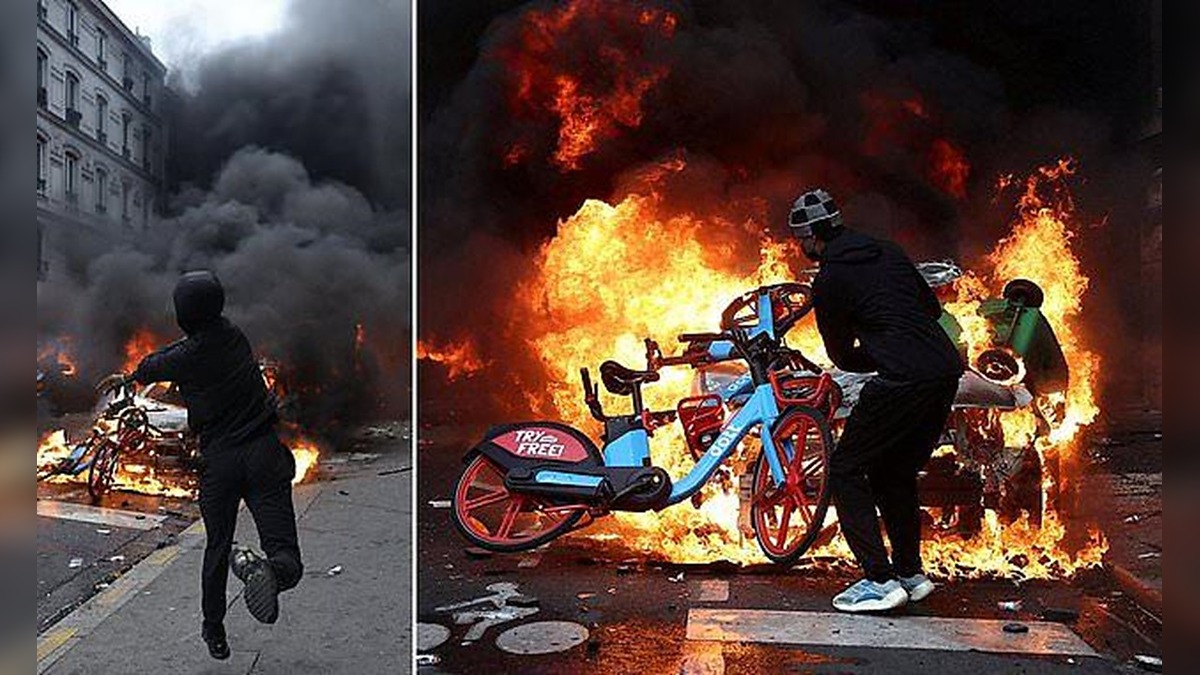
Marine Le Pen’s National Rally party is preparing plans to designate Antifa and other far-left organisations as terrorist groups if it comes to power following France’s 2027 presidential election.
Jordan Bardella, who has been selected by Le Pen as her preferred choice for prime minister if she becomes president, outlined the proposal during an interview with French broadcaster CNews.
Bardella said he would urge the European Union to place Antifa militias and other far-left organisations on its terrorist lists if he assumes leadership of the French government.
He accused far-left groups of pushing France towards civil war and described Antifa as the movement’s armed wing, arguing that stronger measures would be necessary to restore order on the streets.
Bardella Accuses La France Insoumise of Encouraging Violence
The National Rally leader also criticised Jean-Luc Mélenchon, head of the far-left La France Insoumise party, accusing him of encouraging unrest and contributing to growing tensions across the country.
Bardella called on the French public to be cautious of political figures who, he claimed, were promoting civil conflict and threatening the country’s national identity.
He argued that recent demonstrations in Paris had exposed cooperation between far-left activists and elements associated with La France Insoumise.
According to Bardella, the ultra-left should be classified as a terrorist organisation because of its alleged connections to members of parliament from Mélenchon’s party.
He further accused the far-left of acting as La France Insoumise’s armed wing and claimed that Mélenchon understood the consequences of his political actions.
National Rally Wants Restrictions on Protest Participation
Beyond the proposed designation of Antifa, Bardella said his government would consider preventing individuals on security watch lists from taking part in demonstrations.
He compared the proposed restrictions to measures used to prevent known football hooligans from attending matches.
The comments come amid weeks of demonstrations across France, several of which have been accompanied by clashes, property damage and confrontations with security forces.
Authorities have blamed masked far-left activists for some of the violence, accusing them of attempting to provoke wider unrest.



More Than 600,000 People Join Nationwide Demonstrations
Protests continued in Paris last week as demonstrators demanded higher wages and raised concerns about living costs and public services.
France’s Interior Ministry estimated that more than 600,000 people participated in the demonstrations.
However, the CGT, one of the country’s major trade unions, put the figure at nearly 1.6 million people across more than 200 demonstrations nationwide.
The reported turnout was higher than the figures recorded during the October 17 demonstrations, which were accompanied by incidents of rioting and looting.
Interior Minister Laurent Nuñez said approximately 70,000 police officers were deployed to manage the demonstrations, supported by armoured vehicles, drones and helicopters.
Police operations have also attracted criticism over allegations that officers used excessive force, resulting in injuries to protesters.
Violence Reported in Several French Cities
Authorities in Brittany reported on Thursday that masked individuals had attempted to block roads in Rennes.
Officials said young people, sometimes accompanied by adults, had engaged in serious acts of violence, including throwing steel balls at police officers.
Other confrontations, disturbances and incidents were reported in Lyon, Nantes, Pau, Orléans, Rennes and Toulouse.
The Interior Ministry confirmed that at least 448 people had been arrested in connection with the demonstrations.
Protests Began Over School Conditions Before Spreading Nationwide
The protest movement started in September following demonstrations over staff shortages at a high school southeast of Paris.
It subsequently expanded across the country, attracting students demanding increased education funding.
The movement later drew in workers protesting over pensions, rising fuel prices and the increasing cost of living.
The demonstrations have since become a major political issue as France approaches its next presidential election.
Presidential Race Intensifies Ahead of 2027 Election
The protests are unfolding as political parties and presidential hopefuls position themselves ahead of the campaign to succeed Emmanuel Macron.
Macron is constitutionally barred from seeking a third consecutive presidential term, leaving the field open to competing candidates.
Le Pen, who leads the National Rally, is considered a leading contender in the race.
Several political figures also joined Thursday’s demonstration in Paris, including Mélenchon, Green Party leader Marine Tondelier and moderate-left politician Raphaël Glucksmann.
The National Rally’s proposal to classify Antifa and other far-left organisations as terrorist groups is expected to form part of the party’s security and public order agenda if it wins the 2027 election.
