
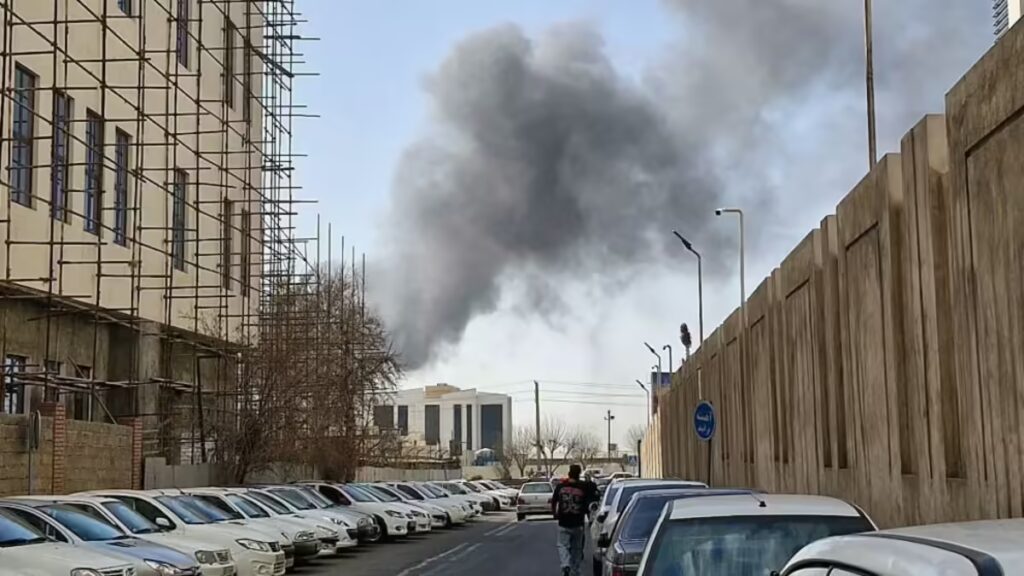
In a startling escalation of regional tensions, Iranian drones struck the United States Embassy in Riyadh, Saudi Arabia, causing a small fire and limited damage.
Saudi authorities have labeled the attack as retaliatory, amid the ongoing conflict in the Middle East.
The incident represents a significant shift in the nature of hostilities, moving beyond traditional military targets and directly threatening diplomatic missions.
Damage and Immediate Impact
While officials report only minor material damage and no confirmed casualties, the strike has sent a clear signal that high-profile diplomatic sites are no longer off-limits.
Firefighters quickly contained the blaze, but the psychological impact on embassy staff and local security personnel is significant.
Riyadh, which hosts critical U.S. diplomatic and strategic operations in the Gulf, now faces heightened security concerns as this attack underscores the vulnerability of key assets in the region.
Regional and Global Repercussions
The embassy strike has already triggered reactions in global markets. Oil prices have firmed, gold is rising due to safe-haven demand, and equities are experiencing renewed volatility as investors react to the increasing risk of conflict expansion.


Experts warn that this move could mark a dangerous widening of the Middle East conflict, potentially drawing in additional regional powers and complicating diplomatic relations across the Gulf.
Drone Warfare and Strategic Implications
The attack highlights the growing use of drones in regional conflicts, where inexpensive, remote-controlled weapons allow adversaries to reach critical targets with minimal risk to personnel.
Analysts say the incident may force countries in the region to reevaluate the security of embassies, military installations, and strategic infrastructure.
Diplomatic missions may now need to implement higher levels of protection, and governments are expected to intensify monitoring of unmanned aerial threats in the Gulf.
Impact and Consequences
- Escalates tension between Iran and Saudi Arabia, with potential broader U.S. involvement.
- Signals that diplomatic sites are vulnerable in modern conflicts.
- Creates uncertainty in global markets, particularly oil and safe-haven assets.
- Raises the stakes for security coordination among Gulf states and international partners.
What’s Next?
Regional and international leaders are expected to convene emergency meetings to assess the implications of the attack.
Diplomatic efforts may intensify to prevent further escalation, while military and intelligence agencies could step up surveillance and defensive measures around embassies.
The coming days will be crucial in determining whether this strike is an isolated incident or the beginning of a broader campaign targeting strategic and diplomatic sites.
Summary
Iranian drones attacked the U.S. Embassy in Riyadh, causing a limited fire and material damage.
The strike signals a dangerous expansion of hostilities beyond traditional military targets, heightening concerns over regional stability, diplomatic security, and global market volatility.
The event underscores the growing role of drone warfare and the vulnerability of critical assets in the Gulf.
Bulleted Takeaways
- Iranian drones targeted the U.S. Embassy in Riyadh, causing minor damage.
- Saudi authorities view the strike as a retaliatory move amid regional conflict.
- No casualties have been confirmed, but psychological and security impacts are significant.
- Global markets reacted with rising oil prices, gold gains, and equity volatility.
- The attack demonstrates the increasing use of drones against strategic and diplomatic targets.
- Diplomatic security and regional stability are now under heightened scrutiny.
