
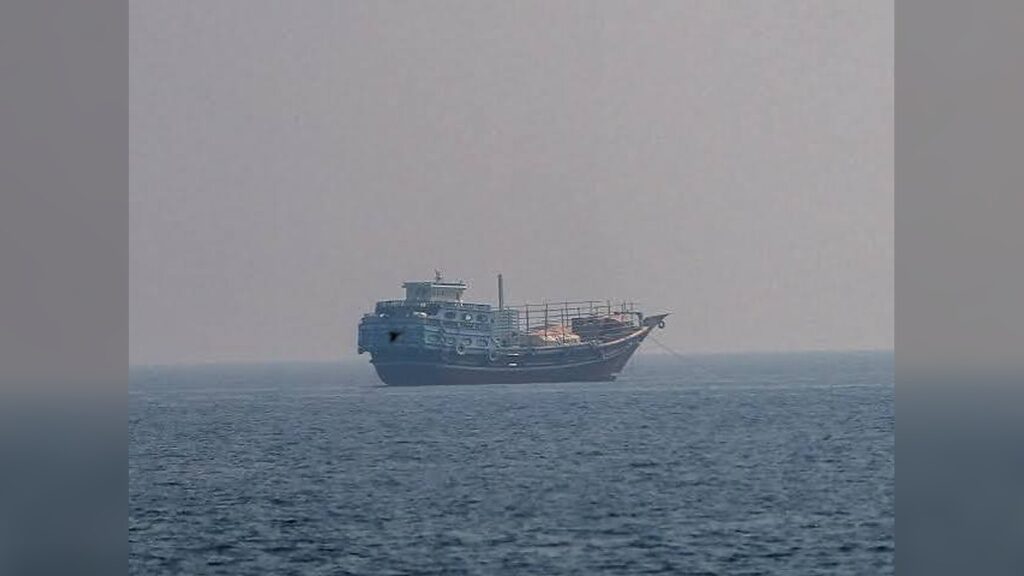
Commercial shipping continued to move through part of the Strait of Hormuz on Sunday, even after Iran declared the strategic waterway closed amid rapidly escalating military tensions with the United States.
According to maritime security officials, the southern transit route along Oman’s coastline remained accessible, offering vessels a narrow passage despite growing regional instability.
However, shipping operators were warned that the security situation remains highly dangerous as the conflict shows little sign of easing.
Maritime Authorities Warn of Serious Security Risks
The Joint Maritime Information Center advised vessels navigating the region to exercise extreme caution, describing the overall threat level in the Strait of Hormuz as “severe.”
The organization warned ship crews to expect increased communication with naval forces operating in the area while remaining alert to potential hazards, including the possibility of naval mines.
Although part of the waterway remains open, authorities stressed that conditions can change rapidly as military operations continue across the Gulf.
Iran Says Foreign Ships Will Not Be Allowed to Pass
Iran’s Islamic Revolutionary Guard Corps (IRGC) announced that no vessels would be permitted to transit the Strait of Hormuz until what it described as foreign interference in the region comes to an end.
The military accused the United States of fueling instability and argued that restricting maritime traffic was necessary during the ongoing confrontation.
The declaration further heightened uncertainty around one of the world’s most strategically important shipping lanes.
Latest US Airstrikes Intensify Regional Conflict
The maritime warning came shortly after the United States launched another round of airstrikes against Iranian targets, marking the third major American military operation against Iran within a week.



The latest attacks followed an incident involving a Cyprus-flagged container ship that was struck near the Omani coast.
The vessel caught fire after the attack, forcing its crew to abandon ship as emergency responders rushed to the scene.
The growing cycle of military retaliation has significantly increased fears of a broader regional conflict.
Strait of Hormuz Remains the Core Issue in US-Iran Talks
Control of the Strait of Hormuz continues to dominate diplomatic efforts between Washington and Tehran.
Before the conflict intensified, nearly one-fifth of the world’s traded crude oil and liquefied natural gas passed through the narrow waterway, making it one of the most critical energy corridors on the planet.
Recent attacks targeting several U.S.-allied nations, including Qatar, Kuwait and Oman, have placed the fragile ceasefire reached last month under severe pressure and raised fresh doubts about ongoing negotiations.
Commercial Traffic Drops Sharply
Shipping activity through the strait appeared dramatically reduced on Sunday as many operators avoided the region.
Only a small number of oil product tankers were observed approaching the waterway, reflecting growing concerns among commercial shipping companies over the escalating security risks.
The decline in vessel movements highlights the uncertainty surrounding one of global trade‘s most important maritime routes.
Missing Crew Member Sparks International Concern
Rescue teams successfully evacuated crew members from the damaged container ship after the attack, according to British maritime authorities.
However, India’s government confirmed that one of its citizens who had been aboard the vessel remains missing, with efforts continuing alongside Omani officials to locate the crew member.
The incident has added a humanitarian dimension to the rapidly worsening military crisis.
Iran Reports Stopping Ships That Ignored Warnings
Iranian state media reported that Revolutionary Guard forces intercepted commercial vessels attempting to pass through the Strait of Hormuz despite official warnings.
According to Iranian reports, one cargo ship was halted after a warning shot was fired, while another vessel was also reportedly intercepted for failing to comply with Iranian instructions.
Iranian authorities have provided few additional details, but the reports suggest Tehran is actively seeking to enforce its declared restrictions on maritime traffic as tensions with the United States continue to escalate.

