
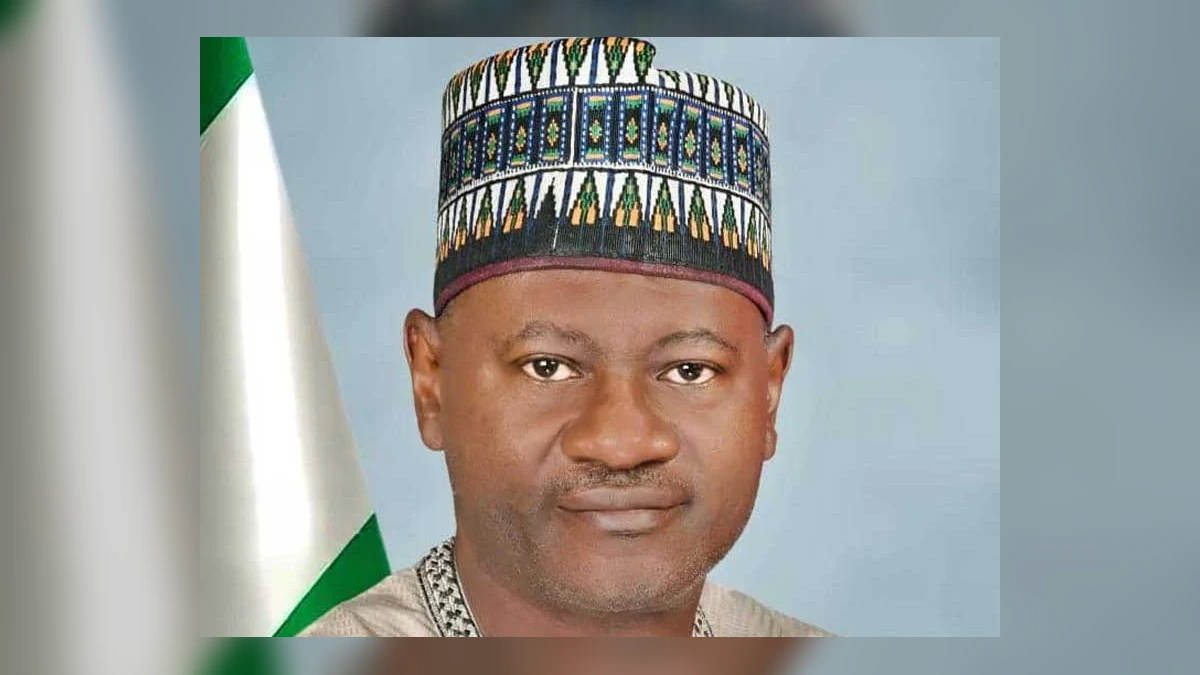
The Director-General of the Institute for Peace and Conflict Resolution (IPCR), Joseph Ochogwu, has called on religious leaders, policymakers and other stakeholders to avoid narratives that could intensify religious tensions and weaken national unity.
Ochogwu made the appeal on Friday in Abuja during the Quarterly Policy Review Dialogue of the Network of Policymakers and Religious Leaders to Support Peace, Security and Reconciliation in Nigeria.
The event was organised by the IPCR in partnership with the King Abdullah bin Abdulaziz International Centre for Interreligious and Intercultural Dialogue. It focused on the theme, “Moving Beyond ‘Us versus Them’: Strengthening Local Governance, Security and Foreign Relations to Protect Freedom of Religion or Belief in Nigeria.”
Warning Over Religious Framing of Security Challenges
Ochogwu said discussions about insecurity and religious freedom must be factual, balanced and supported by evidence. He cautioned against accounts that portray complex security problems exclusively as conflicts involving religious groups.
He acknowledged concerns about violent attacks against Nigerians, including incidents in which individuals and communities have been targeted because of their religious identities.
He also noted the international attention surrounding the United States’ designation of Nigeria as a Country of Particular Concern.
“The subject has assumed greater national and international significance in view of concerns surrounding violent attacks against some Nigerians, including incidents in which victims and communities have been targeted on the basis of their religious identity,” he said.
While recognising the need to address religious intolerance, insecurity and attacks on vulnerable communities, Ochogwu warned that exaggerated or polarising messages could increase mistrust and deepen divisions.
He said legitimate concerns about violations of religious freedom should be addressed constructively, with victims receiving justice and protection, while public discussions should promote national understanding.
Stronger Institutions and Security Accountability Needed
The IPCR director-general said Nigeria already had constitutional, legal and institutional provisions guaranteeing freedom of religion and prohibiting religious discrimination.
However, he stressed that the existence of these provisions was not enough without effective implementation.
According to Ochogwu, protecting religious freedom requires accountable institutions, impartial security operations, effective governance and consequences for violations.
He identified local governance, security administration and foreign relations as three areas requiring stronger policy action.
Ochogwu called for local government institutions, traditional rulers and community leaders to become more responsive to grievances, discrimination and disputes before they develop into violent conflicts.




He also urged security agencies to adopt professional, intelligence-led and impartial methods while respecting constitutional rights and human rights protections.
On international relations, he said Nigeria needed stronger bilateral and multilateral partnerships to improve cooperation on religious freedom, intolerance and conflicts driven by identity.
Professor Zuru Links Divisions to Poor Governance
Presenting the lead paper at the dialogue, Professor Shehu Zuru, a law lecturer at Nile University of Nigeria, attributed Nigeria’s growing social divisions to hatred, declining moral values, failed leadership and the erosion of shared humanity.
Zuru said the “Us versus Them” mentality flourished in societies where hatred and social hostility had weakened people’s belief systems.
He also linked the country’s security difficulties to poor governance, widespread poverty, ineffective local leadership and the failure of successive administrations to agree on national development priorities.
The professor called on the Federal Government to address the question of local government autonomy, arguing that effective administration at the grassroots was necessary to tackle insecurity and other social challenges.
“The Federal Government, if it is serious about effective public policy governance at the rural level, must stop playing the ostrich on the issue of local government autonomy and confront the issue head on,” he said.
Zuru Calls for International Cooperation Against Insecurity
Zuru argued that Nigeria could not effectively tackle terrorism, banditry and other forms of organised insecurity without cooperation from other countries.
He noted that many of these threats had cross-border dimensions and required stronger diplomatic engagement.
The professor urged Nigeria to build partnerships with countries capable of providing advanced military equipment and intelligence support for counter-insurgency operations.
Hayab Rejects Christian-Muslim Explanation for All Violence
The Chairman of the Northern Christian Association of Nigeria, John Hayab, warned against describing Nigeria’s security challenges solely as conflicts between Christians and Muslims.
He identified impunity, weak institutions, economic marginalisation and manipulation by political and other elites as factors contributing to insecurity and social divisions.
Hayab said presenting violence primarily through religious identities might be politically convenient but failed to explain the actual causes of criminal activity.
He urged Nigerians to report offenders regardless of their religious affiliation rather than protecting individuals because they belonged to the same faith community.
“If my brother, because he goes to church, will cause Nigeria a problem, I should be strong enough to expose him and let Nigeria know that these people are like that,” he said.
Call for Grassroots Peacebuilding and Early Warning
Hayab also advocated stronger cooperation among traditional rulers, religious leaders, local government officials and other community stakeholders to improve conflict prevention and early-warning systems.
He referred to peacebuilding initiatives in Kaduna, which he said helped maintain relative stability in the state between November 2002 and April 2011.
The cleric further called on security agencies to include human rights and freedom of religion training in their operations.
He maintained that religious or ethnic identity should not protect anyone from prosecution for breaking the law.
“Anybody that violates the general law is not above the law, whether he’s a Christian or a Muslim, a Southerner or a Northerner. Whatever kind of identity you call it, the law is meant for Nigerians,” Hayab said.
He urged Nigerians to regard attacks and insecurity affecting any community as national concerns rather than problems belonging exclusively to a particular religious group.
