
The Ford Foundation has announced a new strategy centred on what it describes as the “preconditions for thriving democracies”, placing greater emphasis on the rule of law, reliable information and inclusive economies.
The announcement, made on Thursday, marks a significant strategic change for the 90-year-old grantmaking organisation. Some observers have described it as the foundation’s most substantial shift since 2015, when former president Darren Walker focused its work on tackling inequality.
The announcement also comes less than two weeks before the US midterm elections.
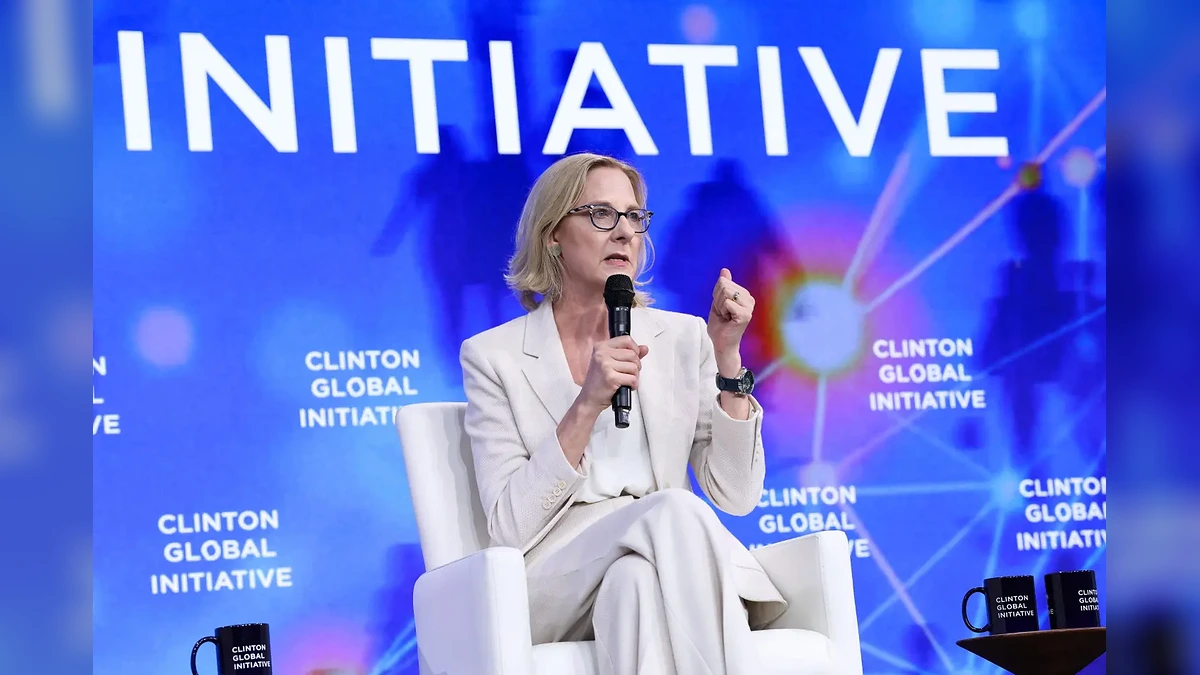
Ford Foundation president Heather Gerken said the new direction represented an evolution of the organisation’s existing work rather than a complete departure from its previous approach.
She said the strategy reflected the rapidly changing global environment.
Foundation Responds to Rising Autocracy and Inequality
The organisation said its revised priorities were developed in response to rising autocracy, widening inequality and declining public trust.
Gerken said conditions had changed since the foundation’s previous strategy review, prompting it to mobilise its resources to address emerging challenges while maintaining its commitment to social justice.
The foundation expects to distribute approximately $700 million in grants in 2027, according to a spokesperson who spoke to the Associated Press. The amount could increase.
It also plans to change how funding is distributed by providing larger grants, making more multiyear commitments and expanding general operating support.
The foundation said its approach was informed by decades of research suggesting that organisations receiving flexible, long-term funding were better equipped to respond to unexpected challenges.
Nicholas Turner, the foundation’s executive vice president of programs, said the strategy review had highlighted the demands that an unpredictable and volatile period placed on philanthropic organisations.
Seven Areas Will Guide Future Grantmaking
Under the new strategy, the foundation will organise its grantmaking around seven areas:
- Democratic governance and the rule of law
- Inclusive economies
- Information as a public good
- Safety and justice
- Gender equality
- Global cooperation
- Racial justice
The organisation plans to introduce strategies for each area in stages throughout 2027.
It will also establish a dedicated racial justice fund, expand its gender equality work to cover the full range of reproductive healthcare, and increase its focus on how digital tools are developed, deployed and governed.




The foundation said the changes would guide its funding as it responds to challenges affecting democratic institutions and communities around the world.
Some Existing Grantees Could Lose Funding
The strategic shift will also affect organisations currently receiving support from the foundation.
Some existing programmes will eventually be phased out as funding moves towards the new priorities. Turner told the Associated Press that it was too early to identify which programmes would be affected.
He said the foundation would approach the withdrawal of support with respect, care and assistance for those involved.
The changes form part of a broader effort to reshape how the organisation distributes its resources and supports its grant recipients.
Ford Foundation Operates Independently of Ford Motor Company
Despite sharing the Ford name, the foundation operates independently of Ford Motor Company.
Edsel Ford, the son of company founder Henry Ford, established the foundation in 1936 with an initial contribution of $25,000. It was intended from the beginning to operate separately from the automotive business.
Following Edsel Ford’s death in 1943 and Henry Ford’s death in 1947, the foundation received substantial funds from their estates, helping it become one of the world’s largest philanthropic organisations.
Henry Ford II, Edsel’s son, later helped guide the foundation towards greater independence. It expanded its international mission, appointed trustees from outside the Ford family and moved its headquarters to New York City in 1953.
The foundation eventually sold its stake in Ford Motor Company. The automaker now operates its own charitable organisation, Ford Philanthropy, which is funded through the company’s earnings.
Endowment Grows to $18 Billion
The Ford Foundation is headquartered in New York and operates 10 overseas offices. It currently provides funding to more than 2,300 organisations.
Its endowment has grown from $13 billion in 2019 to $18 billion, according to the foundation. In 2019, it was distributing more than $600 million annually in grants.
The organisation has also played a role in supporting civil rights litigation since the late 1960s and helped establish public interest law as a distinct field.
Its new strategy builds on that history while directing future resources towards democracy, economic inclusion and other areas identified in its revised priorities.
Strategy Announced Amid Pressure on US Nonprofits
The announcement comes as the Trump administration increases scrutiny of nonprofit organisations and educational institutions.
President Donald Trump threatened last year to revoke Harvard University’s tax-exempt status. Earlier this month, the administration proposed a rule that would remove tax-exempt status from colleges and private schools operating race-based programmes, according to the Chronicle of Philanthropy.
Vice President JD Vance has also criticised major philanthropic foundations. During his 2021 Senate campaign, he argued that large foundations should lose their tax exemptions and described the Ford Foundation and similar organisations as “cancers on American society”.
Against this backdrop, Gerken told the Associated Press that the foundation’s work on democracy was nonpartisan. She pointed to millions of dollars the organisation had committed this year to groups defending election results.
Social Justice Remains Central to the Foundation’s Mission
Despite the changes to its funding strategy, the Ford Foundation said its commitment to social justice would continue across all seven areas of work.
Gerken said the organisation would maintain its focus on communities that had been marginalised or denied equal treatment under the law and economic opportunities.
The foundation said its new approach would combine its longstanding mission with a revised funding structure designed to respond to changing global conditions.

