
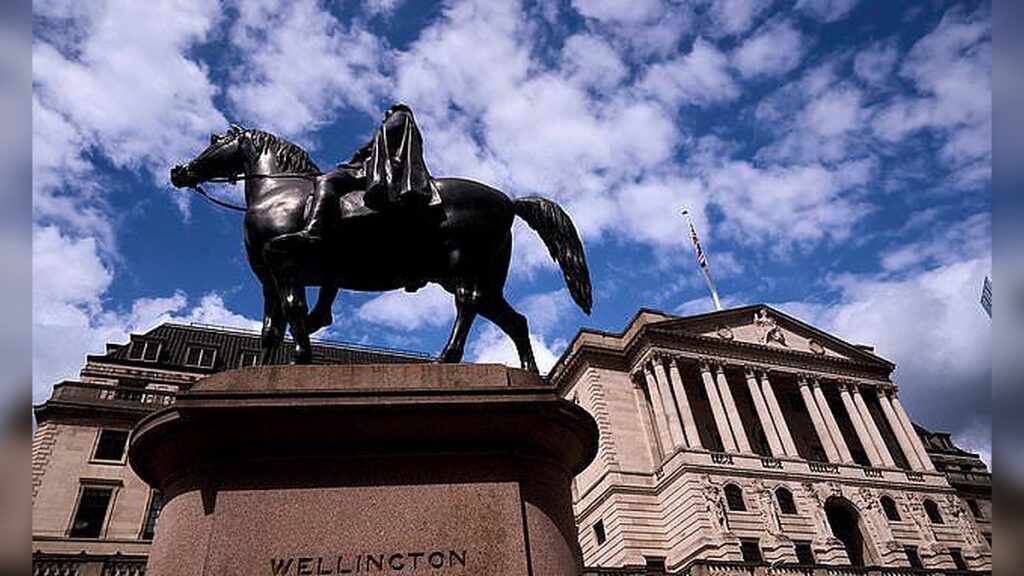
The Bank of England has kept its benchmark interest rate at 3.75 per cent for a sixth consecutive meeting, while signalling that borrowing costs could rise if elevated energy prices begin to feed more persistently into inflation and wages.
The Monetary Policy Committee voted by six to three to leave Bank Rate unchanged, matching the decision taken at its previous meeting in July.
Three members backed an increase, highlighting the growing debate within the committee over how long the central bank can maintain its current position.
Bailey Warns Prolonged Energy Shock Could Trigger Rate Rise
Governor Andrew Bailey said the Bank had so far seen limited evidence that higher global energy prices were influencing UK price and wage-setting behaviour.
However, he warned that a prolonged period of energy market volatility could change the picture and require the central bank to act.
“Today, we’ve held Bank Rate at 3.75 per cent,” Bailey said.
He added that the longer the energy-price volatility continued, the greater its potential effect on inflation and the more likely it would become that rates would need to rise to return inflation to the Bank’s 2 per cent target.
UK Inflation Climbs to 3.1% in August
The decision came as official figures showed that consumer price inflation increased to 3.1 per cent in August, up from 2.9 per cent in July.
Core inflation, which excludes volatile food and energy components, remained at 2.6 per cent for the fourth consecutive month.
The stability in underlying inflation has offered some reassurance that the latest energy shock has not yet produced the kind of broader price pressures seen during the inflation surge of 2022.
That distinction remains important for policymakers as they assess whether higher energy costs are likely to remain concentrated in household bills and fuel prices or spread more widely through the economy.
Middle East Conflict Pushes Oil Above $100
Energy markets have become a major source of uncertainty since the Bank’s previous meeting, with escalating hostilities in the Middle East driving oil prices sharply higher.
Brent crude has risen above $100 a barrel, reaching its highest level in several months.
Economists have warned that a sustained rise in oil and other energy costs could push UK inflation towards 4 per cent by the start of next year.




The concern is that prolonged high energy prices could eventually become incorporated into wage negotiations, business pricing and other areas of the economy, creating what economists describe as second-round inflation effects.
Economists See Limited Evidence of Broader Price Pressure
Investment bank ING said the UK economy was less exposed to second-round inflation effects than it had been during the energy shock associated with the war in Ukraine.
The bank said the latest inflation figures did not point to a need for the Bank of England to adopt a more aggressive stance, arguing that inflation was currently developing in a relatively predictable way.
That contrasts with the situation in 2022, when inflation repeatedly exceeded forecasts and prompted increasingly aggressive monetary tightening.
Mortgage Rates Rise as Markets Reassess the Outlook
Despite the Bank’s decision to hold rates, financial markets have been pricing in further increases over the coming year.
Major lenders including NatWest, Santander, HSBC, Lloyds Bank and TSB have already increased some mortgage rates, with experts expecting other lenders to review their pricing.
The average five-year mortgage rate has reached 5.87 per cent, its highest level since November 2023, increasing the cost for borrowers approaching remortgage dates as well as people trying to secure their first home.
Households Face Higher Energy Costs
The interest-rate debate is taking place alongside renewed pressure on household finances.
Energy bills are expected to rise to a three-year high next month, while new forecasts suggest they could increase by a further 25 per cent in January.
Petrol prices have also climbed, reaching a four-year high, adding another source of pressure from the energy market.
Rate Setters Face Supply-Side Inflation Problem
The Bank faces a particular challenge because much of the current inflationary pressure is being generated by supply-side factors rather than strong domestic demand.
Higher interest rates can weaken demand and slow domestic price pressures, but they cannot directly resolve geopolitical disruptions affecting global oil and energy supplies.
Rob Morgan, chief investment analyst at Charles Stanley, said the Bank therefore faced a difficult balance between controlling inflation and avoiding additional pressure on an already fragile economy.
He noted that there was currently little evidence of the feared second-round inflation effects and no clear sign that weakness in the labour market was reversing.
Bank Breaks With Federal Reserve
The Bank of England’s decision also marked a divergence from the US Federal Reserve.
The Federal Reserve unanimously voted to raise its benchmark interest rate by 0.25 percentage points to 4 per cent, its first increase since 2023.
It is the first time since September 2024 that the two central banks have moved in different directions. At that time, the Bank of England held its rate while the Federal Reserve announced a 50-basis-point reduction.
Richard Carter, head of fixed income research at Quilter Cheviot, described the Bank as the last of the major central banks to maintain rates while its counterparts move towards tighter policy.
He argued that because much of the latest inflation increase is linked to energy costs and developments in the Middle East, the Bank has limited influence over the underlying source of the shock.
At the same time, Carter said financial markets continued to anticipate at least one rate increase this year and several more into next year, while warning that delayed action could become a concern if higher energy prices spread into other parts of the economy.
