
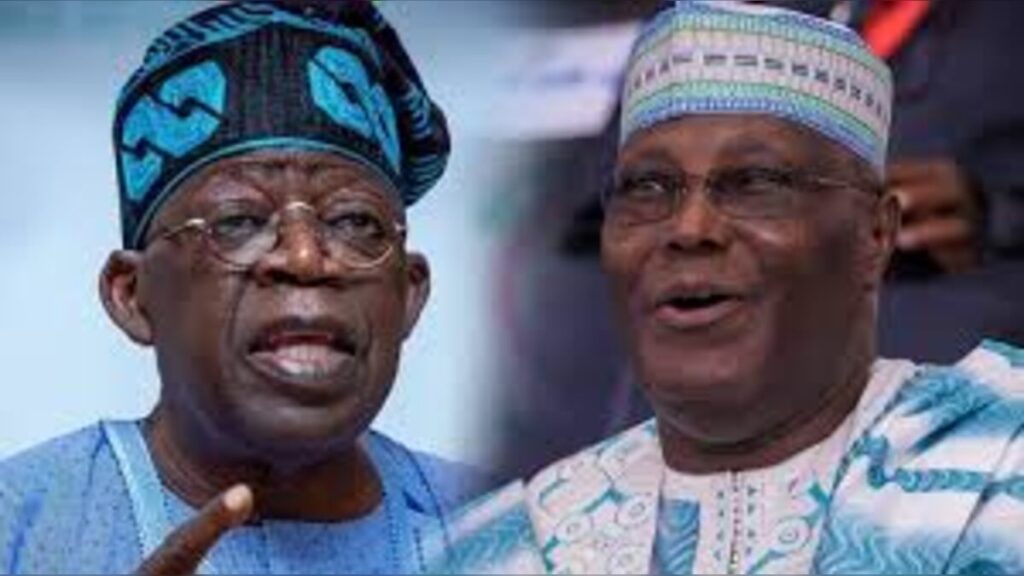
A fresh political clash has emerged between allies of former Vice President Atiku Abubakar and President Bola Tinubu following the latter’s recent trip to Lagos.
What was expected to be a high-profile working visit has instead sparked criticism, with the opposition camp questioning the President’s visibility and engagement during key public events.
Accusations of Absence at Major Events
At the center of the controversy is the claim that Tinubu did not personally attend several important project unveilings scheduled during the visit.
According to Atiku’s media aide, Phrank Shaibu, this absence reflects a troubling pattern of what he described as “absentee leadership.”
Projects such as the Opebi–Mende–Ojota Link Bridge and a Multi-Agency Complex were reportedly commissioned without the President’s presence.
Instead, responsibilities were delegated to Senate President Godswill Akpabio.
Critics argue that such delegation, while common in governance, becomes problematic when it appears consistent during major state functions.
Concerns About Leadership Style
The Atiku camp went further, suggesting that the President’s limited public appearances raise questions about his commitment to governance and accountability.
They linked this pattern to broader national concerns, including rising insecurity and public expectations for visible leadership.




The criticism didn’t stop in Lagos. The statement also referenced Tinubu’s recent visit to Jos, where he reportedly spent only a short time following a deadly attack.
For critics, this added to the perception of a leader not fully engaging with pressing national issues.
Presidency Pushes Back
In response, the Presidency has defended Tinubu’s actions.
Presidential spokesperson Sunday Dare explained that the President’s absence from some events was due to ongoing security briefings.
According to Dare, Tinubu has been actively engaged behind the scenes, prioritising urgent national matters over ceremonial appearances.
He pointed to recent security developments across the country as requiring the President’s immediate attention, suggesting that governance often extends beyond what is visible to the public.
A Broader Political Context
This exchange reflects Nigeria’s vibrant and often intense political landscape, where opposition figures closely scrutinise the actions of those in power.
Public appearances by leaders are not just ceremonial—they are symbolic of accountability, empathy, and connection with citizens.
Historically, Nigerian presidents have faced similar criticism when perceived as distant during crises.
At the same time, governance often involves balancing public duties with sensitive behind-the-scenes decision-making, especially on security matters.
Impact and Consequences
- Public perception: Repeated absence from public events can shape how citizens view leadership commitment.
- Political tension: The criticism deepens rivalry between Tinubu’s administration and Atiku’s camp.
- Governance debate: Raises questions about the balance between delegation and direct involvement.
- Trust and accountability: Visible leadership often influences public trust, especially during crises.
- Media narrative: Such disputes can dominate headlines and influence political discourse nationwide.
What’s Next?
The Presidency may increase public engagements to counter the narrative of limited visibility.
Meanwhile, opposition figures are likely to continue highlighting perceived gaps in leadership.
As Nigeria navigates security and economic challenges, the spotlight will remain on how frequently and effectively the President engages both publicly and administratively.
Summary
The Atiku camp has criticised President Bola Tinubu for not attending key events during his Lagos visit, calling it a sign of absentee leadership. The Presidency, however, insists that the President was focused on urgent national security matters. The situation underscores ongoing political tensions and raises broader questions about leadership visibility and accountability in Nigeria.
Bulleted Takeaways
- Atiku Abubakar’s camp accused President Bola Tinubu of missing key Lagos project unveilings
- Major events were delegated to Senate President Godswill Akpabio
- Critics say the pattern reflects absentee leadership and weak public engagement
- Tinubu’s brief visit to Jos after a deadly attack also drew criticism
- Presidency, through Sunday Dare, says security briefings required the President’s attention
- Debate highlights tension between public visibility and behind-the-scenes governance
- Issue adds to ongoing political rivalry and national discourse on leadership accountability

