
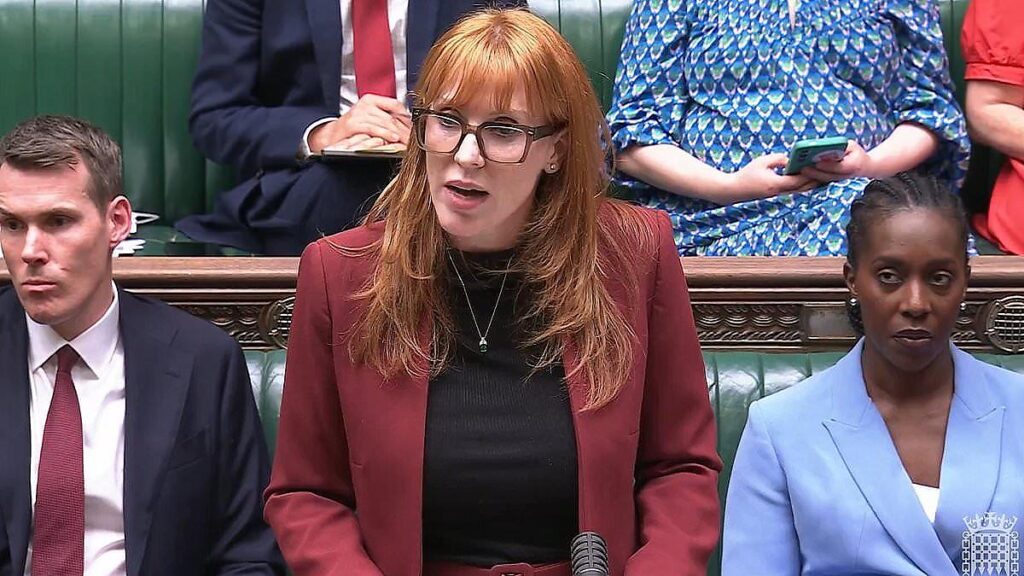
Angela Rayner has been forced to halt a major Labour programme to overhaul local government after mounting legal challenges raised fresh questions over the way council reorganisation decisions were reached.
The Communities Secretary announced that the Government was withdrawing previously issued decisions affecting Essex, Hampshire, Norfolk and Suffolk while ministers carry out a review of the wider programme.
The move represents a major setback for a policy launched under the previous administration and places several councils in uncertainty over their future structure.
Legal Advice Prompts Government Review
The Ministry of Housing, Communities and Local Government said it had received updated and privileged legal advice that prompted ministers to reconsider decisions already made.
The department said the review would help ensure that the process was legally robust and compatible with the new Government’s plans to reorganise the state and devolve greater power.
At least eight local authorities had either launched legal challenges or been considering court action over the Government’s decisions.
Rayner told MPs that she wanted to establish whether the existing process was sound and whether the proposed reorganisations fitted the priorities of Prime Minister Andy Burnham’s administration.
Four Council Areas Lose Previous Decisions
Decisions concerning Essex, Hampshire, Norfolk and Suffolk have now been withdrawn, including relevant neighbouring unitary authorities where necessary.
A further 14 areas affected by decisions announced in July will also be subjected to a full review, with reorganisation activity paused while ministers reassess the plans.
Those areas include Derbyshire, Devon, East Sussex, Gloucestershire, Hertfordshire, Kent, Lancashire, Leicestershire, Lincolnshire, Nottinghamshire, Oxfordshire, Staffordshire, Warwickshire and Worcestershire.
Cambridgeshire and Peterborough and West Sussex will also be examined as part of the review, despite final decisions not yet having been made in those areas.
Surrey Reorganisation Will Proceed
The Government stressed that Surrey’s reorganisation is not being reconsidered.
The two new unitary authorities covering East and West Surrey have already been established through legislation, while elections have also taken place.
They are therefore still scheduled to begin operating next April.
The wider programme, however, remains uncertain.
Labour’s Ambitious Council Overhaul
Labour’s reform programme is designed to replace England’s existing two-tier structure of county and district councils with larger unitary authorities.
The previous Government had announced plans in July that would have reduced 134 councils to 38 unitary authorities across 14 areas.
Those proposals immediately attracted political controversy, with Conservatives accusing Labour of manipulating proposed boundaries for electoral advantage.
The allegations of “gerrymandering” became a major source of opposition as councils examined the implications of the proposed restructuring.




Rayner Says Burnham Ordered a Fresh Look
Rayner said the decision to review the programme came at the request of Burnham after he became Prime Minister.
She told MPs that the new administration wanted to ensure that its plans genuinely delivered its ambition of transferring power closer to local communities.
The Communities Secretary acknowledged that the decision was difficult because substantial work had already been carried out by councils and local government officials.
She also described it as disappointing that she had been required to make the announcement, while insisting that the review was necessary to establish whether the programme was both legally sound and aligned with the Government’s priorities.
Conservatives Accuse Labour of Wasting Public Money
The Government’s decision was swiftly attacked by the Conservatives.
David Simmonds, the shadow local government minister, called on Rayner to apologise to councillors, officials, candidates, activists and businesses that had participated in the reorganisation process.
He described the reversal as a betrayal of local democracy and argued that councils had been allowed to invest considerable time and resources in a process that was now being reconsidered.
James Cleverly, a former shadow communities secretary and candidate for London mayor, went further by describing the original proposals as political opportunism and “gross gerrymandering”.
He questioned who should be held responsible for the costs incurred by councils if Rayner herself had only recently returned to the brief.
Reform Claims Government Has Backed Down
The decision was also welcomed by Reform UK, which controls several of the councils involved in legal challenges.
Kent County Council is due to consider whether to pursue a judicial review after receiving no response from the Government to concerns it had formally raised.
Reform also leads councils in Norfolk, Suffolk and Essex, all of which had challenged aspects of the reorganisation process.
Party leader Nigel Farage portrayed the Government’s decision as another victory for his party, claiming that Reform had consistently opposed the restructuring and used legal action to challenge it.
He described the latest development as an embarrassing defeat for Labour and argued that the Government had been forced to reconsider its approach.
Local Government Network Welcomes Pause
The County Councils Network said it had repeatedly raised concerns about the proposed restructuring.
Sean Matthews, the organisation’s chair-elect, said the network supported reorganisation where it could produce meaningful savings, protect services, maintain local identity and stimulate economic growth.
However, he said several councils had questioned whether the proposals met those objectives and whether the evidence supporting the decisions was sufficiently robust.
The network welcomed the Government’s decision to take ownership of the programme and conduct a review before deciding which proposals should proceed.
Liberal Democrats Warn of Chaos for Councils
Liberal Democrat local government spokesperson Zoe Franklin described the reversal as an embarrassing climbdown that had left councils facing further uncertainty.
She argued that financially pressured authorities had already spent substantial sums preparing for reorganisations that ministers had previously presented as legally secure.
Franklin also warned that councils responsible for crucial services, including adult social care and support for children with special educational needs and disabilities, could be particularly vulnerable if the uncertainty continues.
Unions Raise Concerns Over Council Workers
The uncertainty is also affecting local government employees.
Unison’s head of local government, Mike Short, said there had been concerns about the reorganisation process from the beginning and warned that the pause would prolong anxiety among workers.
Employees now face continued uncertainty about jobs, organisational structures and the services they will ultimately be expected to provide.
Short said staff should be treated as central to any restructuring on such a large scale, arguing that successful new authorities would depend on experienced and motivated workforces.
Elections to Continue Under Existing Boundaries
Despite the upheaval surrounding the restructuring programme, the Government confirmed that next May’s local elections will proceed using the existing council boundaries.
That decision provides some immediate clarity for voters and political parties while ministers undertake their review.
For the councils whose previous reorganisation decisions have been withdrawn or suspended, however, the longer-term shape of local government remains unresolved.
