
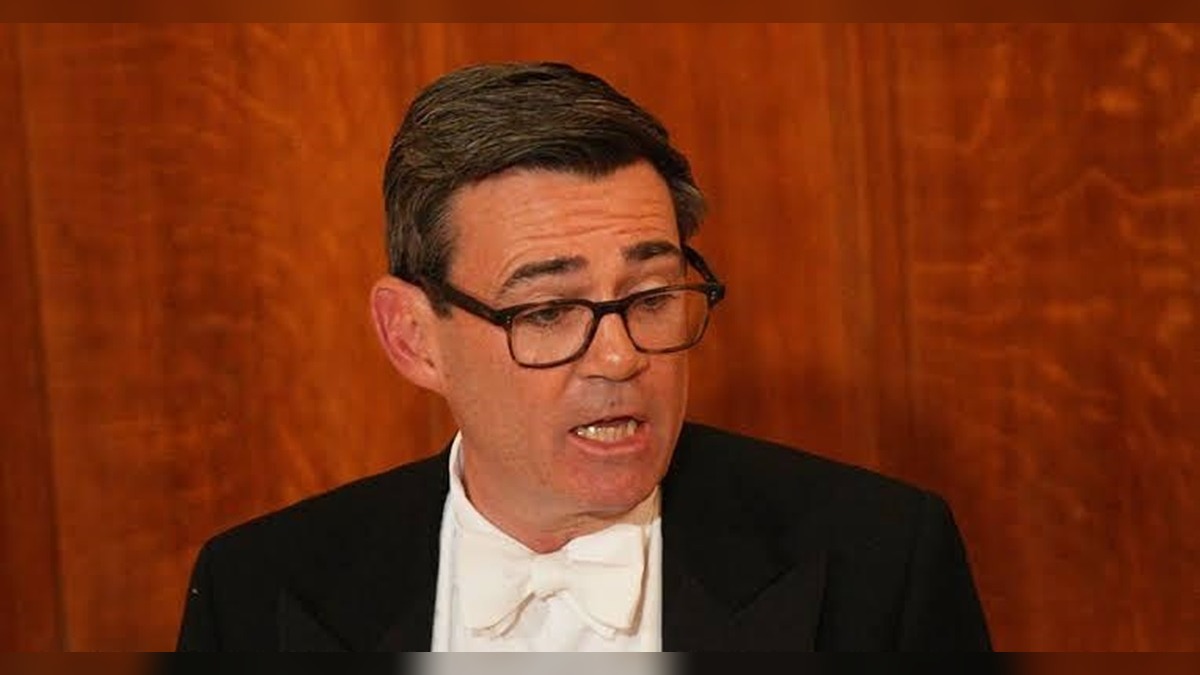
Speculation surrounding a possible May general election has intensified after it emerged that legislation to overhaul the welfare system and tackle youth unemployment is not expected until the middle of next year.
The delay could allow Andy Burnham to avoid several difficult parliamentary battles before a potential election, particularly over proposed changes to benefits for young people who are not in education, employment or training (NEET).
Former Labour minister Alan Milburn unveiled a major review of youth unemployment, outlining measures that would combine substantial investment in employment support with stricter conditions for receiving welfare payments.
However, Labour MPs have already indicated their opposition to potential benefit reductions, raising the prospect of another internal rebellion for the party.
Government policy based on Milburn’s recommendations is expected to be published in the New Year, with legislation following around the middle of 2027.
Key parliamentary votes could take place considerably later.
Labour Leadership Change Fuels Election Talk
The prospect of a May election has continued to generate discussion in Westminster despite Burnham repeatedly dismissing suggestions that he intends to call an early national poll.
If Burnham decides to hold an election in May, Parliament would need to be dissolved by the end of March.
The speculation has gathered momentum following an improvement in Labour’s polling performance after its leadership change.
Other government decisions have also contributed to the uncertainty, including Chancellor John Healey’s postponement of major decisions in the Budget delivered at the end of last month.
One Labour MP told the Daily Mail that the government’s timetable suggested an election was being considered for May.
“Everything points to him calling it in May.
All the difficult decisions have been kicked back to the back half of 2027,” the MP said.
The MP also described the spending review as a significant challenge for the government.
Defence Spending Presents Another Challenge
A spending review expected in the second half of next year will need to establish how the government intends to increase defence spending to three per cent of gross domestic product by 2030.
Healey has acknowledged that difficult decisions will be required across departmental budgets.
Think-tanks have also warned that existing government spending plans could result in substantial real-terms reductions in funding over the coming years.
Burnham also indicated during his Mansion House speech that decisions about Labour’s position on rejoining the European Union could be postponed until after the next general election.
A Labour MP suggested that Burnham and James Purnell, who were both involved in politics when Gordon Brown decided against calling an election in 2007, would be keen to avoid repeating that experience.
“They are scarred by it. They will be desperate not to make that mistake again,” the MP said.
Milburn Unveils Major Youth Employment Reform Proposals
The election speculation comes as Milburn publishes a 278-page review proposing extensive changes to how the government tackles youth unemployment and economic inactivity.
The report warns that without significant reforms, the number of under-25s classified as NEET could reach 1.27 million within five years.
Current figures put the number of young people aged 16 to 24 who are not in education, employment or training at approximately 981,000, representing 13 per cent of the age group across the UK.



Milburn’s recommendations include billions of pounds in employment support, government-backed job schemes and subsidies to encourage businesses to recruit young people.
The proposals also include changes to the benefits system, additional school assessments and a digital platform providing immediate access to NHS mental health services.
A new one-stop-shop would also be established to help young people access employment, education and training opportunities.
Employers Could Receive Relief From Employment Costs
Milburn has urged the government to make recruiting young workers cheaper, simpler and less risky for businesses.
His recommendations include reversing part of Rachel Reeves’ £25 billion increase in employers’ National Insurance contributions, slowing increases in the youth minimum wage and suspending elements of Angela Rayner’s Employment Rights Act.
He has also proposed legislation requiring ministers to assess how proposed tax increases and regulations could affect employment opportunities for young people before introducing them.
Speaking during television and radio interviews, Milburn acknowledged that Labour’s employment policies had affected business confidence.
He said there was “no doubt” that increases in National Insurance contributions and the minimum wage had made employers more reluctant to recruit.
“Employers have come to me and said that that has made it harder,” he added.
The former minister’s recommendations are expected to receive broad government support, although the proposal to reduce National Insurance costs for businesses employing young people is likely to be rejected.
Welfare Payments Could Be Restricted for Young People
Alongside increased employment support, Milburn has proposed tougher conditions for young people receiving benefits.
Under his recommendations, young people would be offered a legal guarantee of employment, education, training or other support.
Those who refuse to cooperate with the programme could lose their welfare payments.
Defending the proposal, Milburn argued that encouraging young people to undertake even a few hours of work each week would represent progress for those currently inactive.
“I think, honestly, if you can work a few hours a week rather than working none and doomscrolling in your bedroom, that’s a step forward,” he said.
“In the end, for the vast majority of young people, work beats welfare every single time.”
He also acknowledged that reforming the welfare system would require billions of pounds in initial investment and would not generate savings for at least a decade.
Government Spending Could Reach £5.8 Billion Annually
Although the report aims to achieve what it describes as “NEET Zero”, its projections suggest that the proposed measures would reduce the NEET rate from 13 per cent currently to 6.8 per cent by 2036.
The programme is expected to require annual funding of £5.8 billion.
According to the review, the investment could eventually produce a £6 billion reduction in welfare spending, although those savings are not expected to materialise until approximately ten years after implementation.
Milburn has called on ministers to begin implementing the recommendations immediately.
He wants the government to establish a funding timetable within 100 days and provide an initial £500 million allocation next year.
The report states: “There is no honest version of change in which the country declares youth participation a national priority and then refuses to pay for making it real. We have to put our money where our mouth is.”
It also warns that failing to address youth inactivity would carry significant financial and social costs, including lower employment, weaker economic growth, increased benefit spending and poorer health outcomes.
Badenoch Attacks Labour Over Youth Employment Crisis
Conservative Party leader Kemi Badenoch welcomed the attention given to youth employment but criticised the government for policies she believes have contributed to the problem.
She argued that Labour had made it increasingly difficult for businesses to employ young people through higher employment taxes, minimum wage changes and the Employment Rights Act.
Badenoch also questioned whether Milburn’s proposals would ultimately save taxpayers money.
“They have made hiring young people virtually impossible with the jobs tax, the equivalence on the youth minimum wage, the Employment Rights Act – they have made it really tough,” she said.
“Now they are talking about paying businesses to try to bring those young people into employment. How about just stop doing the stupid things in the first place?”
Conservatives Question Expansion of State Responsibilities
Shadow Work and Pensions Secretary Helen Whately also criticised the recommendations, describing them as a significant expansion of government responsibilities.
She highlighted the proposed legal entitlement to support under the Youth Guarantee, alongside plans to provide taxpayer-funded employment for young people who have been out of work for a year.
Whately also raised concerns about proposals allowing part-time workers to retain more of their benefits.
She argued that the measures would effectively place under-25s under continued government responsibility in a way similar to the system for under-18s.
“Under 25s will essentially remain a government responsibility like under 18s, with a legal guarantee of something to do. When will Labour let young people become grown ups?” she said.
