
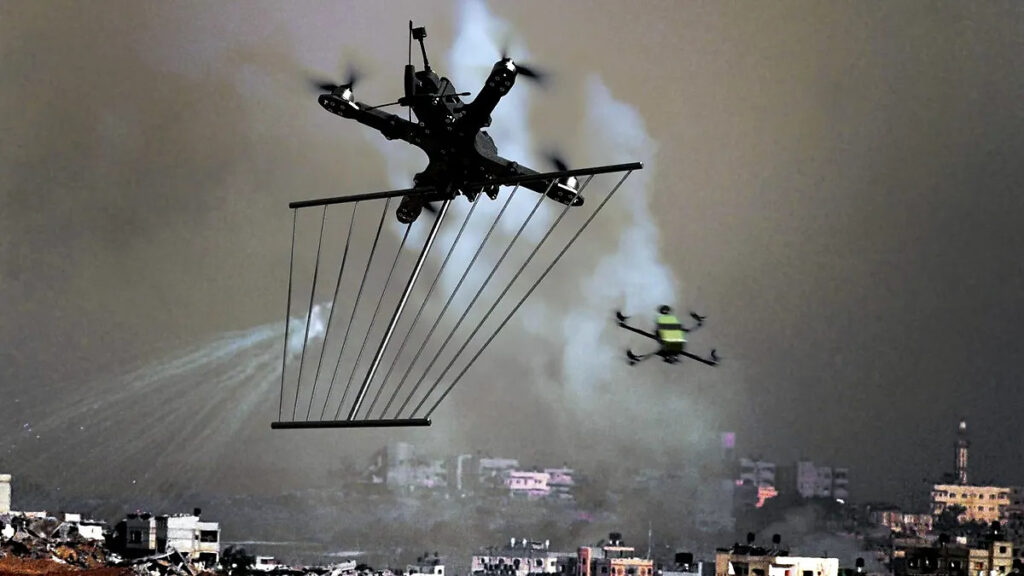
A relatively small US defence start-up is drawing attention with a low-cost drone interceptor that could offer a new way to defend critical infrastructure against the growing threat posed by Iranian drones.
Powerus, based in West Palm Beach, Florida, has developed the Guardian, an interceptor designed to engage smaller unmanned aircraft at a fraction of the cost of more sophisticated missile-defence systems.
The company has been producing the system at a facility in the United Arab Emirates since July, combining 3-D printed components with modular, readily available parts that can be assembled into the finished interceptor.
Guardian Costs Around $5,000
One of the system’s biggest selling points is its reported price.
The Guardian costs approximately $5,000, putting it in a very different category from high-end missile interceptors used against larger and more dangerous threats.
According to a Powerus spokesperson cited by The New York Times, the company currently has the capacity to manufacture around 3,000 interceptors every month.
Powerus is aiming to dramatically expand that figure, with a target of reaching production of approximately 15,000 units a month by 2027.
Ukrainian Experience Helped Shape the Design
The Guardian’s development has reportedly been influenced by Ukraine’s experience defending itself against Russian attack drones.
Powerus based its system on a Ukrainian interceptor that demonstrated potential against Russian suicide drones, adapting the concept into a product intended for wider commercial and military use.
The company’s stated specifications give the Guardian a maximum burst speed of around 340 kilometres per hour and a cruising speed of approximately 160 kilometres per hour.
It has a reported range of 15 kilometres and can remain operational for about 28 minutes.
Powerus also says the system has achieved hundreds of confirmed interceptions.
A Cheap Option With Clear Limitations
Despite its potential, the Guardian is not designed to replace sophisticated missile-defence systems.
The interceptor is intended primarily for smaller aerial threats and cannot deal with ballistic missiles or other larger weapons.
Those threats require substantially more advanced and expensive systems, including Lockheed Martin’s PAC-3 interceptor.
The distinction is important as militaries face increasing pressure to protect themselves against large numbers of relatively inexpensive drones without exhausting their stocks of costly missiles.




Major Contract Highlights Growing Demand
Powerus received a $22.3 million contract on Thursday to help protect oil and gas infrastructure in the Middle East, underlining the growing commercial interest in relatively affordable counter-drone technology.
Company co-founder and chief operating officer Brett Velicovich said the deal reflected what Powerus believes will become a major direction for the counter-drone industry.
Rather than relying on isolated weapons, the company is pursuing integrated and networked systems designed to protect strategically important infrastructure.
Velicovich said the company’s approach is to provide the capabilities customers need immediately while creating a system that can be expanded as threats and operational requirements change.
Competition Is Growing in the Counter-Drone Market
Powerus is not alone in pursuing the market for inexpensive drone interceptors.
The company reportedly faces competition from another California-based developer that has also priced a basic interceptor at roughly $5,000.
The emerging competition reflects a broader effort within the defence industry to develop weapons that can economically counter drones that may cost significantly less than traditional missiles.
The economics of modern warfare have made that issue increasingly important, particularly when large numbers of drones can be deployed in a single attack.
The UAE Wants More Than Imported Defences
The UAE has also shown increasing interest in developing and assembling interceptor technology domestically.
The country has faced significant aerial threats from Iran, including attacks involving drones and ballistic missiles, creating pressure to strengthen its ability to protect vital infrastructure.
For Abu Dhabi, domestic production could provide another layer of security alongside systems purchased from the United States and other international suppliers.
A Push for Greater Sovereignty
Albert Vidal, a regional research associate at the International Institute for Strategic Studies, told The New York Times that the UAE’s interest in local interceptor production is closely linked to the pursuit of greater strategic independence.
The approach would allow the country to continue purchasing advanced systems from the United States while simultaneously developing relationships with other suppliers and building some capabilities at home.
That strategy could become increasingly significant as Middle Eastern states look for ways to respond more quickly to evolving aerial threats.
Why Cheap Interceptors Matter
The Guardian’s appeal ultimately lies in the possibility of using relatively inexpensive systems against threats that can be deployed in large numbers.
Traditional missile-defence systems remain essential for intercepting ballistic missiles and other high-end threats, but using them against every small drone can quickly become financially and operationally difficult.
A lower-cost interceptor could therefore provide another layer of protection, particularly around oil facilities, gas installations and other critical infrastructure.
What Happens Next?
Powerus now faces the challenge of scaling production while proving that its system can consistently perform in increasingly demanding operational environments.
Its planned expansion from 3,000 to 15,000 interceptors per month would represent a major increase in manufacturing capacity.
At the same time, growing competition and the UAE’s push for domestic defence production could reshape the counter-drone market as governments seek cheaper, more flexible ways to defend against mass drone attacks.
Summary
Powerus has emerged as a notable contender in the race to develop affordable counter-drone technology, with its $5,000 Guardian interceptor offering a lower-cost option for tackling smaller aerial threats.
The system cannot replace advanced interceptors designed for ballistic missiles, but its relatively low price, modular construction and potential for high-volume production could make it valuable for protecting critical infrastructure.
With a $22.3 million contract already secured and production taking place in the UAE, the company is positioning itself in a rapidly expanding market driven by the increasing use of drones in modern conflicts.

