
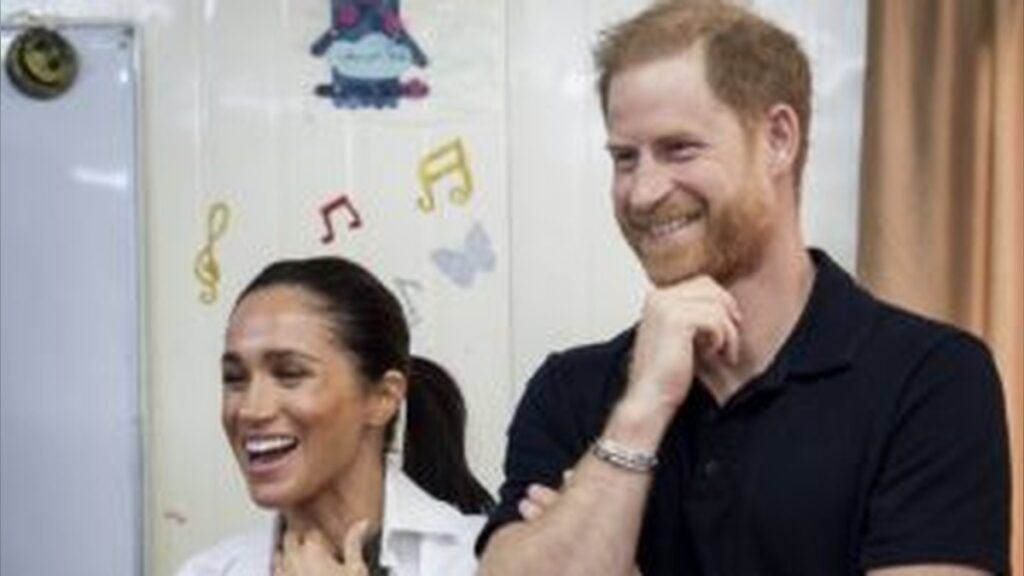
Prince Harry and Meghan Markle are preparing to return to Britain with their two children, Archie and Lilibet, despite years of insisting that they could not safely live in the UK without guaranteed police protection.
The couple’s decision to come back has therefore raised an obvious question: what has changed?
For years, Harry has challenged the Government’s decision not to provide him with the same level of publicly funded protection he received while carrying out royal duties.
The dispute has also reached the courts, with the cost of full-time protection reportedly estimated at millions of pounds each year.
Yet the Sussexes now appear ready to establish a new base in Britain, with reports suggesting they are considering an expensive property in the Cotswolds.
That has inevitably prompted speculation over whether their security concerns have been resolved privately or whether a new arrangement could be under consideration.
Recent developments have fuelled speculation
Several developments have added to the uncertainty surrounding the Sussexes’ future security arrangements.
Andy Burnham recently described the couple’s security as a private matter while stopping short of ruling out the possibility of taxpayer support if they return to Britain.
His comments appeared to leave open the possibility of further discussions over their protection.
Then came calls from Labour MPs, including Dame Emily Thornberry, for Harry and Meghan to receive police protection funded by the public purse.
The issue became even more intriguing after reports emerged that a fresh security assessment involving the Sussexes had been completed only recently on the orders of the Royal and VIP Executive Committee.
Taken together, those developments have prompted questions over whether a significant decision is being prepared behind the scenes.
Why the security dispute matters so much
Harry’s position has long been that his family faces genuine security risks in Britain.
His argument is not entirely without foundation.
The prince has previously faced threats because of his royal status, military background and highly publicised life.
In 2014, convicted criminal Ashraf Islam was sentenced to three years in prison after admitting to plotting to kill Harry.
Several years later, Oskar Dunn-Koczorowski and Michal Szewczuk were also jailed after sharing violent far-Right material.
One image created by Szewczuk depicted Harry with a gun pointed at his head.
Those incidents demonstrate that the Sussexes cannot simply dismiss security concerns as imaginary.
However, the central dispute has never been whether Harry and Meghan require protection.
It has been who should pay for it and what level of protection should be provided.
The Sussexes have already paid privately in America
While living in the United States, Harry and Meghan have reportedly spent substantial sums on private security.
That experience raises another question: why could a similar approach not be used in Britain?
There is an important difference between the two countries.
Private security personnel in Britain generally cannot carry firearms, meaning the level of protection available privately is not identical to what can be arranged in America.
Britain nevertheless has wealthy and high-profile individuals who rely on private protection rather than permanent police security.
The argument, therefore, is not necessarily that Harry and Meghan should be left without protection.
Rather, critics question whether British taxpayers should be expected to finance it.




Public opinion appears firmly against taxpayer-funded protection
A recent Mail on Sunday poll found that 68 per cent of respondents believed Harry and Meghan should pay for their own security.
That figure reflects the broader frustration surrounding the couple’s relationship with Britain since they stepped away from royal duties.
Critics argue that the Sussexes chose to leave their official roles, moved abroad and subsequently built commercial careers, while repeatedly criticising members of the Royal Family and institutions in Britain.
Against that background, the prospect of taxpayers funding their protection could prove particularly controversial.
For many people, the issue is less about personal hostility towards Harry and Meghan than about whether public money should be used to protect individuals who no longer perform official duties on behalf of the state.
Harry’s past criticism of the Royal Family remains relevant
The controversy is also complicated by the tone Harry has sometimes adopted when discussing his family.
In a 2023 interview with the Telegraph, the Duke demanded that members of the Royal Family apologise to Meghan and accused them of knowing what they had done wrong.
His comments were delivered with considerable force, reinforcing the impression of a deep and unresolved family dispute.
That history makes the Sussexes’ return to Britain more complicated than a straightforward homecoming.
Some observers have compared Harry’s return to the biblical story of the Prodigal Son, suggesting that the King could welcome his son back despite everything that has happened.
But critics of that comparison point out that the biblical son returns with remorse and an acknowledgment of his mistakes.
Harry, they argue, has not publicly offered a comparable apology.
King Charles could offer a private solution
There is another potential way of resolving the dispute that would avoid placing the bill directly on taxpayers.
If Harry and Meghan genuinely cannot afford the level of private protection they believe necessary, King Charles could theoretically choose to assist them from his own private wealth.
Such an arrangement would be a personal decision rather than a commitment of public funds.
It would also represent a considerable gesture of goodwill from the King, particularly given the criticism directed towards him and other members of the Royal Family by the Sussexes over recent years.
Whether such private assistance is realistic remains unknown.
The cost could become a major political issue
The reported cost of publicly funded protection is one reason the issue could quickly become politically explosive.
Estimates have placed the potential annual bill in the region of £5 million, although the actual cost would depend on the nature and scale of any security arrangement.
At a time when governments face pressure over public spending, the prospect of millions being spent protecting a couple who have stepped away from official royal responsibilities would inevitably attract scrutiny.
The controversy would become even greater if Harry and Meghan were able to establish a comfortable life in the British countryside while continuing to pursue lucrative commercial opportunities.
The Sussexes’ return could test public patience
Harry and Meghan’s return could ultimately prove far more complicated than simply finding a house and settling their children into life in Britain.
They would be returning to a country where opinions about them remain deeply divided, while their security arrangements could become a constant source of political and public debate.
If they fund their own protection, the controversy may be easier to contain.
If the Government instead decides that taxpayers should finance police protection, the reaction is likely to be considerably stronger.
Critics would argue that the couple cannot reasonably expect the privileges of royal protection while rejecting the responsibilities associated with being working members of the Royal Family.
A decision could have consequences for the monarchy
The wider implications could extend beyond Harry and Meghan themselves.
The monarchy remains sensitive to public perceptions of fairness, privilege and the use of public resources.
Any decision that appeared to give the Sussexes preferential treatment could therefore create another difficult episode for the institution.
It could also intensify tensions between Harry and the rest of the Royal Family if the Government were perceived to have intervened in a dispute that has already lasted several years.
Conversely, an arrangement that leaves the Sussexes responsible for their own security could demonstrate that stepping away from royal duties also carries practical consequences.
What happens next?
The key question is whether the recent security assessment will result in any change to Harry’s official protection arrangements.
At present, the public does not know whether the Sussexes have received any private assurances, whether discussions with officials are taking place or whether they have simply decided that private security is sufficient for their return.
Their decision to move back to Britain, however, suggests that they believe the security situation is manageable.
If publicly funded police protection is eventually granted, the Government would face difficult questions over why the arrangement has changed and why taxpayers should carry the cost.
If no such protection is provided, Harry and Meghan will have to continue relying primarily on private arrangements, as they have done in the United States.
Summary
Harry and Meghan’s planned return to Britain has reopened an old dispute over security that once appeared capable of keeping them permanently abroad.
Recent comments from politicians and the completion of a new security assessment have fuelled speculation that their position could be changing.
The Sussexes have genuine reasons to take security seriously, given threats made against Harry in the past.
The more contentious question is whether the British taxpayer should finance their protection after they stepped away from royal duties.
Whatever decision is eventually made, the security issue has the potential to become one of the first major controversies surrounding the couple’s return — and could once again put the Sussexes and the Royal Family at the centre of a bitter public debate.

