
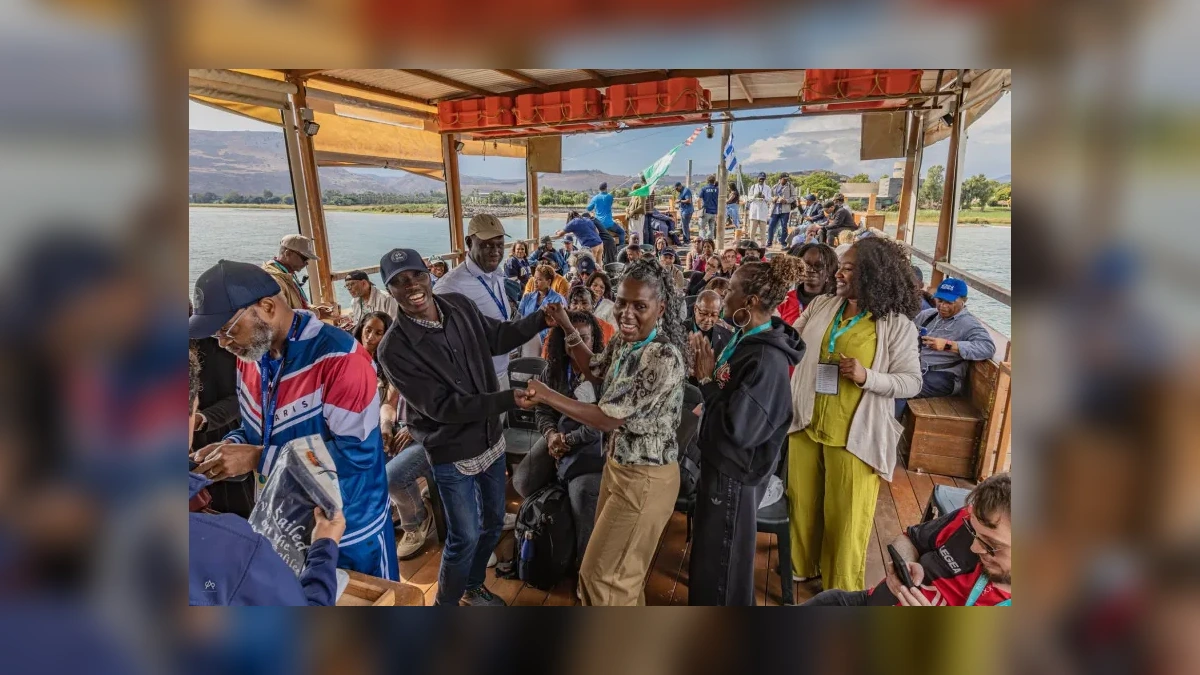
A group of Christian leaders from Africa and the United States has visited Israel as part of an initiative aimed at strengthening relations between Black Christian communities and Jewish communities.
During the visit, Zambian pastor Jeff Mulenga said he repeatedly questioned why towns and communities in northern Israel appeared largely deserted as the delegation travelled through the region.
“Where are the people? Where are the residents…?” Mulenga recalled asking his guide, who explained that residents had been evacuated during the war following the October 7 attacks.
The visit was Mulenga’s first trip to Israel and formed part of the Unfinished Business Pilgrimage, led by the Black Christian Leadership Council on Israel Relations.
Hundreds Participate in Unfinished Business Pilgrimage
The delegation was organised in cooperation with Israel’s Foreign Ministry, which provided most of the funding, according to the Jewish News Syndicate (JNS).
Israel’s Foreign Ministry said the group comprised 500 participants, including 75 Christian leaders from 10 African countries. Around 30 American rabbis were also expected to join the visit, according to JNS.
The pilgrimage was designed to give participants firsthand accounts of the October 7 attacks, the subsequent war and everyday life in Israel, with organisers hoping they would share their experiences with their communities after returning home.
At a press conference in Jerusalem on November 4, council co-chairs Dumisani Washington and Michael A. Stevens Sr., both pastors, outlined the purpose of the visit.
Israeli Ambassador Tammy Ben-Haim welcomed the delegation on behalf of the Foreign Ministry and highlighted its longstanding connections with members of the council. The main group arrived the following day, according to The Jerusalem Post.
Pilgrimage Revives Martin Luther King Jr.’s Unfulfilled Plan
The organisers based the initiative on a pilgrimage that civil rights leader Martin Luther King Jr. had planned for 1967 to bring Black churches in the United States and Africa into closer contact with Israeli and Jewish communities.
King intended to lead a group to Israel and Jordan in November 1967. However, following the Six-Day War, he wrote to El Al in September to cancel the journey because of regional tensions and concerns about the participants’ safety.
He left open the possibility of arranging the visit in 1968 but was assassinated in April that year. King had previously visited East Jerusalem in 1959, when the city was under Jordanian administration.
Benjamin Chavis Jr., a former executive director of the National Association for the Advancement of Colored People (NAACP) who worked alongside King during the civil rights movement, recalled preparations for the planned 1967 trip.
During the latest pilgrimage, Chavis referred to King’s relationship with Rabbi Abraham Joshua Heschel as an example of the cooperation he hoped to see restored between Black and Jewish communities, according to Carrie Hart, who covered the visit for The Times of Israel’s blog platform.
Council Seeks Stronger Engagement Between Black Churches and Israel
The Black Christian Leadership Council on Israel Relations was launched on June 25 at the National Press Club in Washington.
Stevens, senior pastor of City Church Northlake, said the initiative developed after an earlier visit to Israel in December 2025. He estimated that approximately 40 of the 1,100 pastors who participated in that trip were Black.
Washington, who co-chairs the council, founded the Institute for Black Solidarity with Israel.
The organisers said the latest pilgrimage was intended to encourage stronger relationships between Black Christian communities and Israelis through direct engagement and exchanges of personal experiences.
Delegation Honours Israelis Affected by October 7 Attacks
During the programme, organisers presented three Israelis with certificates and commemorative pomegranates, alongside videos about them or their relatives.



They included Hila Abir, whose brother Lotan was killed at the Nova music festival during the October 7, 2023 attacks.
Another recipient was Elkana Bohbot, who survived 738 days in Hamas captivity.
The third was connected to the family of Daniel Lischinsky, whose son Yaron and Yaron’s partner, Sarah Milgrim, worked at the Israeli Embassy in Washington. Both were killed outside the Capital Jewish Museum.
Participants Share Experiences of Israeli Religious and Cultural Sites
The pilgrimage also included visits to religious and historical locations across Israel.
Educator Simene’ Walden told The Media Line that visiting the Mount of Olives and the Garden of Gethsemane allowed her to see places she had previously known through Scripture.
She described her experience at the Sea of Galilee as unforgettable and linked King’s legacy to peace within individuals, with God and among communities.
Walden said Christians and Jews could maintain relationships after the trip by visiting one another’s places of worship and organising joint community activities.
She called for continued exchanges and educational events throughout the year.
Visitors Say the Trip Challenged Their Previous Impressions
American actress and model Destiny Jenkins said she had not expected Israel to be as diverse as she encountered during the visit.
She told The Media Line that some of the information she had previously heard in the United States had given her the impression that Jewish people were unwelcoming.
However, she said her own experiences with Jewish friends while living in Los Angeles had been positive.
Jenkins also referred to social media discussions about the conflict, including comments from influencers she knew who had expressed support for Palestinians.
She said visiting Israeli sites and hearing personal accounts had prompted her to reconsider how much she understood about the conflict based on information she had encountered in the United States.
Organisers Raise Concerns About Antisemitism and Community Relations
Washington identified rising antisemitism among political groups on both the American right and left as one of the reasons behind the pilgrimage, according to The Times of Israel.
Stevens said he had observed increasing support for Israel among Black churches. He also said Israel could pay greater attention to how Black communities view deaths in Gaza and to the experiences of racism among people of Ethiopian descent.
The pilgrimage coincided with Sigd, an Ethiopian Jewish holiday.
At a gathering marking the occasion at Jerusalem’s King David Hotel, Ethiopian Christian pastors met Ethiopian Israeli Jews. Pastor Abera Habte apologised for previously overlooking the persecution of Jews in Ethiopia, according to Hart.
The pastors also presented a gift to Ethiopian Jewish religious leader Qes Mulualem Temeyet.
The main public Sigd prayer gathering in Jerusalem took place on November 9 at the Armon Hanatziv promenade. The delegation also attended a gala at the Ramada Hotel, where Foreign Ministry Director General Eden Bar Tal addressed participants.
Zambian Pastor Calls for Reciprocal Visits and Education
Mulenga said he hoped the relationship-building initiative would lead to more exchanges, with Israelis visiting Zambia and other African countries and more Africans travelling to Israel.
He called on Jewish and Black communities to work together, specifically urging cooperation with Black people in Africa and the United States.
Mulenga also called for educational institutions to address hostility towards Jewish people from an early age, including at kindergarten and other levels of education and training.
Washington said the council hoped to bring approximately 5,000 pastors to Israel in 2027, marking 60 years since King’s planned pilgrimage.
Atlanta Pastor Highlights Diversity of Israeli Society
Robert Jenkins, a pastor from Atlanta, said he had arrived in Israel with limited knowledge of the place of Muslims in Israeli society.
He explained that his impressions formed in the United States had led him to believe Muslims were largely absent or excluded from the country.
However, he said the diversity he encountered reminded him of American society.
“It’s like America, it’s a melting pot here,” Jenkins told The Media Line.
He said he intended to return home and educate others about his experiences, emphasising the importance of learning about different cultures rather than relying on stereotypes.
During the visit, Jenkins exchanged contact details with rabbis he met so he could continue asking questions and maintaining direct communication after the pilgrimage.
