
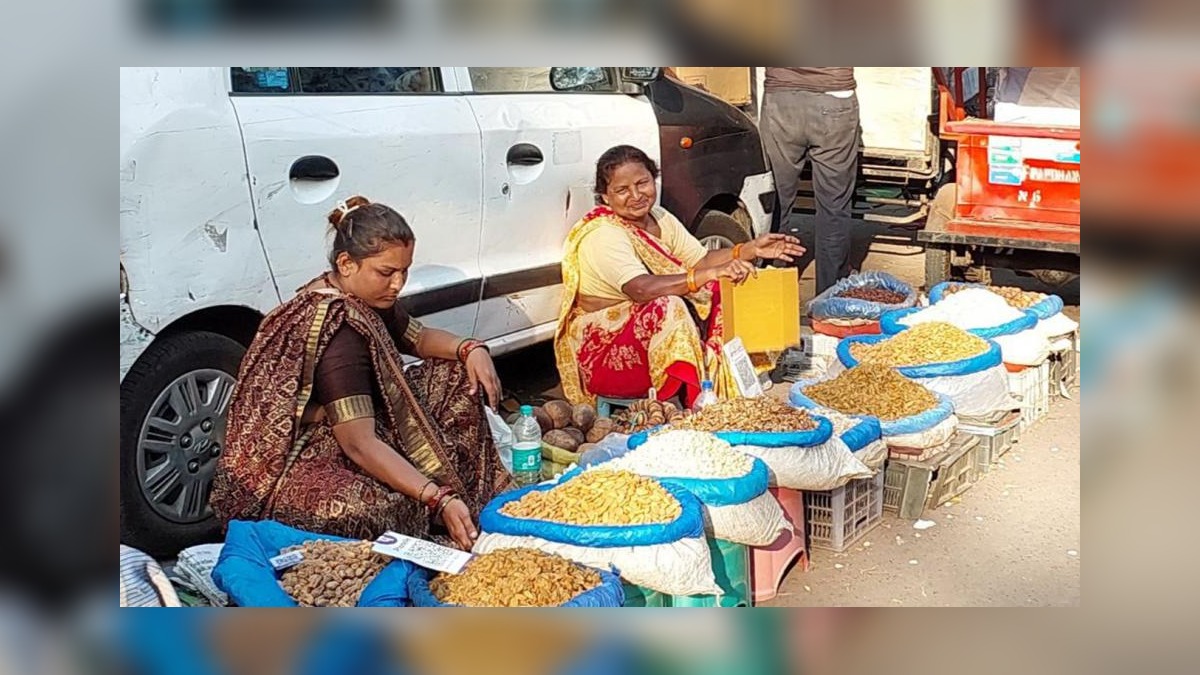
Women in India have overtaken men in higher education enrolment, marking a significant development in the country’s education sector. However, girls in rural communities continue to face difficulties completing secondary school, according to UNESCO’s 2026 Global Education Monitoring report, Gender Equity in Access to Education.
The report identifies upper secondary education as the stage where the gap is most pronounced. In rural India, the gender parity index stands at 0.59, meaning that only 59 girls complete upper secondary education for every 100 boys.
Urban areas have largely achieved gender parity at this level, while the national index stands at 0.89. UNESCO estimates that India has reduced approximately 65 per cent of the gender disparity recorded in 2000.
The organisation classifies India’s progress as fast, particularly when compared with countries that had significant disadvantages for girls at the beginning of the century. The improvement applies both to students completing school within the expected age range and those finishing later.
Girls Account for 48.4% of School Enrolment
Government figures from the UDISE+ 2025-26 report show that girls represent 48.4 per cent of total school enrolment in India.
The figures also indicate improvements in student retention. The secondary school dropout rate declined from 8.2 per cent in 2024-25 to 7 per cent, while the retention rate increased from 47.2 per cent to 51.9 per cent.
However, these institutional measurements use a different methodology from UNESCO’s household-survey-based calculations of school completion rates.




Women Maintain Lead in Higher Education
The strongest progress for women is recorded in higher education, where female participation has exceeded male participation for seven consecutive years.
According to the All India Survey on Higher Education (AISHE) 2023-24, the female gross enrolment ratio reached 31.2 per cent, compared with 28.9 per cent for men.
Female enrolment increased by 42.2 per cent, rising from 1.57 crore students in 2014-15 to 2.24 crore. India’s higher education gender parity index consequently reached 1.08.
School Programmes Help Improve Girls’ Access
UNESCO’s analysis of Indian case studies identified several interventions that have helped disadvantaged girls access education.
Free school meal programmes in underprivileged rural communities had almost twice the impact on primary school enrolment among girls compared with boys.
The availability of separate toilets was also identified as an important factor in increasing school enrolment among adolescent girls.
In Karnataka, the introduction of girls’ clubs focused on life skills and social support contributed to a modest improvement in secondary school completion rates.
Global Education Gains Still Leave Millions Out of School
UNESCO reported that gender parity in enrolment has been achieved globally from pre-primary through upper secondary education.
Women now outnumber men in higher education worldwide, with 88 male students enrolled for every 100 female students. The gap is also reflected in graduation figures, where there are 82 male graduates for every 100 women.
Despite these advances, access to education remains a major global challenge. UNESCO estimates that 273 million children and young people were out of school in 2024.
