
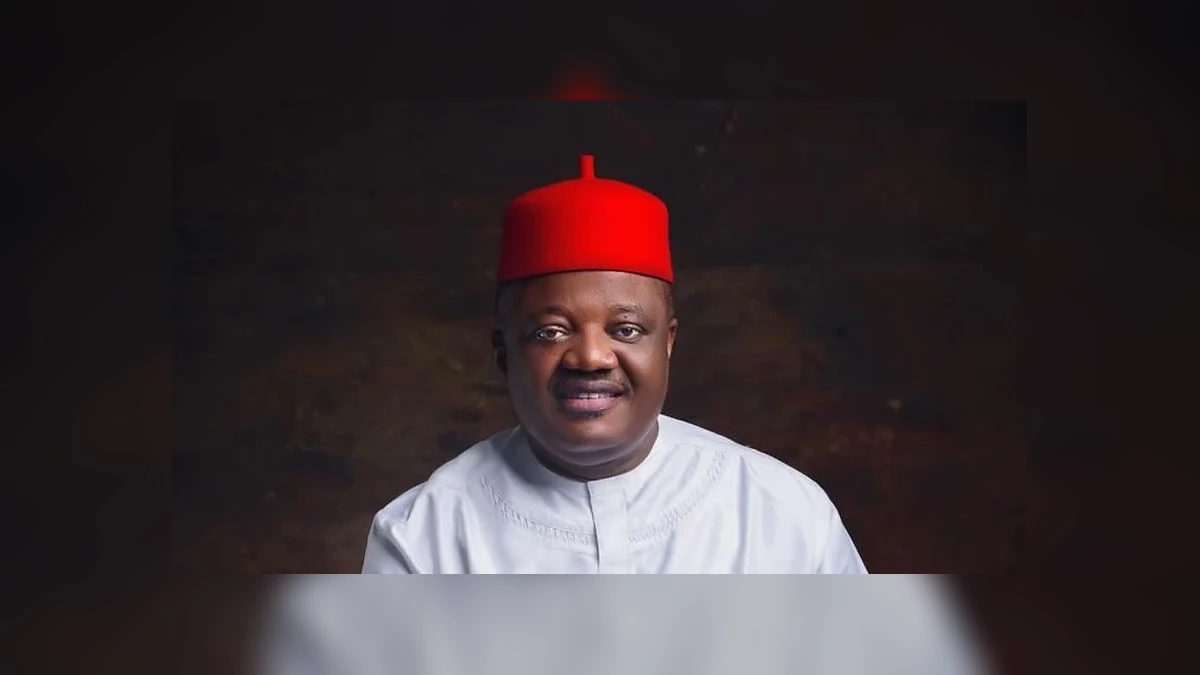
A member of the House of Representatives representing Aguata Federal Constituency in Anambra State, Dominic Okafor, has urged federal and state governments to strengthen public awareness campaigns against human trafficking, particularly the exploitation of vulnerable Nigerians.
The All Progressives Grand Alliance (APGA) chieftain said existing laws provide a framework for tackling the crime, but enforcement and implementation remain major challenges.
Okafor explained that his recent experience during an overseas trip prompted him to push for stronger action against trafficking, stressing that efforts should extend beyond the federal government to include state and local authorities.
Overseas Trip Raises Concerns Over Possible Trafficking
Speaking about the experience, the lawmaker said he noticed several young women travelling on the same Ethiopian Airlines flight with him from Abuja to the Middle East.
He initially assumed they might be female footballers, but became concerned after arriving in Addis Ababa, where passengers had a lengthy stopover and were accommodated in a hotel.
Okafor said he spoke with some of the women and discovered that they had similar explanations for their journeys, with employment opportunities featuring prominently among their reasons for travelling.
He said the experience reinforced the need to educate Nigerians about the dangers of human and child trafficking and encouraged state and local governments to take an active role in prevention efforts.
House Raises Concerns Over Trafficking Networks
Earlier, during a plenary session presided over by Speaker Tajudeen Abbas, Okafor presented human trafficking as a serious national and international crisis.




He said women, children and other vulnerable groups were disproportionately exposed to commercial sexual exploitation, forced labour, domestic servitude, forced begging, organ harvesting and other forms of abuse.
The lawmaker identified poverty, unemployment, insecurity, displacement, irregular migration and organised criminal networks as factors increasing the vulnerability of Nigerians to traffickers.
He also noted that victims were frequently deceived through promises of jobs, education, marriage and opportunities abroad before being subjected to exploitation, physical abuse and psychological trauma. In some cases, victims lose their lives.
Okafor further warned that trafficking operations frequently cross state and international borders, taking advantage of porous border systems, limited public awareness, poor coordination among relevant agencies and difficulties in identifying and prosecuting offenders.
House Calls for Stronger Enforcement and Victim Support
Following the adoption of the motion, the House urged the Federal Government to intensify nationwide efforts to prevent and combat human trafficking.
The recommendations include enforcing existing laws, conducting intelligence-led investigations and ensuring the effective prosecution of traffickers and their collaborators.
The lawmakers also called on President Bola Tinubu’s administration to strengthen programmes for identifying and rescuing victims, as well as providing rehabilitation, psychosocial support, legal assistance and reintegration services.
The House specifically highlighted the need to prioritise women, children and other vulnerable individuals in these interventions.
NAPTIP and Security Agencies Urged to Improve Coordination
The National Agency for the Prohibition of Trafficking in Persons (NAPTIP), alongside other security and law-enforcement agencies, was urged to strengthen surveillance, intelligence-sharing and coordinated operations against trafficking networks.
The proposed measures are expected to address criminal groups operating across state boundaries and international borders.
The House also emphasised the importance of improving cooperation among the agencies responsible for preventing trafficking, rescuing victims and bringing perpetrators to justice.
House Committees Given Four Weeks to Report
The motion was referred to the House Committees on Human Rights, Police and Interior for further examination.
The committees have been directed to submit their findings and recommendations to the House within four weeks to guide further legislative action.
