
As technology becomes embedded in almost every part of daily life, from workplaces and classrooms to healthcare, communication and personal decision-making, the role of user experience design is changing.
Modern UX designers are increasingly expected to make sophisticated digital systems understandable while helping people interact confidently with artificial intelligence and other emerging technologies.
The challenge is no longer simply to make an interface attractive or easy to navigate.
Designers must also consider trust, accessibility, privacy, autonomy and the long-term relationship users develop with technology.
Los Angeles-based UX designer Lingjie Guo has built her practice around this broader understanding of human-centred design.
Combining principles from human-computer interaction, human factors and digital product development, Guo focuses on the underlying systems that shape how people experience technology and the wider social consequences of design decisions.
“Design is not only about making technology easier to use,” Guo says.
“It is about helping people understand complex systems, make better decisions, and interact with technology with more confidence.”
Designing Systems People Can Understand
A defining feature of Guo’s approach is her emphasis on systematic and interpretive design.
Rather than concentrating exclusively on individual screens or isolated interactions, she examines how a complete product communicates its logic to users.
Confusing workflows, unclear terminology and poor feedback can leave people uncertain about what a system is doing or what they should do next.
Her background in human-computer interaction and human factors informs a methodology that considers how people interpret information, understand system status and recover from mistakes.
Information architecture, interface language, workflows and feedback are therefore treated as interconnected parts of the same experience.
This approach shifts UX away from simply making tasks faster.
Instead, it seeks to give users enough clarity to understand what is happening and make informed decisions for themselves.
A Different Approach to AI User Experience
Artificial intelligence has made this challenge even more significant.
AI-powered products can generate personalised and dynamic results, but users may struggle to understand why a system produced a particular answer or how reliable that answer is.
When the underlying technology remains opaque, even technically powerful products can create uncertainty and undermine trust.
Guo’s approach to AI UX addresses this problem by placing transparency and user control alongside technical capability.
Her design principles emphasise making the capabilities, limitations and operating logic of AI easier to understand.
Rather than expecting people to adapt to unexplained algorithms, the interface should give them opportunities to examine, assess and revise automated results.
Privacy, error tolerance and user autonomy become integral parts of the experience rather than secondary considerations.




Recollect Brings Privacy Into AI-Assisted Memory
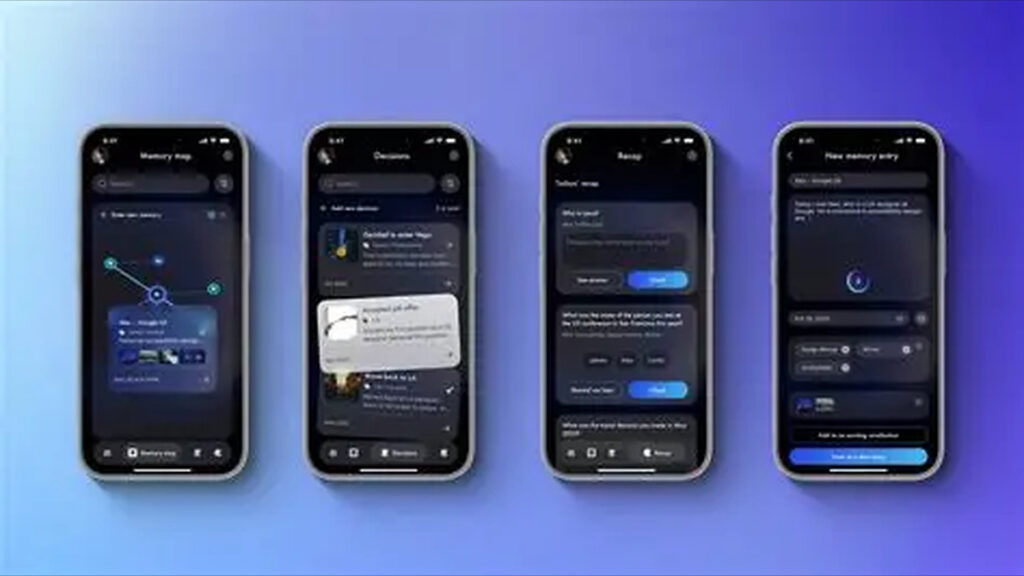
Guo explores these ideas through her independent projects, including Recollect, a concept focused on personal memory management and AI ethics.
The project examines how artificial intelligence could help people organise and reflect on personal memories without requiring them to surrender control over sensitive information.
Instead of placing unrestricted data collection and public sharing at the centre of the experience, Recollect gives privacy and personal ownership a central role.
AI can assist with organising and interpreting memory-related information, while dedicated privacy mechanisms are designed to prevent intimate personal content from being exposed publicly.
The concept demonstrates how technical functionality and human interests can be balanced in AI-driven personal applications, particularly when the information involved is deeply private.
EmpaSee Places Human Cognition at the Centre
Another independent project, EmpaSee, applies Guo’s philosophy to learning and emotional cognition.
The project explores technology as a supportive tool rather than an authority that dictates how users should learn, interpret emotions or make personal decisions.
Its interaction framework is designed around independent learning, emotional awareness and individual cognitive development.
This represents a departure from technology-first approaches in which algorithms can become the dominant force shaping a user’s understanding or behaviour.
EmpaSee instead positions digital tools as aids that can support human judgment without replacing it.
Together, Recollect and EmpaSee illustrate Guo’s broader interest in ensuring that emerging technology strengthens human agency rather than diminishing it.
Accessibility Is Treated as a Measure of Quality
Accessibility is another important element of Guo’s design philosophy.
In many product development environments, accessibility can be addressed late in the process as a compliance requirement or corrective exercise.
Guo approaches it differently, treating inclusive design as part of fundamental product quality from the earliest planning stages.
Readable information structures, appropriate visual contrast, predictable interactions and clear system feedback can benefit users with diverse needs while simultaneously making products easier for everyone to use.
This perspective also exposes weaknesses that can remain hidden when designers rely too heavily on visual assumptions or ambiguous interaction patterns.
By addressing those structural problems early, accessibility becomes part of building more stable, understandable and adaptable products.
Recognition From the International Design Community
Guo’s work has also received recognition across international design platforms.
Her distinctions include multiple Red Dot Design Awards, an IDEA finalist recognition, an Indigo Design Awards Gold Award and recognition from the DNA Paris Design Awards.
The honours reflect the practical and conceptual dimensions of her work, particularly its focus on human-centred systems and emerging technology.
Her professional involvement extends beyond her own projects.
Guo also participates as a juror and reviewer for international design platforms, where she assesses submitted work through considerations including design logic, execution and social value.
Such roles give her an opportunity to contribute to broader conversations within the design profession while evaluating how new approaches can address real-world challenges.
The Future of UX May Be More About Understanding Than Interaction
Guo’s work reflects a wider shift taking place across UX design.
As digital products gain greater influence over everyday choices, successful design will increasingly be measured by more than whether someone can complete a task quickly.
Users may also need to understand how a system works, challenge its recommendations and retain meaningful control over their interactions.
That shift could bring UX design into closer contact with systems thinking, accessibility, ethics, research and technology strategy.
Designers will continue to require strong visual and interaction skills, but they will also need to understand the technologies behind the products they create, how automated systems behave and how design decisions affect different communities.
Building Technology Around Human Understanding
Through her independent projects, professional evaluation work and broader design practice, Guo contributes to an expanding definition of what UX design can accomplish.
Her work suggests that the next phase of the discipline will not be determined solely by the arrival of new tools or more sophisticated interfaces.
It will also depend on whether designers can make increasingly complex technology understandable, accountable and genuinely useful.
In that sense, human-centred UX is evolving from the design of interfaces into the design of relationships between people and technological systems — relationships that require clarity, trust, autonomy and respect as much as technical efficiency.

