
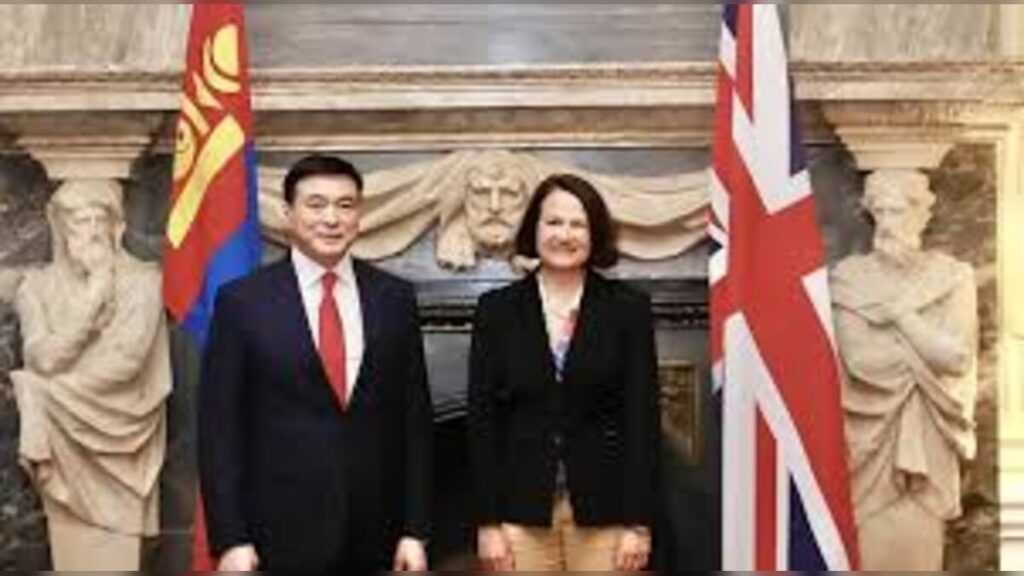
In a significant display of international partnership, the United Kingdom and Mongolia recently held their second annual Political Dialogue in Ulaanbaatar, solidifying a shared vision for democratic governance, economic collaboration, and people-to-people ties.
The dialogue, guided by the Mongolia-UK Joint Co-operation Roadmap, showcased both countries’ dedication to a deeper and more resilient partnership.
Leaders Highlight Shared Democratic Values
UK Minister Seema Malhotra and Mongolia Deputy Foreign Minister Gombosuren Amartuvshin emphasized that democratic principles and respect for international law remain the cornerstone of their bilateral relationship.
In a world of growing uncertainty, both sides reiterated the importance of upholding the UN Charter and refraining from using force against sovereign nations.
Expanding Education and Civil Society Engagement
Education emerged as a focal point of the talks.
Ministers highlighted the Chevening Scholarship program and UK-supported English language teaching, particularly in rural and nomadic Mongolian communities, as avenues to strengthen ties.
Both leaders also celebrated the role of civil society in enhancing democratic governance and promoting women’s political and economic empowerment.



Collaboration between Mongolian media and organizations like BBC Media Action was recognized as a key driver for these goals.
Economic Growth and Investment Opportunities
Trade, investment, and industrial strategy were central topics.
The ministers discussed enhancing Mongolia’s business environment, ensuring investment stability, and expanding UK Export Finance support, particularly for major infrastructure projects like Ulaanbaatar’s first metro system.
Both governments stressed the importance of resilient economic growth, aligned strategies, and increased flows of trade and investment to foster long-term prosperity.
Climate Action and Critical Minerals Cooperation
Sustainability was a major theme, with ministers focusing on clean energy transition and joint action against climate change.
The UK’s expertise in environmental policy will support Mongolia’s hosting of COP17 Desertification in August 2026.
Additionally, both countries committed to advancing cooperation on critical minerals, including rare earths, to diversify global supply chains and promote economic resilience while adhering to Environmental, Social, and Governance (ESG) standards.
Strengthening Women’s Participation
Both leaders welcomed the increase in female parliamentarians in their countries and pledged to maintain momentum toward gender equality in political and economic life.
This aligns with broader commitments to inclusive governance and empowering women at all levels of decision-making.
Impact and Consequences
- Reinforces Mongolia-UK partnership amid global uncertainty
- Supports democratic governance and international law adherence
- Expands education access, especially in rural regions of Mongolia
- Encourages foreign investment and economic stability
- Strengthens cooperation on climate change and critical minerals
- Promotes women’s participation in politics and economic sectors
What’s Next?
- Continued dialogue to elevate the partnership to a Comprehensive Partnership
- Scaling up joint initiatives in education, climate, and critical minerals
- Ongoing collaboration for Mongolia’s COP17 Desertification hosting
- Exploration of further economic alignment and investment projects, including infrastructure
Summary
The UK-Mongolia Political Dialogue in Ulaanbaatar underscored shared democratic values, economic cooperation, and environmental priorities.
Education, civil society, women’s empowerment, trade, and climate action were central themes, demonstrating a holistic and strategic partnership aimed at long-term resilience and mutual growth.
Bulleted Takeaways
- UK Minister Seema Malhotra and Mongolia Deputy Foreign Minister Amartuvshin held the second annual political dialogue
- Dialogue emphasized democratic values, international law, and respect for sovereignty
- Chevening Scholarships and English language programs strengthen people-to-people ties
- Collaboration targets economic growth, investment stability, and infrastructure development
- COP17 Desertification and clean energy transition are key climate initiatives
- Critical minerals cooperation aims to diversify supply chains and boost economic resilience
- Women’s political participation and civil society engagement highlighted as priorities
- Both countries aim to scale cooperation to a Comprehensive Partnership

