
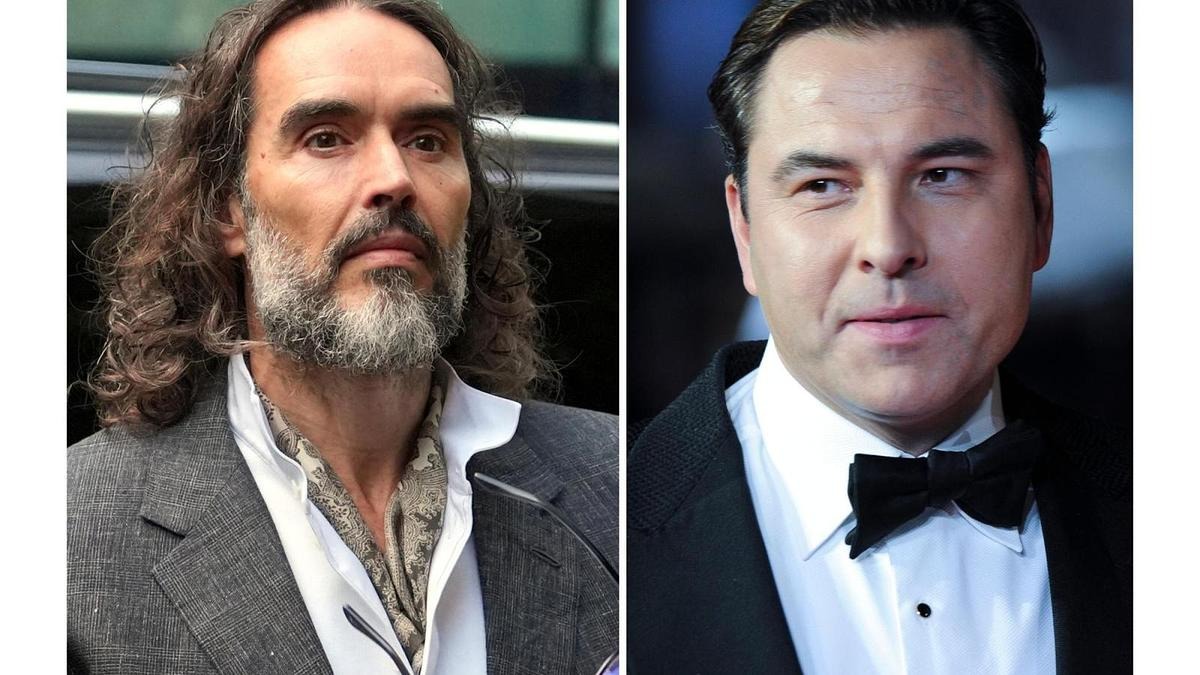
Television executives are facing the prospect of new legal requirements to protect young women from alleged sexual misconduct by high-profile entertainers following the scandals involving David Walliams and Russell Brand.
Culture Secretary Lisa Nandy is preparing to meet broadcasting industry leaders next week, demanding action over allegations that inappropriate behaviour by powerful television personalities had been widely known within the industry but left unchallenged.
The meeting follows claims that Walliams’ alleged conduct, like that of Brand, was an ‘open secret’ among industry insiders.
Ms Nandy has warned that the Government could introduce legislation if broadcasters fail to take meaningful steps to address the problem.
She said: “A decade and a half on from the revelations about Jimmy Savile, and ten years on from the MeToo movement, we must finally take meaningful steps to end abuse and harassment.”
She also vowed to ‘draw a line in the sand’ over the industry’s handling of such allegations.
Government Describes Walliams Allegations as Deeply Troubling
Downing Street has described the allegations against Walliams as ‘deeply troubling’, adding that there was ‘a pattern of behaviour that needs to change’.
The 55-year-old comedian and children’s author has denied allegations that he groomed schoolgirls, sexually assaulted a 15-year-old and repeatedly approached teenagers for sex.
He has also rejected the description of himself as a sexual predator.
An investigation by The Guardian and ITV News uncovered allegations of sexual misconduct from several teenagers and young women.
Walliams allegedly used his celebrity status to invite young women into his dressing room and to his £3.5million home in north London.
He reportedly threatened to take his own life if the allegations were published.
However, he was unsuccessful in obtaining a court injunction to prevent the media from identifying him.
Walliams is understood to be receiving treatment in a psychiatric hospital, days after Russell Brand was jailed for more than ten years.
Young Women Describe Alleged Encounters with Walliams
Lilly Creightmore, who was 18 when Walliams invited her to stay at his home, described an encounter with the comedian during an interview with Newsnight.
She alleged that he once rested his head in her lap before asking whether she wanted to sleep in his bed.
Creightmore said she refused the invitation, describing how she relied on her inner strength to say no.




Comedian Lucy Beaumont, who provided information to the investigation, also raised concerns about the treatment of young women working in television.
She said a young television employee had told her that his job involved taking young girls to Walliams’ dressing room.
According to Beaumont, the girls were over 16, but many came from working-class backgrounds and had never visited London before.
She said she became concerned about their welfare and attempted to contact some of them to establish whether they were safe.
Beaumont also alleged that one of the young women was in a particularly bad state and had been instructed by Walliams’ lawyers to sign a non-disclosure agreement (NDA).
She said the agreement prevented the woman from discussing her experience with family members or a therapist.
TV Agent Claims Previous Complaint About Walliams Was Ignored
Television agent Dermot McNamara said he had previously raised concerns with broadcasters and relevant authorities following an incident involving one of his clients.
He alleged that the woman was 16 when she was taken backstage at Britain’s Got Talent before being invited to Walliams’ home, where inappropriate behaviour allegedly occurred.
McNamara said the incident happened approximately ten years ago and that he reported his concerns at the time.
However, he claimed that no action followed his complaint.
Former Britain’s Got Talent make-up artist Lou Teasdale also alleged that young women were routinely required to sign NDAs before being left alone with famous male entertainers.
She claimed that their mobile phones were sometimes confiscated as part of the arrangements.
Jonathan Ross Apologises Over Past Walliams Joke
Television presenter Jonathan Ross has apologised for a joke he made at the 2004 British Comedy Awards involving Walliams and a 15-year-old girl.
Ross had joked that the teenager would probably be going home with Walliams.
A photograph taken in 2003 also shows Ross alongside Walliams and one of the women who later made allegations against the comedian.
Speaking about the recent revelations, Ross said he was horrified by the allegations concerning Walliams and the crimes committed by Brand.
He acknowledged that he had previously been friends with both entertainers but maintained that he was unaware of their alleged conduct at the time.
Ross said: “I was genuinely unaware of their conduct.”
Walliams Dropped by Publisher Amid Previous Harassment Claims
Walliams’ publishing relationship with HarperCollins ended approximately a year ago following allegations that he had harassed young female employees.
The publisher had sold more than 60 million copies of his books before dropping him.
Walliams has denied the allegations against him, with his legal representatives insisting that he had never groomed young women or engaged in sexual activity with underage girls.
Meanwhile, ITV said production company Fremantle, which produces Britain’s Got Talent, had confirmed that it had never received a complaint about Walliams.
The broadcaster added that it remained committed to ensuring that everyone working within its organisation was treated with respect.
Government Considers Restrictions on Non-Disclosure Agreements
Equalities Minister Bridget Phillipson has called for restrictions on the use of non-disclosure agreements, suggesting that the Government should consider banning them.
Her comments come amid growing scrutiny of how NDAs have allegedly been used to prevent young women from speaking about their experiences with powerful figures in the entertainment industry.
The proposed discussions between Lisa Nandy and broadcasting executives are expected to focus on the industry’s responsibility to protect young women and address allegations of harassment and abuse.
