
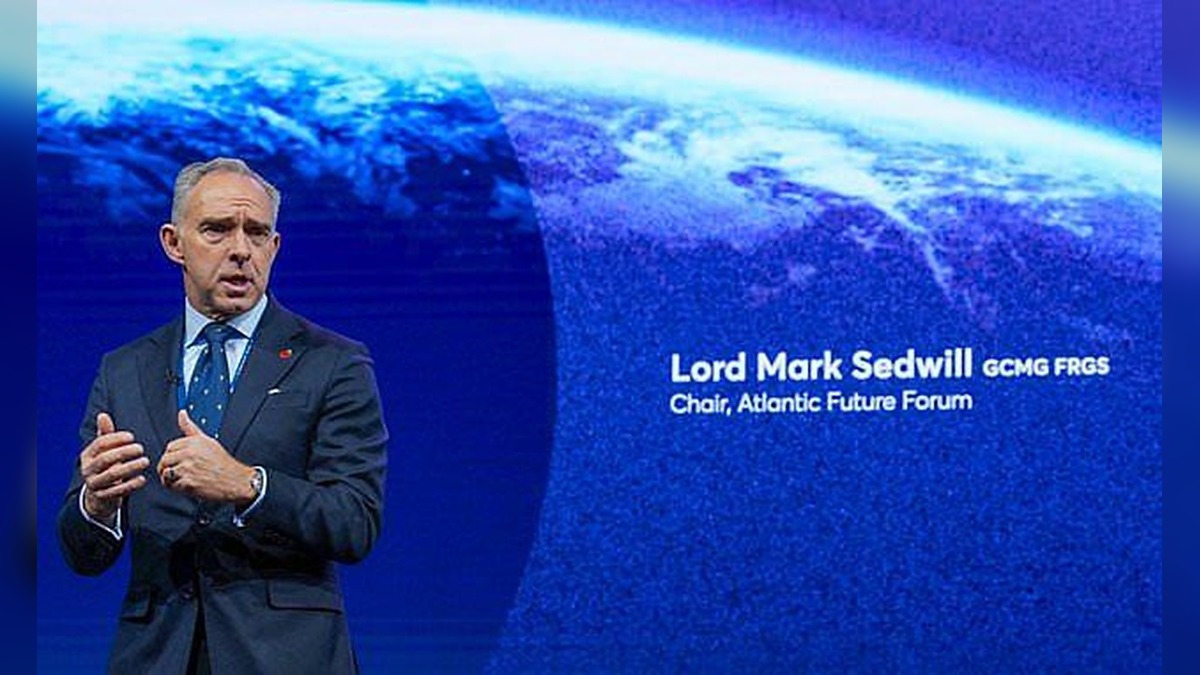
Britain and its NATO allies should adopt a more aggressive strategy towards Russia to deter further hostile activities, former national security adviser Lord Sedwill has warned.
Lord Sedwill, who previously served as Cabinet Secretary, argued that relying solely on defensive measures would not be sufficient to discourage Russian President Vladimir Putin from continuing activities against Western countries.
Speaking at the Atlantic Future Forum conference aboard HMS Prince of Wales in Oslo, he called on Britain and its allies to create strategic challenges for Moscow and make the Kremlin recognise that its actions could carry serious consequences.
He said the most effective defence could sometimes involve taking the initiative and putting adversaries under pressure.
Sedwill Warns Against Allowing Russia to Control the Initiative
Addressing senior military officers and government representatives, Lord Sedwill said Western countries needed to consider ways of making Russia feel threatened by the consequences of its actions.
He pointed to the ongoing hybrid warfare facing Britain, including cyberattacks, bomb threats, assassination attempts and the use of illicit money to influence political activities.
He said: “Sometimes the most effective form of defence is to cause a dilemma, it is to go on the offensive.
“How can we present Russia with a set of strategic dilemmas, how can we make them feel they are under threat?”
Lord Sedwill added that deterrence required more than effective defensive capabilities, arguing that adversaries needed to face potential risks when attempting to undermine Western countries.
He urged NATO members not to surrender the initiative to Moscow but instead ensure that President Putin had reasons to reconsider further hostile actions.
Iran Accused of Using Cyber Operations to Undermine Britain
Lord Sedwill also highlighted the activities of other adversaries, including Iran, warning that Britain was already facing threats beyond conventional military confrontations.




He disclosed that Iranian cyber operatives were attempting to weaken political cohesion within the UK.
As an example, he pointed to automated accounts allegedly flooding social media platforms with messages supporting Scottish independence.
He told the conference that the confrontation with hostile states was taking place across multiple areas, including land, sea, air, cyberspace and the information environment.
He said Britain and its allies were already on the frontline of these activities and needed to recognise that the threats extended beyond traditional military operations.
Russia Strengthens Military Positions Along NATO’s Northern Border
Meanwhile, Russia is reportedly increasing its military preparations along its border with NATO members, particularly in the High North.
Russian forces have been reinforcing command posts, constructing sandbag walls and installing protective netting intended to prevent attacks by drones.
The developments were discussed at the Atlantic Future Forum, where military officials highlighted the growing activity along NATO’s northern flank.
While British troops are preparing for operations in Arctic conditions, Russian forces are also undertaking preparations for potential conflict in the region.
Vice Admiral Rune Andersen, a senior Norwegian naval officer responsible for security in the country’s High North, said Russia’s perception of the threat had increased.
He told the conference: “Russia’s threat perception has increased also.
We have seen preparations such as sandbags and anti-drone netting.”
Norwegian Intelligence Chief Warns of Rising Risk of Conflict
Norwegian intelligence chief Kristin Ven Bruusgaard warned that the growing threat perceptions on both sides were increasing the possibility of a confrontation between Russia and NATO.
She said the situation was particularly concerning because neither side fully understood the other’s limits or potential responses.
“There is a high risk of misunderstandings. We don’t comprehend where the red lines are for the other. So the dynamic [between NATO and Russia] could shift quite rapidly,” she said.
Her warning came amid increasing Russian military activity around NATO’s northern flank, where Moscow is seeking to exploit geographical conditions, challenge collective defence arrangements and create instability.
Lord Sedwill maintained that NATO’s response should extend beyond conventional defensive measures, arguing that the alliance needed to make Russia recognise the potential consequences of continuing its activities against member states.
