
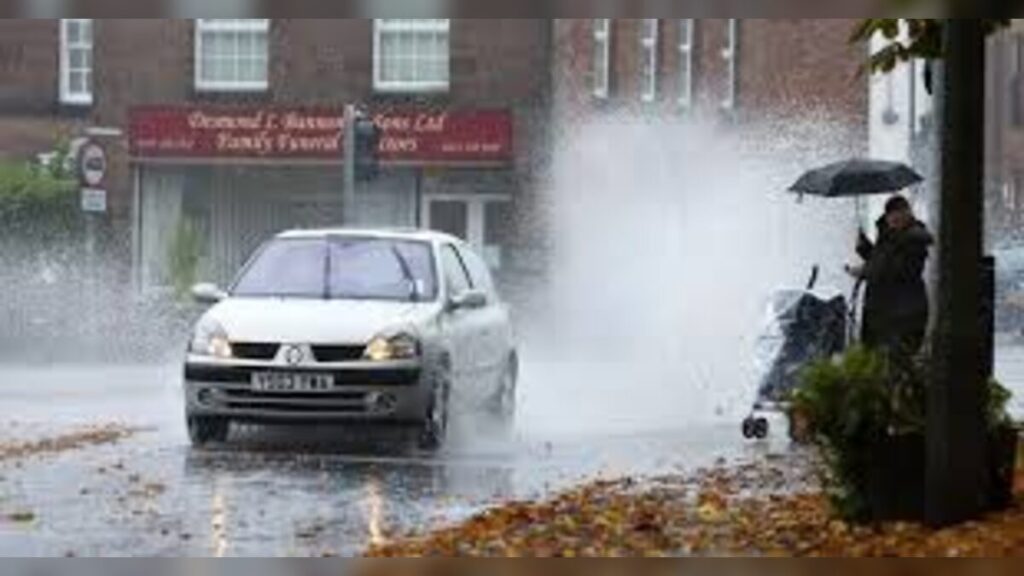
A sharp rise in drivers receiving penalty points has put the spotlight on Britain’s expanding 20mph zones.
Last year, nearly a million drivers were penalised for speeding, up 32% from 2022, raising questions about whether the issue is reckless driving or confusing new limits.
While campaigners point to a persistent “culture of speeding,” others argue that the proliferation of 20mph roads is catching even careful drivers off guard.
How Widespread Are 20mph Limits?
Over 16% of UK roads, or 39,000 miles, now have a 20mph limit, according to transport consultancy Insight Warehouse.
In Wales, the default residential speed dropped from 30mph to 20mph in 2023.
London leads the way, with more than half of its roads under a 20mph restriction, as confirmed by Transport for London, chaired by Labour Mayor Sir Sadiq Khan.
Cities like Leeds are also introducing dozens of 20mph streets, with many town halls across the UK following suit.
Drivers Feeling the Pressure
Although 20mph limits are proven to reduce average speeds, motorists complain that they are often unnecessary.
Many say these limits are being applied to roads that do not require them, creating confusion and unexpected fines.




DVLA statistics obtained by IAM RoadSmart revealed 939,519 drivers received an SP30 endorsement for breaking speed limits on regular roads in 2025.
Motorway offences were significantly lower, at 216,141, suggesting the surge is concentrated on lower-speed streets, including the 20mph zones.
Speed-awareness courses have also skyrocketed, with 1.8 million drivers attending last year as an alternative to points and a £100 fine.
Controversy Over Safety and Enforcement
The debate is heated. Edmund King, president of the AA, acknowledges that the increase in 20mph zones has likely contributed to the rise in penalty points captured by cameras.
Meanwhile, Howard Cox from FairFuelUK argues that such policies are more about taxing drivers than improving safety:
“Recent anti-speeding policies introduced behind alleged safety reasoning is just a dishonest mask to fleece more cash out of the world’s highest-taxed drivers.”
The Department for Transport points out that most drivers exceed the limit on “free-flowing” 20mph roads, even by just a few miles per hour.
BBC presenter Evan Davis, caught at 26mph, noted that many attendees at his speed-awareness course were guilty of similar minor overages.
Understanding the Cultural Challenge
Nicholas Lyes, from IAM RoadSmart, emphasises that speeding remains one of the leading factors in serious collisions:
“Speeding carries serious consequences, but the fact that it is so widespread indicates a cultural problem that needs addressing.”
Experts argue that while enforcement is important, tackling the mindset behind speeding is equally crucial.
Impact and Consequences
The expansion of 20mph zones has multiple effects:
- Increased enforcement and fines—nearly a million drivers received points in 2025.
- Record numbers attending speed-awareness courses (1.8 million).
- Public frustration and perceptions of unfair targeting on low-risk roads.
- Potential reduction in accident severity due to lower average speeds, though cultural attitudes toward speeding remain a challenge.
What’s Next?
- Continued monitoring of accident rates on 20mph roads to assess safety benefits.
- Possible adjustments to speed limits where enforcement appears disproportionate.
- Increased public education campaigns to change the culture of minor speeding.
- Local councils may expand or refine 20mph zones while considering public feedback.
Summary
Britain’s expanding 20mph zones have coincided with a sharp increase in drivers receiving penalty points, highlighting both enforcement challenges and a deeper cultural issue around speeding.
While safety benefits are clear, the growth of low-speed streets is raising public debate over fairness, clarity, and the balance between road safety and everyday driving convenience.
Bulleted Takeaways
- Nearly 1 million drivers received points for speeding in 2025, up 32% from 2022.
- Over 16% of UK roads now have a 20mph speed limit, including more than half of London’s streets.
- 20mph limits reduce average speeds but are often viewed as unnecessary or confusing.
- Speed-awareness courses hit a record 1.8 million participants.
- Safety advocates warn that speeding remains a major factor in serious collisions.
- Critics argue enforcement may disproportionately target low-risk roads.
- Experts suggest a cultural shift in driver attitudes is needed to complement regulations.

