
Nigeria’s Coordinating Minister of Health and Social Welfare, Prof. Muhammad Pate, has called on governments and other stakeholders to maintain the momentum of health sector reforms following the completion of the World Bank-funded Immunisation Plus and Malaria Progress by Accelerating Coverage and Transforming Services (IMPACT) Project.
Pate made the appeal in Abuja during the project’s end-of-project dissemination event, held as part of activities marking the conclusion of the 2026 Health Sector Joint Annual Review, which began on Tuesday.
He said Nigeria’s health reform process had developed over more than 22 years, moving away from an approach centred mainly on infrastructure, equipment and procurement towards financing linked to measurable health outcomes.
According to the minister, the adoption of results-based financing means that performance should be assessed by the outcomes achieved rather than the activities undertaken.
The IMPACT Project was approved in 2020 with $650 million in financing and served as the first phase of a multi-stage programme. Pate said it helped Nigeria move from investment lending towards a results-based financing model supported by the Basic Health Care Provision Fund (BHCPF).
He stressed that sustaining the achievements would require continuous reforms, adding that subsequent phases would build on the progress through the Health Sector Renewal Investment Initiative, the Sector-Wide Approach and the HOPE programme.
World Bank Reports Improvements in Primary Healthcare
World Bank Country Director Matthew Verghis said the project demonstrated the importance of sustained investment in primary healthcare and cooperation among different levels of government.
He reported that health facility quality-of-care scores increased from 39.3 per cent to 50.2 per cent, while more than 2,600 primary healthcare (PHC) facilities were upgraded.
The project also supported the procurement and distribution of more than 10 million insecticide-treated nets. In addition, over $20 million was transferred directly to primary healthcare facilities.
Verghis said approximately $170 million was spent on routine vaccine procurement over four years, helping Nigeria meet its domestic co-financing obligations and access vaccine financing.
More than 15,000 health workers were also engaged to address staffing shortages, while over 6,000 PHC facilities received laptops.
He said the Health Sector Renewal Investment Initiative and HOPE programmes would help sustain the progress made under IMPACT, adding that the project’s closure should not mark the end of efforts to strengthen the country’s health system.
Malaria Prevalence Falls as National Interventions Expand
The National Coordinator of the National Malaria Elimination Programme (NMEP), Dr Nnenna Ogbulafor, said malaria prevalence declined from 27 per cent at the beginning of the project to 15.2 per cent.
She said IMPACT provided support for Nigeria’s 2025 Malaria Indicator Survey, which was conducted with limited assistance from other partners.




The project also contributed to the development of the National Malaria Strategic Plan for 2026–2030 and supported what Ogbulafor described as the country’s largest larval source management intervention.
Other activities included supporting locally manufactured next-generation insecticide-treated nets and improving malaria diagnosis, treatment and the distribution of essential commodities.
Immunisation Coverage Exceeds Project Target
The Executive Director and Chief Executive Officer of the National Primary Health Care Development Agency (NPHCDA), Dr Muyi Aina, said the project contributed to improvements in immunisation coverage and primary healthcare services.
Aina reported that 16.6 million children were fully immunised under the programme, exceeding its target of 9.3 million.
The proportion of fully immunised children aged between 12 and 23 months increased from 31 per cent to 39.7 per cent, surpassing the project’s target of 36 per cent.
He also reported that malaria prevalence fell from 22 per cent in 2021 to 15 per cent in 2025, while under-five mortality declined from 102 to 90 deaths per 1,000 live births.
More than 2,500 primary healthcare facilities were upgraded to Level Two functionality across 30 states and the Federal Capital Territory (FCT).
The interventions also included financing 200 million vaccine doses between 2023 and 2025, supplying 3,144 solar direct-drive refrigerators and distributing 4.68 million long-lasting insecticidal nets.
Aina added that 5.8 million pregnant women received at least three doses of intermittent preventive treatment for malaria.
He called on state and local governments to take responsibility for maintaining the healthcare facilities, equipment and other assets provided through the project.
Project Reached 30 States and the FCT
National Programme Manager of the IMPACT Project, Dr Amina Mohammed, said implementation began in February 2021, initially covering 18 states before expanding to 30 states and the Federal Capital Territory.
She explained that the programme had three main components: Immunisation Plus, Knowledge for Change and Malaria. A fourth component, designed for emergency response, was not activated.
Mohammed said under-five mortality dropped from 132 to 90 deaths per 1,000 live births during the project period.
The proportion of children with fever who received artemisinin-based combination therapy also increased from 8.1 per cent to 47.2 per cent.
The programme supported the training of 79,000 healthcare workers and established a vaccine storage hub in Lagos.
Stakeholders Urged to Protect Project Investments
Aina said responsibility for maintaining the facilities and equipment would now be important as the project approaches its closure on December 31.
The World Bank’s Verghis similarly urged stakeholders to incorporate the programme’s lessons and investments into stronger national health systems.
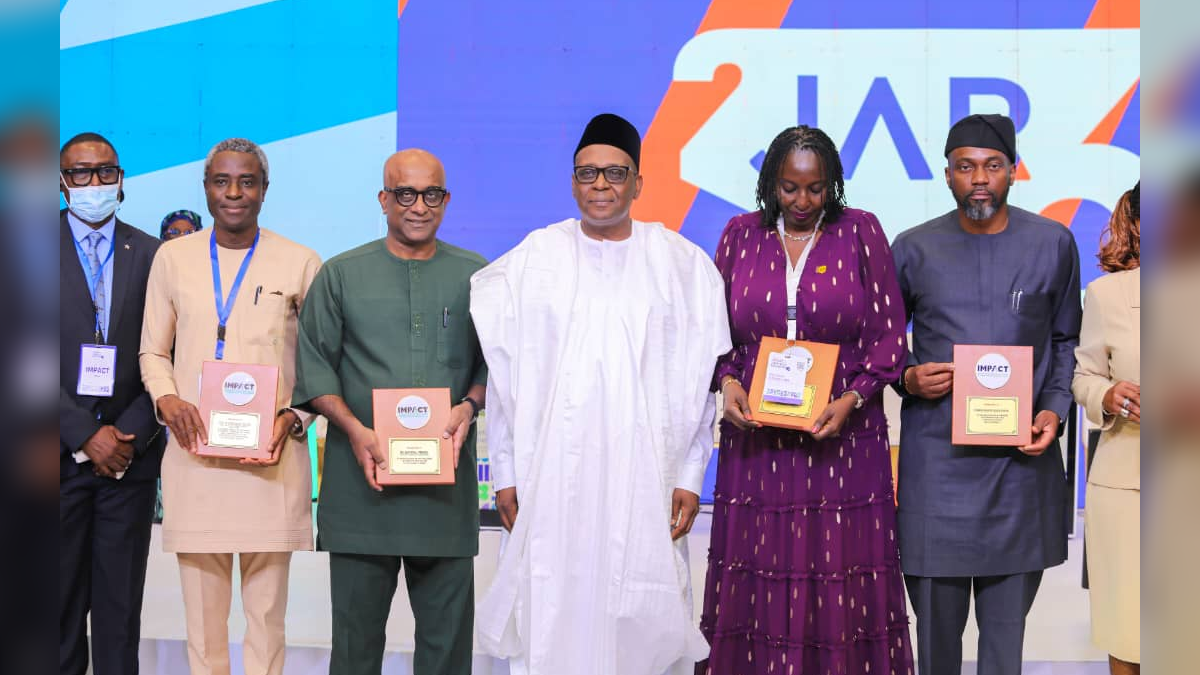
The dissemination event also included awards recognising individuals and teams for their contributions to the implementation of the project.
The IMPACT Project was designed to increase immunisation coverage, expand access to malaria prevention and treatment, and reduce deaths among children under five through investments in primary healthcare facilities, vaccines, medical commodities, infrastructure and health systems.
It was implemented through national agencies and state institutions with financial support from the World Bank.
