
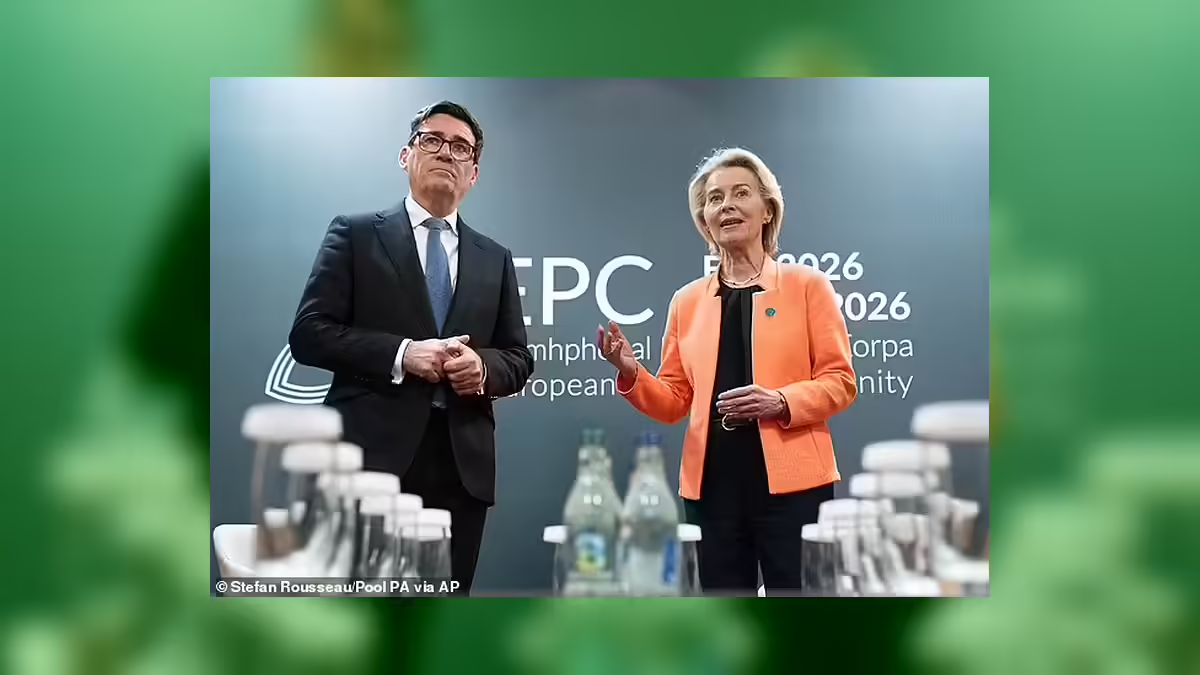
Prime Minister Andy Burnham is facing pressure to defend his plans for a revised agreement with the European Union ahead of a summit in Brussels on Friday.
The proposed deal is expected to involve concessions from the UK on financial contributions, regulatory alignment and border arrangements in exchange for improved trading conditions with the bloc.
Burnham has begun preparing the public for the negotiations, arguing that Britain’s departure from the EU resulted in a harder Brexit than voters were promised during the 2016 referendum.
His government has also launched a series of public engagements to explain the planned changes, although the proposals have already exposed disagreements within Labour and among its political and trade union supporters.
Burnham Criticises the Outcome of Brexit
Writing in the Mirror, Burnham acknowledged that around two-thirds of voters in his Makerfield constituency supported leaving the EU in the 2016 referendum.
He said the promised changes had not materialised, arguing that Britain had failed to regain the level of control promised by Brexit campaigners.
Burnham pointed to rising household bills, higher business costs and the small boats crisis as examples of problems facing the country.
He said Britain had ended up with a much harder Brexit than the one presented to voters and criticised former prime minister Boris Johnson for abandoning Theresa May’s withdrawal agreement.
According to Burnham, Johnson’s Brexit deal had caused more harm than good, while the current arrangement was no longer sufficient for Britain’s national interests.
He said he intended to move beyond the divisions surrounding Brexit and put the country on a path towards economic growth.
Labour Maintains Its Immediate Red Lines
Burnham reiterated that Labour’s manifesto commitments against rejoining the EU customs union or single market during the current parliamentary term remain in place.
However, he did not rule out the possibility of a more substantial change in Britain’s relationship with the EU in the longer term.




He has described Friday’s summit as the starting point for a wider national discussion about future relations with Brussels. That conversation could eventually include the possibility of Britain returning to the European Union.
The Prime Minister is expected to address the issue again during a speech at the Lord Mayor’s banquet at Mansion House.
He will argue that any agreement must remain consistent with Labour’s manifesto commitments and the government’s negotiating limits, while improving the existing Brexit arrangements and meeting what he calls the “Makerfield test” of improving people’s everyday lives.
Miliband Describes Agreement as a First Step
Foreign Secretary Ed Miliband, speaking during a series of television and radio interviews on Monday, described the agreement expected from the Brussels summit as only the beginning of the process.
He declined to say whether he personally supported Britain rejoining the EU, explaining that he would not offer an individual position while serving as a Cabinet minister.
Miliband said the government was concentrating on securing better terms at the summit before considering the options available to the country afterwards.
He also said the government respected the outcome of the 2016 referendum and was not seeking to reopen the arguments surrounding it.
Miliband identified potential benefits for consumers, businesses and workers, including lower shop prices through improved trade arrangements and closer cooperation in the energy sector.
He said the current Brexit arrangements were not good enough and that the government wanted to secure improvements.
UK Will Have No Formal Say Over Some EU Food Rules
Europe Minister Hamish Falconer separately confirmed that Britain would not receive a formal role in decisions concerning food and drink regulations under the proposed arrangements.
The expected regulatory concessions have become one of the issues surrounding negotiations, alongside financial contributions and border arrangements.
Trade Unions Raise Concerns Over Possible EU Re-entry
Burnham’s approach has prompted concern among some Labour supporters, including trade unions that backed the party.
Gary Smith, general secretary of the GMB union, urged caution over the possibility of Britain fully rejoining the EU.
He said the country could not simply return to its previous position and expressed reservations about complete membership.
The comments add to tensions within Labour over the longer-term direction of the government’s European policy.
Boris Johnson Signals Possible Opposition
Brexit supporters have also begun preparing to challenge any move towards closer European integration.
Former prime minister Boris Johnson has indicated that he could return to the political frontline if Labour pursues an effort to take Britain back into the EU as a member state.
Burnham is expected to present the proposed agreement as mutually beneficial for Britain and the European Union when he addresses ministers, Commonwealth representatives and foreign diplomats at Mansion House.
His government is due to pursue the negotiations at Friday’s Brussels summit, after which the Prime Minister plans to set out the next stage of the country’s relationship with the bloc.

