
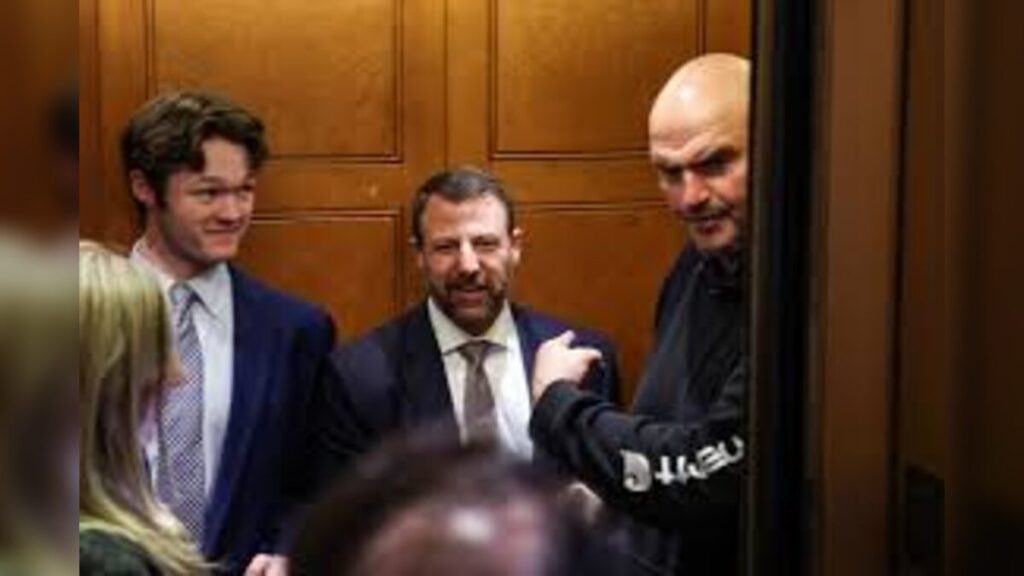
In a surprising move, Pennsylvania Senator John Fetterman voted to confirm Markwayne Mullin as the new Secretary of the Department of Homeland Security, standing apart from most Democrats.
Fetterman described his choice as putting “country over party,” emphasizing principle over partisan loyalty.
He told Fox News’ Saturday in America that while he faced criticism from fellow Democrats, he felt compelled to act in the nation’s best interest, especially in light of anti-American demonstrations in his home city of Philadelphia.
Shock in Philadelphia Spurs Political Decision
Fetterman’s vote came shortly after disturbing footage emerged of anti-American protesters in Philadelphia.
Masked speakers openly celebrated the deaths of U.S. military personnel, chanting that they “cheer” for soldiers returning home in caskets.
“This was truly appalling,” Fetterman wrote on X, condemning the remarks and questioning why there was little outrage from his own party.
The incident drew bipartisan attention, with Texas Senator Ted Cruz also labeling the protest “sick” and publicly engaging with Fetterman’s criticisms.
Voting for Mullin and Crossing Party Lines
When it came time for the Senate vote on Mullin’s confirmation, Fetterman and Democrat Martin Heinrich of New Mexico were the only two Democrats to vote with Republicans.
The final tally was 54-45 in favor of Mullin.




Fetterman highlighted that his decision was guided by a focus on stability and security rather than party politics. “I’m on the right side of reasonable.
I’m on the right side of never shut the government down,” he said.
A Nuanced Approach to Homeland Security
Fetterman has maintained a complex stance on immigration and homeland security in recent months.
He has publicly defended the work of ICE agents deporting criminal migrants while simultaneously criticizing former DHS Secretary Kristi Noem and calling for “new leadership” at the agency.
His vote for Mullin reflects a balance between supporting security operations and advocating for accountability in leadership.
Impact and Consequences
Fetterman’s cross-party vote could shift perceptions of Democratic unity, signaling that some lawmakers prioritize national security over strict party alignment.
His decision has sparked debate within the party about how to respond to threats against American servicemembers while maintaining a progressive stance on other homeland security issues.
It also highlights the political tension surrounding DHS nominations and the broader national conversation on protests targeting U.S. military personnel and foreign policy stances.
What’s Next?
Senator Fetterman has signaled that he will continue to navigate a centrist path, emphasizing pragmatism over partisan loyalty.
Lawmakers and party leaders are likely to watch his actions closely as they consider the implications for future votes on homeland security, immigration, and national defense policy.
Meanwhile, Mullin’s tenure as DHS Secretary will be under scrutiny, with expectations that he must address both internal leadership challenges and the growing national discourse on immigration and public safety.
Summary
John Fetterman’s vote to confirm Markwayne Mullin underscores a rare moment of bipartisan cooperation, driven by concerns over national security and public safety.
Confronted with anti-American demonstrations and long-standing political debates, Fetterman chose to prioritize country over party, sparking discussion about the evolving role of individual judgment in a polarized political landscape.
Bulleted Takeaways
- Pennsylvania Senator John Fetterman voted to confirm Markwayne Mullin as DHS Secretary, crossing party lines
- Anti-American protests in Philadelphia influenced Fetterman’s decision, highlighting threats to U.S. military personnel
- Fetterman faced criticism from fellow Democrats but defended his choice as putting “country over party”
- Only one other Democrat, Martin Heinrich, also supported the nominee
- Fetterman has a nuanced record on immigration, supporting ICE operations while calling for leadership change in DHS
- The vote raises questions about Democratic unity and the party’s approach to national security issues
- Mullin’s confirmation passed 54-45, reflecting significant bipartisan support

