
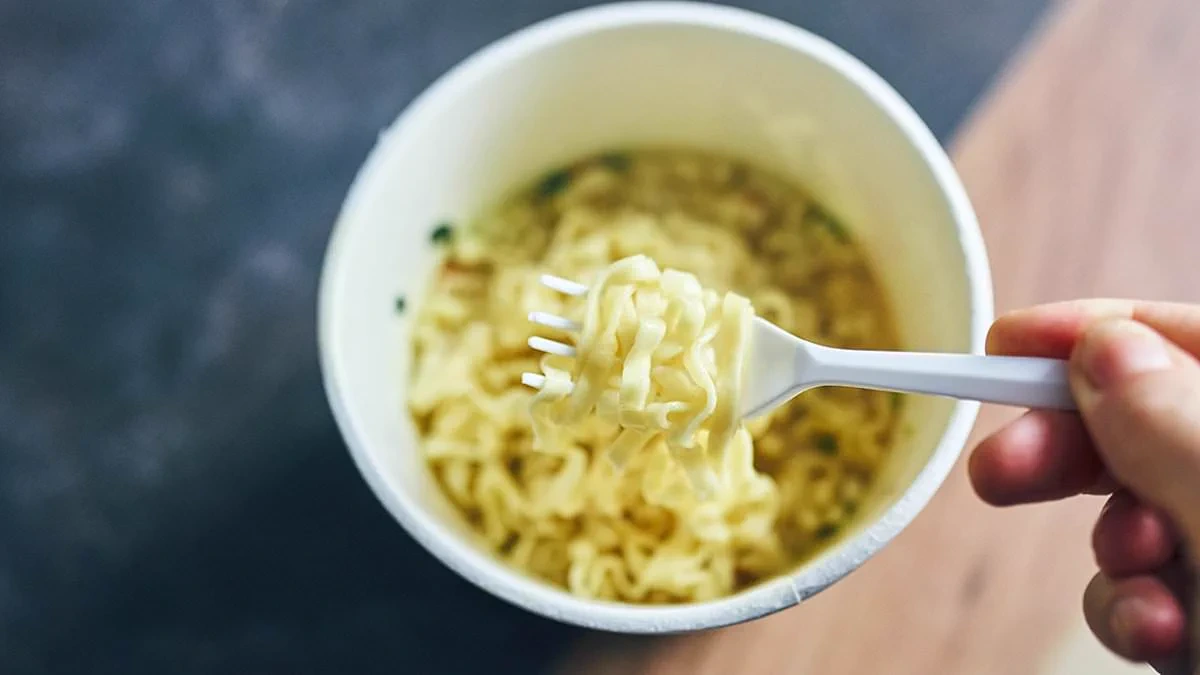
Instant ramen has become increasingly popular, moving beyond its traditional reputation as an inexpensive meal for students and people on tight budgets. Supermarkets now stock a growing range of varieties, including Korean kimchi, Japanese miso, Thai tom yum, beef jjigae, lemongrass and mushroom flavours.
The trend has also been reflected in online shopping activity. Sales of instant noodles on Ocado have increased by 50 per cent year-on-year, while searches for ramen have risen by 35 per cent.
The noodles have also gained popularity among food enthusiasts, with social media users sharing bowls topped with soft-boiled eggs, pak choi, chilli oil, sesame seeds and seaweed.
However, nutrition experts have raised concerns about the salt, fat and limited nutritional value of some instant noodle products, prompting questions about how frequently they should be eaten.
How Instant Ramen Is Made and What It Contains
Instant ramen was developed in Japan in 1958 by food entrepreneur Momofuku Ando. It was created as an affordable and convenient meal that could be prepared by adding hot water.
The product later became popular internationally and appeared on British supermarket shelves in the late 1970s.
Most varieties contain pre-cooked and dehydrated wheat noodles, seasoning powder and, in some cases, a separate sachet of flavoured oil or sauce. Preparation generally takes between three and five minutes, with products available in individual cups, pots and packets.
Nutritional values differ depending on the brand, flavour and portion size. A typical 85g packet contains approximately 350 to 400 calories, 12 to 16g of fat, 5 to 7g of saturated fat, 7 to 10g of protein, 2 to 3g of fibre and between 4 and 5g of salt.
Creamy and spicy Korean-style varieties can contain higher amounts of fat and calories, while some Japanese-style broth options have lower fat content.
High Salt Levels Raise Health Concerns
One of the main nutritional concerns associated with instant ramen is its salt content. Much of the salt comes from the seasoning powder and flavoured oil included in the packaging.
Excessive salt consumption can increase blood pressure and raise the risk of heart attacks and strokes. The NHS recommends that adults consume no more than 6g of salt daily.
Dietitian Nichola Ludlam-Raine said some instant noodle products contain around half of an adult’s recommended daily salt allowance in a single serving.
Nongshim Shin Ramyun, for example, contains approximately 4.6g of salt per packet, representing more than three-quarters of the recommended daily maximum.
Buldak Original Hot Chicken Ramen contains around 4.2g of salt per packet. Ludlam-Raine warned that consuming these products alongside other salty foods could quickly push daily intake beyond recommended levels.
Itsu’s Big Chick’n Ramen pot contains 312 calories, 5.3g of fat, 0.9g of saturated fat, 8.7g of protein, 2.8g of fibre and 3.3g of salt.
Refined Flour and Saturated Fat in Instant Noodles
Experts have also highlighted the limited amounts of fibre and other essential nutrients found in many instant noodle products.




Most instant noodles are made using refined wheat flour, which has had much of its naturally occurring fibre removed during processing. This can make the noodles less filling than wholegrain alternatives.
A diet that regularly relies on low-fibre foods may also contribute to constipation.
Nutritional therapist Charlotte Grand, author of The Fertility Kitchen, explained that many instant noodles are fried in oil, commonly palm oil, before being dehydrated.
The process helps extend their shelf life and makes them quick to prepare, but it can increase their fat content, particularly saturated fat.
Grand also highlighted the saturated fat content of some popular products. Indomie Mi Goreng, for instance, contains approximately 7.2g of saturated fat per packet.
Is MSG in Instant Ramen Safe?
Monosodium glutamate, commonly known as MSG, is another ingredient found in many instant noodle seasonings.
The flavour enhancer gives food a savoury, umami taste and is frequently used in processed foods.
Although MSG has attracted criticism over the years, food safety authorities consider it safe to consume at normal levels.
How to Make Instant Ramen More Nutritious
Nutrition experts say adding fresh ingredients can improve the nutritional value of instant noodles.
Ludlam-Raine said instant ramen is often treated as a complete meal when it is better regarded as a starting point. Adding an egg, tofu, chicken or vegetables can increase its nutritional content.
Grand recommended vegetables such as pak choi, spinach, broccoli, mushrooms, carrots and peppers. These provide fibre, vitamins, minerals and beneficial plant compounds.
Reducing the amount of seasoning powder used can also help lower salt intake. Fresh ginger, garlic, chilli, lime juice and herbs can be added to provide flavour without relying entirely on the seasoning sachet.
For soup-style ramen, leaving some of the broth uneaten may further reduce the amount of salt consumed.
Grand said combining vegetables, eggs and fresh flavourings could turn a basic packet of noodles into a more substantial meal.
Can Instant Ramen Be Part of a Healthy Diet?
Ludlam-Raine said instant ramen could be a reasonable quick meal when prepared with additional nutritious ingredients, although she advised against eating it every day.
She noted that compared with some fast-food meals, instant noodles may provide a similar amount of salt while offering opportunities to include more nutrients through added ingredients.
Grand also highlighted the affordability, convenience and long shelf life of instant ramen, particularly for people with limited time or food budgets.
However, she said the noodles on their own provide mainly carbohydrates for energy and generally contain limited protein, fibre and micronutrients.
Adding vegetables and a source of protein can significantly improve the nutritional balance of the meal.
Huel Lite Chicken Noodles Recommended as a Higher-Protein Option
Dietitian Nichola Ludlam-Raine identified Huel Lite Classic Chicken Flavour High Protein Noodles as an alternative for people looking for a more nutritious instant noodle option.
The product, sold in a 64g serving for £2.50 at Tesco, contains 25g of protein and 3.8g of fibre.
It also contains 1.5g of salt, equivalent to a quarter of the recommended daily maximum for adults. Although this remains a notable amount, it is lower than the salt content of several other instant noodle varieties.
Much of the product’s protein comes from its protein noodles and added pea protein.
Ludlam-Raine said the protein content could help consumers feel fuller for longer. Adding an egg would increase the meal’s total protein content to approximately 31g.
The nutritional assessment highlights the differences between instant noodle products and the importance of checking their salt, fat, protein and fibre content when choosing a meal.
